How to Propagate Big-fruit hawthorn?
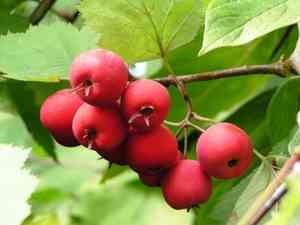
Crataegus pinnatifida can be successfully multiplied via the cutting technique. For optimal outcomes, utilize semi-lignified cuttings acquired in the latter part of summer. It is recommended to employ a rooting stimulant to boost root formation and embed the cuttings in a substrate that drains efficiently. Confirm that the growing medium stays damp yet not oversaturated to avert decay. Supplying filtered light can encourage development until the cuttings are firmly rooted and prepared for relocation.
When Is the Optimal Time to Propagate Big-fruit Hawthorn?
Propagation Method
Cutting
Propagation Period
Autumn,Winter
What Equipment Is Used in Big-fruit Hawthorn Propagation?
Sharp Pruners
Essential for making clean cuts from the parent big-fruit hawthorn, sharp pruners help minimize damage to plant tissues. A clean cut is crucial to prevent disease entry and ensure a higher success rate of root development from the cuttings.
Rooting Hormone
Applied to the base of the cutting, rooting hormone promotes rapid root development at the cut site. This is especially beneficial for big-fruit hawthorn, enhancing the chances of establishment and growth when transplanting.
Sterile Potting Mix
A well-draining, nutrient-rich potting mix free from pathogens is crucial for big-fruit hawthorn cuttings. This medium supports young roots and retains adequate moisture without becoming waterlogged, which is vital for sensitive root systems in early stages.
Misting System
A gentle, consistent misting system keeps big-fruit hawthorn cuttings adequately hydrated without over-saturating, which is essential for preventing root rot while encouraging root growth.
How to Propagate Big-fruit Hawthorn?
Propagation Difficulty
Moderately Difficult
How to Care for Your Newly Propagated Big-fruit Hawthorn?
How to Care for Your Newly Propagated Big-fruit Hawthorn?
After propagation, gradually expose big-fruit hawthorn to more natural outdoor conditions if they were initially propagated indoors. Water regularly to maintain evenly moist but not soggy soil. Apply a balanced, slow-release fertilizer according to package instructions to support healthy growth. Protect young plants from extreme temperatures and direct sunlight to prevent stress. Regular pruning in the dormant season will help maintain shape and encourage branching.
Common Errors to Avoid When Propagating Big-fruit Hawthorn
Using inappropriate cutting types
Utilizing non-viable parts of big-fruit hawthorn for propagation, such as non-woody stems or overly mature wood, can lead to poor rooting and growth. This might result in cuttings that struggle to establish or fail to propagate altogether.
Over-watering
Providing too much water can saturate the soil, depriving big-fruit hawthorn cuttings of necessary oxygen and potentially causing root rot. This mistake can seriously hinder the plantâs ability to establish a healthy root system.
Ignoring soil conditions
Using soil that doesnât drain well or lacks the necessary nutrients can impact the overall health of big-fruit hawthorn. Poor soil conditions can lead to weak plants that are more susceptible to disease and less likely to succeed in propagation.
Tips For Propagating Big-fruit Hawthorn
Select healthy parent plants
Choosing vigorous and disease-free specimens of big-fruit hawthorn ensures that the genetic qualities and health are optimal for propagation. Healthy parent plants are more likely to produce viable, robust cuttings.
Use a rooting hormone
Applying a rooting hormone to the cut ends of big-fruit hawthorn cuttings can significantly enhance root development and survival rates. This step encourages quicker and more uniform rooting across cuttings.
Manage moisture levels
Maintaining a balance in soil moisture is crucial for the successful rooting of big-fruit hawthorn. The soil should be kept consistently moist but not waterlogged to support healthy root growth without risking fungal diseases.



