How to Prune Silver-leaved cathaya?
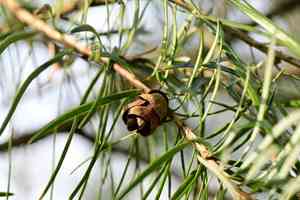
A unique conifer featuring silver-blue needle-like leaves, the silver-leaved cathaya is a relict species that thrives with judicious trimming. To preserve its form and stimulate more compact development, carefully eliminate deceased or congested limbs during its dormant period in winter. Pruning enhances air movement, diminishes insect infestations, and sustains its visual attractiveness. Refrain from extensive cutting to avert harm. Particular focus on safeguarding the central leader branch guarantees robust upward development. Interventions ought to be infrequent to honor the silver-leaved cathaya's gradual growth rate and uphold its inherent structure.
Advantages of Trimming Silver-leaved Cathaya
Advantages of Trimming Silver-leaved Cathaya
Trimming silver-leaved cathaya promotes robust development, leading to denser foliage and a stronger framework. Regular cutting helps preserve its decorative form and prevents excessive growth, maintaining garden appeal.
Optimal Time for Trimming Silver-leaved Cathaya
Optimal Time for Trimming Silver-leaved Cathaya
Trimming silver-leaved cathaya in late winter, just before spring growth begins, allows for the removal of dead or damaged branches without affecting the plant's dormant state. This timing also prevents significant sap loss, which can occur if pruning is done during the active growth period. Furthermore, the absence of leaves in late winter provides better visibility for assessing the plant's structure and making precise cuts. Pruning before the spring growth spurt also means that the cuts will heal more quickly once growth starts, reducing disease risk. Avoid pruning silver-leaved cathaya in late summer or early fall, as this can stimulate new growth that may not harden off before winter, making the plant vulnerable to frost damage.
Tools Required for Trimming Silver-leaved Cathaya
Hand pruners
Perfect for making accurate cuts on silver-leaved cathaya's younger stems and leaves. Users should choose bypass pruners, which create cleaner cuts that heal more easily.
Loppers
Silver-leaved cathaya may have thicker branches that hand pruners cannot manage. Loppers offer extra leverage for branches up to two inches in diameter.
Pruning saw
For mature silver-leaved cathaya with branches exceeding lopper capacity. A pruning saw can handle thick, tough branches, ensuring clean cuts without harming the plant.
Pole pruner
Given silver-leaved cathaya's potential height, a pole pruner is crucial for reaching and safely cutting higher branches without needing a ladder.
Gloves
To shield the gardenerâs hands from scratches and sap while trimming silver-leaved cathaya. Durable gloves also provide a better grip on tools.
Disinfectant
To prevent disease transmission, all tools should be sanitized before moving from one silver-leaved cathaya to another or after cutting diseased wood.
How to Trim Silver-leaved Cathaya
Sanitization
Before trimming silver-leaved cathaya, sterilize all pruning tools with a solution of one part bleach to nine parts water to prevent disease spread.
Identification
Examine silver-leaved cathaya closely to pinpoint all dead or diseased branches that require removal.
Cutting
Use sharp, clean pruning shears to make cuts on dead branches just above a healthy bud or another branch. Angle the cuts away from the bud to allow water to drain.
Removal
For diseased branches, cut at least several inches into healthy wood beyond the affected area to ensure complete removal of any diseased tissue.
Disposal
Discard the removed dead and diseased branches away from silver-leaved cathaya to help prevent potential re-infection or infestation.
Common Trimming Errors with Silver-leaved Cathaya
Excessive Trimming
Removing too much foliage at once can stress silver-leaved cathaya, impeding its growth or leading to a weakened state where it is more vulnerable to disease.
Incorrect Cuts
Making cuts too close to the trunk or leaving large stubs can result in improper healing and increase the risk of decay.
Tearing Bark
When branches are not supported during removal, their weight can tear the bark and damage silver-leaved cathaya's trunk, creating potential entry points for disease.
Trimming Healthy Growth
Unnecessarily cutting away healthy growth can limit silver-leaved cathaya's ability to photosynthesize effectively and store energy.
Tool Misuse
Using dull or unclean pruning tools can create jagged cuts that heal poorly and introduce pathogens to silver-leaved cathaya.
Neglecting To Trim
Failing to remove dead or diseased branches perpetuates a source of potential infection and compromises the overall health of silver-leaved cathaya.
General Trimming Advice for Silver-leaved Cathaya
Selective Trimming
Focus on removing only dead, damaged, or diseased wood to maintain plant health without unnecessarily reducing healthy growth.
Clean Cuts
Make clean and angled cuts near a bud to promote effective healing and direct new growth in the desired direction.
Wound Care
Ensure that larger cuts are clean and smooth to facilitate natural healing processes, avoiding the application of wound paint which can inhibit healing.
Hygiene
Sterilize pruning tools before and after use to prevent the spread of disease between plants or parts of silver-leaved cathaya.
Trimming For Shape
Trim to maintain the natural form of silver-leaved cathaya, avoiding excessive shaping that can lead to unnatural growth patterns and stress the plant.
Support Branches
When removing larger limbs, use a three-cut method to prevent bark tearing: an undercut followed by a top cut further out on the branch, and a final cut near the branch collar.
Branch Collar Care
Cut outside the branch collar without damaging it to preserve silver-leaved cathaya's natural defense against disease.



