How to Propagate Hooker's townsend daisy?
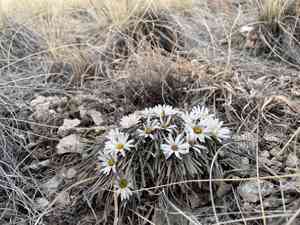
Effective propagation of Hooker's townsend daisy is achieved through the use of cuttings. For optimal rooting success, choose robust, non-blooming stems. Sever a 4-6 inch section, preferably in the morning when the plant's hydration levels are elevated. Detach the bottom leaves and immerse the cut end in a rooting stimulant to encourage root formation. Insert into a potting blend that drains efficiently, making sure the severed portion is adequately submerged but the upper leaves remain exposed. Keep the medium consistently damp and supply diffused light until the root system is established.
Optimal Time for Propagating Hooker's Townsend Daisy
Propagation Method
Cutting
Propagation Period
Spring,Summer
Tools for Hooker's Townsend Daisy Propagation
Sharp pruning shears
These are vital for making clean cuts on stems or shoots of hooker's townsend daisy. A precise cut is essential to avoid crushing or damaging plant tissues, which could impede root formation. Sharp shears also help prevent disease introduction at cut sites.
Rooting hormone powder
This product is crucial for boosting the rooting success rate of hooker's townsend daisy cuttings. Dipping the cut end into the powder helps stimulate root growth more rapidly and effectively than if cuttings were planted untreated, increasing propagation success.
Well-draining propagation medium
This substrate offers the perfect environment for hooker's townsend daisy's root development. A blend of perlite, vermiculite, and peat moss is typically suitable, providing necessary aeration and moisture retention to support new root growth without waterlogging, which can cause root rot.
Propagation trays or pots
These containers are used to hold the propagation medium and hooker's townsend daisy's cuttings. Trays or pots should have adequate drainage holes to prevent excessive water retention. Using individual cells or pots helps manage moisture for each cutting, crucial for initial root development.
Plastic covers or humidity domes
These items help maintain a high humidity environment around hooker's townsend daisy cuttings, which is critical for preventing them from drying out before roots establish. The cover also stabilizes temperature, creating an ideal microclimate for rooting.
How to Propagate Hooker's Townsend Daisy?
Propagation Type
Easy
Caring for Your Newly Propagated Hooker's Townsend Daisy
Caring for Your Newly Propagated Hooker's Townsend Daisy?
Once roots are established, gradually introduce hooker's townsend daisy to drier conditions by opening the propagation dome for longer periods over a week. When fully acclimated, transplant them to a permanent garden spot with full sun to partial shade. Water consistently, but allow the soil to dry slightly between waterings to encourage strong root growth. Fertilize with a balanced, slow-release product as directed to promote healthy growth and flowering.
Common Mistakes to Avoid When Propagating Hooker's Townsend Daisy
Overwatering
Watering hooker's townsend daisy too often can lead to root rot, as its natural habitat suggests a preference for well-drained soils. Excessive moisture hinders proper root development, vital for the plant's successful establishment.
Deep planting
Planting seeds or seedlings of hooker's townsend daisy too deeply can impede their growth. This species may require light for optimal germination, and seeds buried too deep might fail to sprout.
Ignoring soil composition
Using overly rich or dense soil can impede the rooting of hooker's townsend daisy. This error can cause inadequate root development, limiting nutrient uptake and the plant's overall vigor.
Tips For Propagating Hooker's Townsend Daisy
Well-draining soil
Using a well-draining soil mix helps mimic the natural rocky or sandy habitats of hooker's townsend daisy, promoting better root health and preventing waterlogging.
Surface sowing
For seed propagation of hooker's townsend daisy, scatter seeds on the soil surface and gently press them into the topsoil without covering them. This exposure aids in germination, leveraging the need for light.
Moderate watering
Maintain moderate and consistent watering for hooker's townsend daisy, ensuring the soil is moist but not waterlogged. Overwatering can harm the plant, while too little water might not provide sufficient moisture for growth.



