How to Propagate Salmonberry?
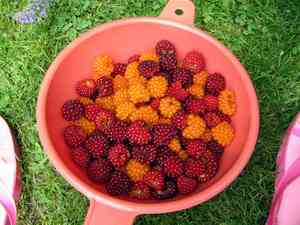
Salmonberry reproduces most effectively in Fall or Winter utilizing cutting and layering methods. A moderate level of challenge might be encountered, yet the emergence of new shoots signifies successful propagation. Guarantee damp earth and sufficient solar exposure for peak outcomes.
When Is the Optimal Time to Propagate Salmonberry?
Propagation Method
Cutting
Propagation Period
Autumn,Winter
What Tools Are Utilized for Salmonberry Propagation?
Pruning shears
These are vital for obtaining cuttings from salmonberry. The blades must be sharp and clean to ensure a precise cut, minimizing damage and reducing infection risk. Pruning shears should be used to sever a stem section from the parent plant just below a leaf node.
Rooting hormone
This compound encourages root development in salmonberry cuttings. When applied to the cut stem end, rooting hormones can accelerate rooting and boost propagation success. They are especially beneficial for fostering healthy, robust root systems.
Propagation trays
Trays offer a controlled setting for salmonberry cuttings to root. Their use helps maintain consistent moisture and temperature, two critical factors in the rooting process. They typically feature individual cells to keep cuttings separate, reducing disease spread risk.
Sterilizing solution
Ensuring all tools and containers are disinfected is crucial for preventing contamination and disease in salmonberry cuttings. A sterilizing solution or alcohol can be used to clean tools before and after each use.
Perlite or vermiculite
These materials are used to enhance aeration and drainage in the propagation medium. They help create an ideal rooting environment for salmonberry cuttings by preventing soil compaction and retaining adequate moisture without becoming waterlogged.
Peat pots or biodegradable pots
These containers are used for planting rooted salmonberry cuttings. They are particularly useful as they can be planted directly into the ground, lessening transplant shock by minimizing root disturbance.
Misting bottle
Salmonberry cuttings require high humidity to prevent drying out before roots have formed. A misting bottle is used to gently water the cuttings, maintaining the necessary humidity without overly saturating the soil.
How to Nurture Your Newly Propagated Salmonberry?
How to Nurture Your Newly Propagated Salmonberry?
Once the salmonberry cutting has rooted and new growth is established, gradually acclimate the young plant to its new surroundings by increasing airflow and decreasing humidity. Transplant to a larger pot or directly outdoors if conditions are suitable. Provide the salmonberry with partial shade to full sun and water regularly to keep the soil consistently moist. Mulching around the base can help retain moisture and suppress weeds. Prune salmonberry annually to encourage fruiting and maintain a healthy shape.
Common Errors to Avoid When Propagating Salmonberry
Overwatering
Excessive watering can lead to root rot, compromising salmonberry's root system and overall health. Waterlogged soil can suffocate the roots, impeding growth and propagation efforts.
Deep planting
Planting salmonberry's cuttings or seeds too deeply can hinder successful sprouting and rooting, as salmonberry typically needs a certain level of light and air exchange to trigger germination and growth.
Ignoring pest infestations
Failing to address pests promptly can weaken or destroy new salmonberry propagules. Pests can quickly infest and harm the delicate tissues of young plants.
Neglecting soil quality
Using poor quality or unsuitable soil can impede salmonberry's root development, as the plant requires well-draining and fertile soil to thrive and propagate successfully.
Advice For Propagating Salmonberry
Correct moisture levels
Maintaining appropriate moisture levels is crucial, as salmonberry requires consistently moist but not waterlogged soil to establish roots from cuttings or seedlings.
Light mulching
Applying a thin layer of mulch around salmonberry can help maintain soil moisture and temperature, benefits that support healthy propagation.
Gentle handling
Handle salmonberry's soft cuttings and seedlings with care to prevent damage. The plant's propagules are delicate and can easily be harmed by rough handling.
Pest management
Regular monitoring and appropriate interventions are key to managing pests that could negatively affect salmonberry's propagation process. A pest-free environment contributes to the successful establishment of new plants.



