How to Propagate Red pondweed?
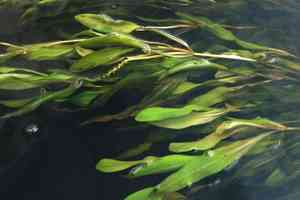
Red pondweed flourishes when reproduced by planting seeds, which ought to be carried out in an aqueous environment that replicates its native watery surroundings. To achieve successful sprouting and development, ensure consistent water parameters devoid of contaminants and surplus nutrients. Mild stirring of the water can simulate natural currents, assisting in the uniform dispersal and anchoring of seeds.
Optimal Period for Red Pondweed Propagation
Propagation Method
Seeding
Propagation Period
Spring
Essential Tools for Red Pondweed Propagation
Aquatic Planting Basket
An aquatic planting basket is crucial for securing the root structure of red pondweed during its initial aquatic seeding. This device ensures the plant stays anchored and can establish itself firmly, minimizing displacement by water currents. These baskets are typically meshed, allowing water and nutrient flow while containing growth to a manageable area, vital for habitat maintenance and preventing overgrowth.
Fine-Grained Substrate
A fine-grained substrate, such as specialized aquatic soil or finely textured gravel, is critical for successfully establishing red pondweed from seeds. This substrate type supports seed anchoring and offers an ideal setting for delicate seedling roots to penetrate and develop. The fine particles facilitate easier root growth compared to coarser materials, which might impede the young root system's development.
Submerged Planter
A submerged planter is utilized for positioning and maintaining red pondweed seeds at a controlled depth within the water. This is especially important for ensuring seeds remain submerged and are not dislodged by water movement or animal activity. Submerged planters help provide a stable environment for the seeds, safeguarding them from external disturbances during crucial germination and early growth phases.
Water Level Regulator
Maintaining an ideal water level is vital for red pondweed, particularly during the initial stages of propagation from seeds. A water level regulator assists in managing the water depth and conditions surrounding red pondweed, ensuring seedlings are neither too deeply submerged nor prematurely exposed to air, both of which could hinder their development or lead to mortality.
How to Propagate Red Pondweed?
Propagation Type
Simple
Caring for Your Newly Propagated Red Pondweed
Caring for Your Newly Propagated Red Pondweed
Post-propagation, red pondweed demands minimal upkeep. Ensure it's situated in a calm, shallow water area, ideally with partial sun exposure. Regularly monitor water conditions to maintain low to moderate nutrient levels, which helps prevent algal overgrowth and preserves red pondweed's health. Periodically thinning dense areas will encourage healthier growth and prevent overcrowding.
Common Errors to Avoid When Propagating Red Pondweed
Overcrowding
Placing red pondweed propagules (young plants) too closely together can restrict their access to essential nutrients and light, leading to weaker development and increased vulnerability to disease.
Poor water quality
Using water that is excessively nutrient-rich or contaminated can foster algae growth, which competes with red pondweed for resources and potentially results in poor plant health.
Insufficient light
Failing to provide red pondweed with adequate sunlight can impede its photosynthesis process, which is crucial for growth and successful propagation.
Harvesting too early
Removing parts of red pondweed for propagation before they reach sufficient maturity can lead to reduced viability and poor growth of new plants.
Advice for Propagating Red Pondweed
Appropriate spacing
Ensure ample space between each red pondweed cutting when planting. This promotes robust root development and lessens competition for light and nutrients.
Water quality management
Utilize clean, nutrient-appropriate water. Avoid water with high levels of pollutants or excessive nutrients that could encourage algal overgrowth.
Optimal lighting
Position red pondweed in areas where it receives sufficient but not excessive sunlight, balancing its exposure for optimal growth and photosynthesis.
Using healthy parent plants
Select strong and mature red pondweed specimens for propagation to increase the likelihood of vigorous and healthy new plants.



