How to Propagate Cliff beardtongue?
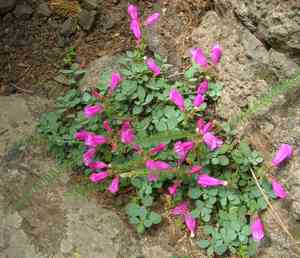
Cliff beardtongue is a perennial species that flourishes in stony habitats and porous substrates. For effective propagation, utilize premium seeds, verifying their freshness. Disperse the seeds superficially in a fertile growing mixture. Sustain steady hydration without oversaturation. The sprouting phase may be protracted, necessitating perseverance and consistent attention. Once sprouts emerge, ensure sufficient light exposure to foster vigorous development for proper rooting.
When Is the Optimal Time to Propagate Cliff Beardtongue?
Propagation Method
Seeding
Propagation Period
Spring
What Equipment Is Used in Cliff Beardtongue Propagation?
Seed Trays
Seed trays are crucial for initiating seeds indoors or within a greenhouse. They offer a regulated setting that aids in moisture retention and temperature control, vital for the successful germination of cliff beardtongue seeds.
Fine Seed Starting Mix
A fine seed starting mix ensures proper soil-to-seed contact and supplies essential nutrients for early growth. This type of mix drains well, which is important to prevent cliff beardtongue seeds from decaying.
Misting Spray Bottle
A misting spray bottle helps maintain consistent moisture in the seed mix without over-saturating it. This is especially beneficial for the delicate cliff beardtongue seeds, providing even hydration without disruption.
Propagation Dome
A propagation dome placed over the seed tray helps maintain humidity and warmth, creating an ideal microenvironment for cliff beardtongue seeds to germinate more effectively.
Heat Mat
A heat mat positioned beneath the seed tray can provide gentle bottom warmth, which is advantageous for accelerating the germination process for cliff beardtongue seeds. Consistent warmth ensures quicker and more uniform sprouting.
Labeling Stakes
Labeling stakes are essential for tracking different seed varieties and their planting dates. This helps ensure cliff beardtongue seeds are monitored correctly during their growth stages.
Sterile Scalpel
A sterile scalpel is useful for carefully separating seedlings that may have germinated too close together without harming the fragile roots, crucial for the health of cliff beardtongue seedlings.
Planting Dibble
A planting dibble helps create uniform holes in the soil for transplanting seedlings, ensuring each cliff beardtongue seedling is planted at the correct depth and spacing, promoting healthier growth.
How to Propagate Cliff Beardtongue?
Propagation Type
Simple
How to Care for Your Newly Propagated Cliff Beardtongue?
How to Care for Your Newly Propagated Cliff Beardtongue?
Post-transplant, ensure cliff beardtongue receives full sun to partial shade and is planted in well-draining soil with a slightly acidic to neutral pH. Water moderately, allowing the soil to dry out between waterings. Cliff beardtongue prefers cooler climates and may need protection from excessive heat. Apply mulch around the base to retain moisture and suppress weeds. Prune spent flowers to encourage further blooming and maintain a neat appearance.
Common Errors to Avoid When Propagating Cliff Beardtongue
Overwatering
Excessive watering can lead to root rot, which severely impacts the plantâs ability to grow and spread.
Using Non-Well-Draining Soil
Soil that does not drain properly can retain too much moisture, leading to root diseases.
Incorrect Cuttings
Using stems that are either too mature or too young can result in unsuccessful rooting.
Ignoring Soil pH
Improper soil pH levels can hinder nutrient absorption, affecting plant growth.
Lack of Adequate Light
Insufficient light can reduce photosynthesis, weakening the plant and impeding propagation.
Tips For Propagating Cliff Beardtongue
Use Well-Draining Soil
Ensure the soil mixture drains well to prevent water stagnation and root rot.
Control Watering
Water the plant moderately to keep the soil moist but not waterlogged.
Choose the Right Cuttings
Select semi-hardwood cuttings as they have a better chance of rooting successfully.
Monitor Soil pH
Maintain a slightly acidic to neutral pH in the soil to ensure optimal nutrient uptake.
Provide Adequate Light
Place the plant in a location with plenty of indirect sunlight to support healthy growth.



