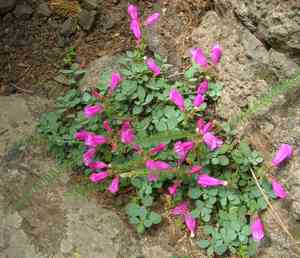
Cliff beardtongue (Penstemon rupicola)
Also known as: Cliff Beardtongue
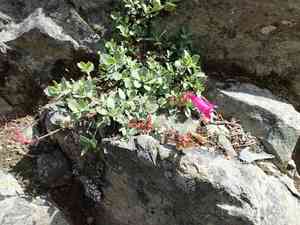
The plant you're describing is likely the Cliff Beardtongue, a hardy evergreen shrub native to rocky alpine environments. It features striking pink to lavender flowers clustered on leafy, upright stems. The plant's narrow, glossy leaves hug its creeping branches, making it well-adapted to survive in tough, rocky conditions. This perennial's compact growth and vivid blooms make it a standout ornamental choice for rugged landscapes.
In This Article
Attributes of Cliff beardtongue
Lifespan
Perennial
Plant Type
Herb
Plant Height
5 cm to 15 cm
Spread
45 cm
Leaf Color
Blue Green Gray Silver
Flower Size
0.5-0.75 inches (1.3-1.9 cm)
Flower Color
Pink
Images of Cliff beardtongue
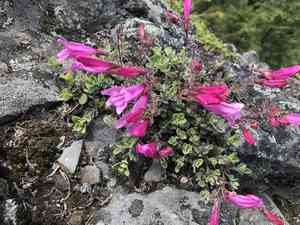
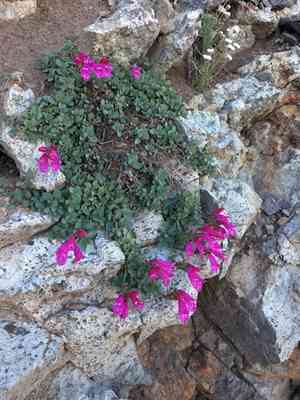
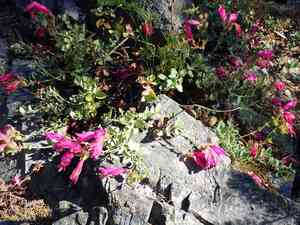
Quickly Identify Cliff beardtongue
1
Penstemon rupicola can be identified by its vibrant pink to magenta flowers, narrow lance-shaped leaves, and its preference for growing in rocky, well-drained soils. The plant is also characterized by its low-growing, mat-forming habit.
Scientific Classification of Cliff beardtongue
Phylum
Vascular plants
Class
Dicotyledons
Order
Lamiales
Family
Plantain
Genus
Penstemon
Species
Cliff beardtongue
Planting and Growing of Cliff beardtongue
Care Difficulty
Moderate
Watering Schedule
Every 2 days
Sunlight Requirements
Full sun
Sunshine Duration
6-10 hours
Ideal Temperature
60-75℉
Soil Type
Potting Mix, Peat Mix
Soil pH
6.5-7.5
Fertilizer Type
Balanced
Pruning Season
Spring, Summer
Pruning Area
Branches, Leaves
Pruning Frequency
2 times a year
Repotting Season
Spring
Pot Type
Plastic, Ceramic
 How to Water Cliff beardtongue?
When watering Penstemon rupicola, aim for about 120 milliliters. This plant prefers its soil to be consistently damp but not soggy. Water until the soil is moist to the touch, allowing any excess to drain away to prevent waterlogging.
What are the symptoms of an underwatered Cliff beardtongue?
›
What should I do if my Cliff beardtongue is not getting enough water?
›
What are the symptoms of an overwatered Cliff beardtongue?
›
How to save an overwatered Cliff beardtongue?
›
 What Are the Sunlight Requirements for Cliff beardtongue?
Penstemon rupicola thrives best in full sun to partial sun environments, ensuring robust flowering and foliage. Ideal light encourages healthy plant development and resilience against diseases.
What is the ideal lighting environment?
›
What is a good way to provide ideal light?
›
What benefits does ideal light provide?
›
 What Is the Ideal Temperature Range for Cliff beardtongue?
Penstemon rupicola thrives best in a temperature range of 60°F to 75°F. This range provides the warmth it needs for efficient photosynthesis and metabolic processes. In this range, the plant will show vigorous growth and vibrant blooms, making it crucial for optimal cultivation efforts.
 What Soil is Best for Cliff beardtongue?
Penstemon rupicola thrives in well-drained soil, which ensures that the roots do not sit in water. This type of soil is crucial to prevent root rot, allowing the plant to grow vigorously and maintain its health. This plant prefers soil with moderate nutrient levels. Too rich a soil can lead to excessive foliage growth at the expense of flowers. Balanced nutrients ensure striking, colorful blooms. While Penstemon rupicola can tolerate a broad pH range, it particularly appreciates slightly alkaline soils, helping it absorb nutrients more effectively and display its glossy foliage.
 How to Fertilize Cliff beardtongue?
For Penstemon rupicola, fertilization should be done sparingly. In the growing season, use about a quarter-strength balanced liquid fertilizer every two weeks, especially if growth appears sluggish. Ensure not to overdo, as too much nutrient can harm the plant.
 How to Prune Cliff beardtongue?
Begin by examining the plant for any dead or damaged stems. Remove these by cutting them back to healthy wood or the main stem, which encourages stronger growth and better airflow. Trim back long or unruly stems to maintain a compact shape. Make cuts just above a leaf node to promote bushier growth, helping the plant maintain a tidy appearance and promoting more blooms. After the first wave of flowers, remove spent blooms by cutting the flower stem back to the first pair of leaves. This deadheading encourages the plant to produce a second round of flowers.
More About Pruning Techniques→
 How to Propagate Cliff beardtongue plant?
1
Sow the seeds in seed trays filled with well-draining soil. Cover lightly with soil and water gently. Keep the trays in a warm spot and ensure they remain moist until germination occurs.
2
Select healthy stems and cut them just below a node. Remove lower leaves and dip the cut end into rooting hormone to encourage root development. Place the cuttings in a prepared growing medium.
3
Once seedlings have developed a strong root system, they can be transplanted into individual pots. Ensure adequate space for root growth and water them consistently to promote acclimation and further development.
 How to Repot Cliff beardtongue plant?
1
Penstemon rupicola likes to be repotted when it shows signs of being root-bound. If you see roots growing out of drainage holes, or if water sits on top of the soil without quickly soaking in, it is likely time to give your plant a new home. Typically, this happens every two to three years.
2
Select a pot that is about 1-2 inches wider in diameter than the current one. A pot that is too large can retain excess water and lead to root rot. Ensure the new pot has sufficient drainage holes, which helps prevent waterlogging and encourages healthy root growth.
3
The ideal soil mixture for Penstemon rupicola should provide excellent drainage. Use a sandy mix, preferring one with perlite or pumice. This combination imitates the plant's natural rocky habitat, giving roots the air exposure they crave while avoiding water retention that can lead to rot.
Learn More About Cliff beardtongue Diseases
Anthracnose
Bacterial Leaf Spot
Bacterial Wilt
Black Spot
Chemical Injury
Crown Gall
Cyst Nematode
Damping-off
Downy Mildew
Drought Stress
Fusarium Wilt
Gray Mold
Leaf Curl
Leaf Spot
Mosaic
Nutrient Deficiency
Nutrient Toxicity
Powdery Mildew
Root Rot
Root-knot Nematode
Rusts
Sooty Mold
Spider Mites
Temperature Stress
Thrips Damage
White Mold



