How to Propagate Nymphoides exiliflora?
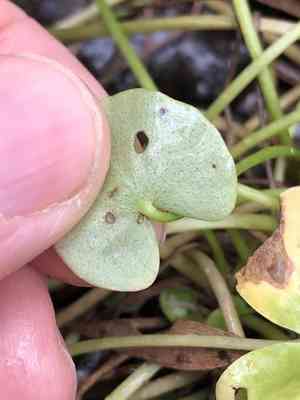
Nymphoides exiliflora, a species within the Menyanthaceae lineage, flourishes in watery settings. To achieve successful reproduction, utilize newly harvested seeds planted in shallow water or damp substrate. Guarantee steady hydration and adequate illumination for proper sprouting. While Nymphoides exiliflora possesses distinct environmental requirements, with diligent focus on its particular demands, reproduction can be readily accomplished by preserving water purity and inhibiting excessive algal proliferation.
When Is the Optimal Time to Propagate Nymphoides Exiliflora?
Propagation Method
Seeding
Propagation Period
Spring
What Equipment Is Used for Nymphoides Exiliflora Propagation?
Seed Trays
Seed trays provide a controlled setting for planting nymphoides exiliflora's seeds. They ensure even spacing, which promotes uniform development and simplifies moisture management.
Mister Spray Bottle
A mister spray bottle delivers a fine mist crucial for keeping the planting medium damp without over-saturating, ensuring ideal seed germination conditions for nymphoides exiliflora.
Seed Compost
Using premium seed compost guarantees that nymphoides exiliflora's seeds receive essential nutrients and proper drainage to foster healthy germination and initial growth phases.
Transparent Propagation Lid
A clear propagation lid helps create a humid micro-environment vital for nymphoides exiliflora's germination by retaining moisture and warmth within the seed tray.
Seed Dibber
A seed dibber aids in making precise and uniform holes in the compost, ensuring nymphoides exiliflora's seeds are sown at the correct depth for optimal germination.
Heating Mat
A heating mat can provide consistent warmth to the seed tray, which can be especially beneficial for nymphoides exiliflora's germination process by maintaining an ideal soil temperature.
Watering Can with Fine Rose
A watering can with a fine rose distributes water evenly and gently, preventing displacement of nymphoides exiliflora's seeds and avoiding harm to delicate seedlings.
Labels and Marker Pen
Using labels and a marker pen to identify each seed tray ensures that nymphoides exiliflora can be easily recognized and monitored throughout its germination and growth stages.
How to Propagate Nymphoides Exiliflora?
Propagation Difficulty
Simple
How to Maintain Your Newly Propagated Nymphoides Exiliflora?
How to Maintain Your Newly Propagated Nymphoides Exiliflora?
Once nymphoides exiliflora seedlings are established and robust enough, transfer them into individual aquatic containers or directly into a pond or water garden where they can grow fully submerged. Ensure they receive ample indirect sunlight and maintain a consistent water level. Regularly inspect for pests and diseases, and trim any damaged or dead leaves to encourage healthy growth. Fertilize periodically with a balanced aquatic plant fertilizer to support their development.
Common Errors to Avoid When Propagating Nymphoides Exiliflora
Overwatering
Excessive moisture can lead to root rot, which is particularly harmful for aquatic plants like nymphoides exiliflora.
Improper Lighting
Insufficient light can impede photosynthesis, affecting growth and propagation. Conversely, too much direct light can cause leaf burn.
Incorrect Substrate
Using the wrong planting medium can impact water retention and nutrient availability, crucial for healthy growth.
Ignoring Water Quality
Poor water quality, such as high chlorine or salt levels, can harm plant health.
Overcrowding
Planting too many specimens in a small area can restrict growth and reduce nutrient availability.
Advice For Propagating Nymphoides Exiliflora
Moderate Watering
Maintain consistent moisture without waterlogging to ensure healthy root development.
Optimal Lighting
Provide bright, indirect light to support robust growth while avoiding leaf burn.
Appropriate Substrate
Use a nutrient-rich aquatic substrate to support adequate root anchorage and nutrient uptake.
Clean Water
Use dechlorinated and pH-balanced water to safeguard against harmful contaminants.
Spacing
Ensure adequate space between plants to allow for healthy growth and nutrient access.



