How to Propagate Spring quillwort?
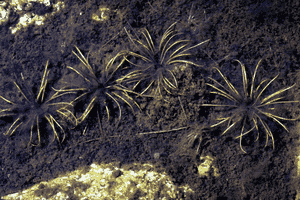
Isoetes echinospora belongs to a plant group recognized for its distinct reproductive methods, primarily relying on spores rather than seeds. Effective cultivation of this plant entails dispersing spores in a regulated, humid setting. It is crucial to sustain a consistent atmosphere devoid of temperature and moisture fluctuations to foster sprouting and development. A fertile growing medium, replicating the plant's native surroundings, improves the likelihood of thriving growth.
When Is the Optimal Time to Propagate Spring Quillwort?
Propagation Type
Sowing
Propagation Season
Spring
What Tools Are Utilized for Spring Quillwort Propagation?
Fine mesh sieve
A fine mesh sieve is crucial for purifying and preparing spring quillwort spores prior to planting. The minute, granular nature of the spores necessitates a gentle method to eliminate impurities without material loss. Employing this tool guarantees that only clean, viable spores are used for propagation, which is vital for successful germination and the well-being of spring quillwort.
Misting bottle
A misting bottle is indispensable for sustaining the required humidity levels for spring quillwort spores post-sowing. Given the sensitivity of spring quillwort's spores to environmental factors, a misting bottle enables gentle watering that will not dislodge or harm the spores. This tool aids in establishing a micro-environment that fosters ideal germination conditions by delivering a fine spray that uniformly moistens the soil without causing erosion or spore burial.
Sterile propagation trays
Sterile propagation trays are essential for planting and germinating spring quillwort spores. These trays assist in maintaining a controlled setting, free from pathogens and contaminants that could negatively impact germination. The sterility of the trays ensures no competition from other microorganisms, which is particularly critical for the delicate initial growth phases of spring quillwort.
Fluorescent grow lights
Fluorescent grow lights are advised when propagating spring quillwort indoors or in low-light conditions. These lights offer a consistent and appropriate light spectrum, which is vital for the photosynthesis of young spring quillwort during germination and early development. Sufficient lighting is crucial for ensuring healthy growth, free from etiolation (elongated, weak growth due to insufficient light).
Peat moss-based growing medium
A peat moss-based growing medium is perfect for sowing spring quillwort spores due to its properties that support moisture retention and air exchange. This medium provides an acidic environment, which is advantageous for spring quillwort germination and growth. Its fine texture is also suitable for the small size of spring quillwort spores, allowing spores to be evenly distributed and come into contact with moisture and nutrients effectively.
How to Propagate Spring Quillwort?
Propagation Type
Simple
How to Nurture Your Newly Propagated Spring Quillwort?
How to Nurture Your Newly Propagated Spring Quillwort?
Following propagation, continue to care for the young spring quillwort plants by maintaining high humidity and moisture levels, mirroring their natural habitat. Gradually introduce them to their permanent growing location, which should be partially shaded and consistently damp. Regular inspection for pests and diseases is important, though spring quillwort typically faces few pest issues. Long-term care involves replicating the marshy conditions of their native environment to encourage robust growth.
Common Errors to Avoid When Propagating Spring Quillwort
Inadequate substrate
Utilizing an incorrect or poor-quality substrate can impede the development of spring quillwort's roots. This plant thrives in a specific type of substrate, typically requiring a mix that mimics its natural aquatic or semi-aquatic environment. Unsuitable substrates may not provide the necessary moisture or nutrient levels, negatively affecting root development and the plant's overall health.
Over-watering
While spring quillwort flourishes in moist conditions, excessive water can lead to root rot and fungal infections. It's crucial to maintain a balance where the substrate remains moist but not overly saturated, as standing water can be detrimental to the plant's health.
Too much light
Spring quillwort naturally grows in partly shaded environments, and exposing it to too much direct sunlight can result in leaf burn and stress. Overexposure can impair photosynthesis and diminish the plant's vitality, hindering its growth and propagation success.
Advice For Propagating Spring Quillwort
Use of spores
Propagate spring quillwort by gathering and sowing its spores. This imitates the natural reproductive strategy of spring quillwort and is often more effective than vegetative propagation. Ensure that the spores are sown on a suitable moist substrate and kept under conditions that reflect their natural environment to enhance germination and growth.
Water level maintenance
Ensure that water levels are optimally maintained when propagating spring quillwort in an aquatic or semi-aquatic environment. This involves regular checks to prevent both drying out and over-saturation, facilitating a stable environment conducive to the propagation of spring quillwort.
Partial shading
Provide partial shade to mimic spring quillwort's natural habitat during propagation. This can prevent the stress and damage associated with excessive direct sunlight, thereby supporting healthier growth and effective propagation.



