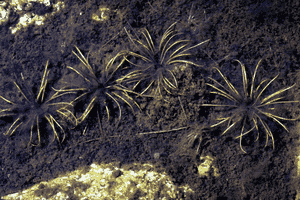
Spring quillwort (Isoetes echinospora)
Also known as: Spiny-spored quillwort
The microspores of the plant are approximately 26 µm in length and exhibit a smooth texture with fine spines. One key distinction is that European populations do not have stomata, while North American populations do. When differentiating North American plants from their European counterparts, they are often identified as Isoetes muricata and Isoetes echinospora var. braunii.
In This Article
Attributes of Spring quillwort
Lifespan
Perennial
Plant Type
Fern
Plant Height
5 cm to 15 cm
Spread
N/A
Leaf Color
Green
Flower Size
N/A - This plant does not produce flowers.
Flower Color
N/A - This plant does not produce flowers.
Images of Spring quillwort
Quickly Identify Spring quillwort
1
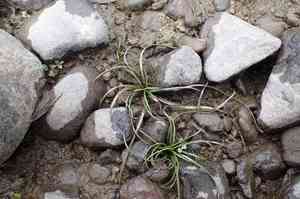
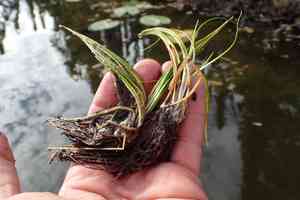
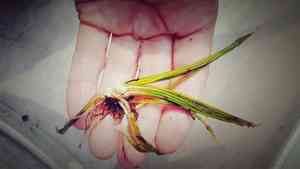
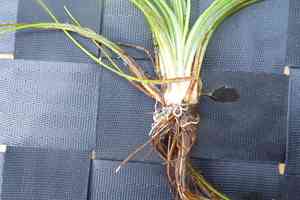
Isoetes echinospora can be identified by its quill-like, grass-like leaves that can grow up to 20 cm long. The plant has a bulbous base and produces spores. The leaves are typically green and arise in tufts.
Scientific Classification of Spring quillwort
Phylum
Vascular plants
Class
Club mosses
Order
Isoetales
Family
Quillwort
Genus
quillworts
Species
Spring quillwort
Planting and Growing of Spring quillwort
Care Difficulty
Hard
Watering Schedule
Every 3 days
Sunlight Requirements
Partial sun
Sunshine Duration
4-8 hours
Ideal Temperature
50-68℉
Soil Type
Potting Mix, Peat Mix
Soil pH
4.8-7
Fertilizer Type
Balanced
Pruning Season
Spring, Summer
Pruning Area
Branches, Leaves
Pruning Frequency
2 times a year
Repotting Season
Spring
Pot Type
Plastic, Ceramic
 How to Water Spring quillwort?
Isoetes echinospora thrives in consistently moist conditions, so it’s essential to ensure the soil remains damp without becoming waterlogged. When watering this plant type, saturate the soil to the point where it feels moist but not excessive.
What are the symptoms of an underwatered Spring quillwort?
›
What should I do if my Spring quillwort is not getting enough water?
›
What are the symptoms of an overwatered Spring quillwort?
›
How to save an overwatered Spring quillwort?
›
 What Are the Sunlight Requirements for Spring quillwort?
Isoetes echinospora thrives best in partial sun, ideally receiving about 3 to 6 hours of morning sunlight. This lighting provides essential energy for photosynthesis while preventing heat-related stress.
Optimal Location Placement
›
Use of Light Diffusers
›
Effects of Ideal Lighting
›
 What Is the Ideal Temperature Range for Spring quillwort?
Isoetes echinospora thrives best in a temperature range between 50°F and 68°F. This range supports healthy photosynthesis and metabolic activities crucial for its growth and reproduction.
 What Soil is Best for Spring quillwort?
Isoetes echinospora thrives in damp, aquatic environments, and it's crucial that the soil retains moisture well. A soil with high organic content, such as loam, provides excellent moisture retention, ensuring that the roots remain submerged and hydrated, essential for the plant's survival and growth. Despite the need for moisture, the soil should also offer good aeration. Sandy soil allows for adequate air flow to the roots without saturating them completely, preventing root rot and encouraging healthy growth, thus playing a vital role in the plant's development. Isoetes echinospora benefits greatly from soil rich in nutrients. Loam, with its balanced composition of minerals and organic matter, provides an ideal environment. The availability of essential nutrients supports robust growth and enhances the plant's resilience against diseases.
 How to Fertilize Spring quillwort?
Isoetes echinospora, also known as spiny quillwort, requires very minimal fertilization due to its natural habitat in nutrient-poor waters. A small dose of diluted liquid fertilizer once every two weeks is sufficient. In terms of solid fertilizer, using a slow-release granular fertilizer applied three times a year during the growing season is adequate. The exact amount should be a very thin layer, approximately one-eighth of a teaspoon per plant, ensuring the pellets do not directly contact the plant itself.
 How to Prune Spring quillwort?
Begin by identifying any dead or yellowing leaves, which can easily be pruned without damaging the rest of the plant. Trimming these away helps the Isoetes echinospora redirect energy to healthier growth. Always use clean and sharp scissors to make cuts to prevent introducing diseases. Make your cuts as close to the plant base as possible to ensure clean removal, maximizing health benefits. When pruning, aim to remove no more than one-third of the plant at any time. Conservative pruning supports steady growth and minimizes stress on the plant, ensuring it remains healthy and vigorous.
More About Pruning Techniques→
 How to Propagate Spring quillwort plant?
1
Isoetes echinospora reproduces via spores that are collected from mature sporangia. Ensure the spores are dry and store them in a cool, dry place until sowing.
2
Prepare a moist substrate that is rich in organic matter for spore sowing. Peat-based or loamy substrates usually provide the best results for spore germination.
3
Evenly scatter the spores across the substrate's surface. Do not cover them with soil as they require light for germination. Maintain high humidity and moderate temperatures for optimal growth.
 How to Repot Spring quillwort plant?
1
Recognizing when Isoetes echinospora needs repotting is crucial. Look for compacted roots or a stunted growth pattern. These signs indicate that the plant has outgrown its pot and needs more space. Typically, these plants benefit from repotting during the active growing seasons of spring or summer, allowing them to establish well in a new pot.
2
Selecting the proper pot for Isoetes echinospora is vital for its growth. Opt for a pot that's slightly larger than the current one, ensuring adequate drainage holes. This allows excess water to drain away, preventing root rot. The material should be durable and environmentally stable, such as terracotta, which promotes better airflow around the root zone, helping the plant's health.
3
A well-considered soil mix is essential for repotting Isoetes echinospora. Choose an acidic, well-draining mixture to mimic its natural habitat. This facilitates proper hydration and air circulation in the root zone, preventing waterlogging and promoting healthy root development. An appropriate soil mix is critical to ensuring the plant thrives after repotting.



