How to Propagate Fourpetal St. John's wort?
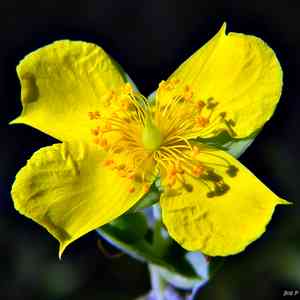
Hypericum perforatum is a robust and adaptable botanical specimen suitable for diverse environments. Its reproduction is generally achieved via seeding, with newly harvested seeds planted in adequately draining substrate to facilitate prime development. Robust young plant growth necessitates steady hydration and illumination, though excessive watering should be avoided. Applying a thin layer of organic matter can assist in seed emergence. Maintain the soil uniformly damp, yet not saturated, to encourage effective seed sprouting.
Optimal Time for Fourpetal St. John's Wort Propagation
Propagation Method
Sowing
Propagation Period
Spring
Essential Tools for Fourpetal St. John's Wort Propagation
Seed Trays
Seed trays are vital for germinating fourpetal St. John's wort seeds, offering a controlled and organized space. They facilitate easier handling and ideal spacing for seedlings, promoting proper root growth and preventing overcrowding.
Seed Compost
Seed compost is crucial for fourpetal St. John's wort due to its fine texture and nutrient-rich composition, which boosts germination rates and supports robust seedling development. It ensures delicate roots receive adequate nutrients without being overwhelmed.
Mist Sprayer
A mist sprayer helps maintain the correct moisture level for fourpetal St. John's wort seeds during germination. Moisture is key for seed sprouting, and a mist sprayer ensures even distribution without saturating the seeds.
Propagation Dome
A propagation dome creates a miniature greenhouse effect for fourpetal St. John's wort, providing consistent humidity and temperature, which are vital for successful seed germination. The dome helps retain moisture and warmth, accelerating the germination process.
Label Stakes
Label stakes are important when sowing fourpetal St. John's wort seeds to track the variety and planting date. Proper labeling aids in monitoring germination and identifying seedlings, especially when propagating multiple plant types simultaneously.
Seed Dibber
A seed dibber is used to make uniform holes in the soil for planting fourpetal St. John's wort seeds at the correct depth. Ensuring optimal planting depth improves germination rates and prevents seeds from being exposed or buried too deeply.
How to Propagate Fourpetal St. John's Wort?
Propagation Difficulty
Easy
Caring for Your Newly Propagated Fourpetal St. John's Wort
Caring for Your Newly Propagated Fourpetal St. John's Wort
Fourpetal St. John's wort thrives in full sun to partial shade and needs well-draining soil. Water young plants regularly, allowing the soil to dry between waterings. Once established, fourpetal St. John's wort is drought-tolerant and needs less frequent watering. Apply mulch around the plant's base to retain moisture and suppress weeds. Prune annually to maintain shape and encourage denser growth.
Common Propagation Mistakes to Avoid with Fourpetal St. John's Wort
Overwatering
Excessive moisture can lead to root rot and fungal diseases, hindering root development and causing plant decline.
Improper Soil Mix
Using a soil mix that holds too much water or lacks adequate aeration can impede root growth and overall plant vitality.
Inadequate Light
Fourpetal St. John's wort requires sufficient light for photosynthesis and growth; insufficient light can result in weak, elongated plants.
Inconsistent Temperatures
Temperature fluctuations stress the plants, leading to poor growth and reduced propagation success.
Diseased Cuttings
Using cuttings infected with disease can introduce pathogens, negatively impacting the health of young plants.
Tips for Propagating Fourpetal St. John's Wort
Use Well-Draining Soil
Ensure the soil mix drains well to prevent waterlogging and support healthy root development.
Maintain Consistent Moisture
Keep the soil consistently moist but not saturated, allowing roots to establish without risk of rot.
Provide Adequate Light
Place cuttings in an area with indirect sunlight to encourage healthy growth.
Use Clean, Sharp Tools
Take cuttings with clean, sharp tools to prevent pathogen introduction and ensure clean cuts that heal quickly.
Monitor Temperature
Maintain a stable temperature for the plants, avoiding extremes and sudden changes, to facilitate steady growth.



