How to Propagate Great St. John's wort?
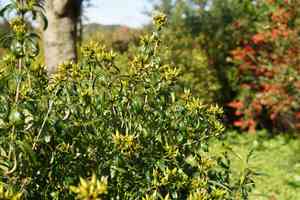
Hypericum ascyron, a sturdy herbaceous perennial, flourishes when reproduced via seeding. To achieve successful development, guarantee the seeds receive illumination for sprouting and cultivate them in a substrate that drains effectively. Consistent irrigation will foster continuous growth, whereas preventing overly saturated conditions is vital to avert root decay.
What Is the Best Time To Propagate Great St. John's Wort?
Propagation Type
Sowing
Propagation Season
Spring
What Tools Are Used in Great St. John's Wort Propagation?
Seed trays
Seed trays are vital for the sowing technique employed for propagating great St. John's wort. They enable regulated environmental conditions, which is key for the germination of great St. John's wort's seeds. Each tray can hold multiple seeds, allowing for space-efficient propagation and simplifying the maintenance of consistent soil moisture and temperature, critical elements for successful germination of great St. John's wort.
Fine-textured soil mix
A fine-textured soil blend is essential for sowing great St. John's wort's seeds, as it ensures proper soil contact and retains moisture without becoming waterlogged. This type of soil mix typically contains a balance of peat moss, vermiculite, and perlite, providing the lightness and aeration required for the delicate roots of great St. John's wort to establish.
Misting bottle
A misting bottle is utilized to gently irrigate the seeds of great St. John's wort without disturbing them. Excessive water pressure can dislodge or bury seeds too deeply, so a misting bottle helps maintain uniformly moist soil, which is crucial during the germination phase. This tool also minimizes the risk of overwatering, a common issue that can lead to fungal diseases.
Label and marker
Using labels and markers for identifying seed trays is important when propagating great St. John's wort. Given that germination can take varying times, labels ensure that each stage of development is documented and managed appropriately, preventing any confusion during later stages of plant care and maintenance.
Heat mat
A heat mat promotes successful germination of great St. John's wort by maintaining a consistent soil temperature, essential especially in cooler climates or during colder months. Germination temperature plays a critical role in the success rate and speed of seed sprouting, and a heat mat keeps the environment around the seeds stable.
How to Propagate Great St. John's Wort?
Propagation Type
Easy
How to Care for Your Newly Propagated Great St. John's Wort?
How to Care for Your Newly Propagated Great St. John's Wort?
Great St. John's wort requires full sun to partial shade for optimal growth. It thrives in moderately fertile, well-drained soil. Regular watering is important, especially during dry spells, but be careful not to overwater as great St. John's wort does not tolerate standing water. After establishment, great St. John's wort can tolerate some drought. Periodic application of a balanced fertilizer during the growing season will support robust growth. Monitor for pests and diseases and treat appropriately to maintain plant health.
Common Mistakes to Avoid When Propagating Great St. John's Wort
Over-watering
When propagating great St. John's wort, a common mistake is over-watering. This can lead to root rot, which is detrimental as the plant's roots become too saturated, inhibiting proper growth and potentially leading to fungal diseases that can kill the plant.
Deep planting
Planting cuttings or seeds too deeply can prevent great St. John's wort from successfully propagating. Deep planting can restrict the necessary air circulation around the base and emerging roots, potentially causing the cuttings or seedlings to suffocate and decay.
Neglecting humidity for cuttings
Ignoring the need for maintaining adequate humidity when propagating great St. John's wort from cuttings causes the cuttings to dry out. Without sufficient humidity, the cuttings may not root well, leading to poor establishment and growth of the plant.
Tips For Propagating Great St. John's Wort
Appropriate soil mix
Using a well-draining soil mix is crucial for the successful propagation of great St. John's wort. A mixture of peat, perlite, and sand is often suitable as it ensures good drainage and aeration, essential for healthy root development.
Providing indirect light
Ensuring that great St. John's wort receives indirect light during the rooting phase allows the young plants to establish without being stressed by excessive direct sunlight. This supports steady growth and reduces the risk of scorching young tissues.
Use of rooting hormone
Applying a rooting hormone to the cuttings of great St. John's wort can significantly enhance rooting success. This hormone stimulates root growth, improving the overall stability and health of the plant as it develops.



