How to Propagate Peacock plant?
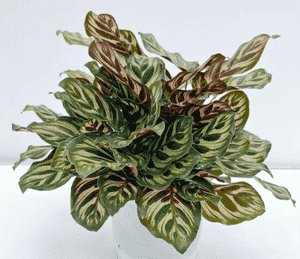
To multiply peacock plant, division is most effective in Spring or Autumn. This technique is quite straightforward, indicated by the emergence of new foliage. Gently divide the root masses to guarantee robust propagation.
When Is the Optimal Time to Propagate Peacock Plant?
Propagation Method
Division
Propagation Period
Spring, Autumn
What Implements Are Utilized in Peacock Plant Propagation?
Sterile Sharp Knife or Scissors
These are crucial for cleanly separating the rhizomes or shoots of peacock plant, minimizing harm to the plant tissue. A sharp, sterile tool ensures a precise cut that promotes faster healing and lowers the risk of infection.
Disinfectant for Tools
Disinfectant is essential for sanitizing propagation tools before and after use to prevent the spread of disease among peacock plant specimens. Ensuring tools are pathogen-free aids in the successful establishment of new plants.
Watering Can with a Fine Rose or Spray Bottle
A watering can with a fine rose or a spray bottle assists in gently watering peacock plant after propagation, ensuring the soil is damp but not saturated. This helps prevent root rot and maintains the delicate balance required for the new division's growth.
Well-Draining Potting Mix
A well-draining potting mix is vital for peacock plant to prevent water accumulation around the roots, which can lead to decay. A mix containing perlite or vermiculite is suitable for promoting aeration and drainage.
Small Pots or Containers
Following division, each section of peacock plant will require its own receptacle. Small pots are appropriate for the initial growth phase post-propagation, as they encourage a concentrated root zone which aids in plant establishment.
Growth Hormone (Optional)
While not always mandatory, a growth hormone can stimulate root development in peacock plant divisions. This is particularly advantageous if the division is small or if the root system is underdeveloped.
Humidity Dome or Plastic Bag
A humidity dome or clear plastic bag can create a moist environment around peacock plant, which is beneficial for maintaining the necessary humidity levels for the plant's recovery and initial growth phase. It helps prevent the young plants from drying out.
Label and Permanent Marker
Labels with a permanent marker are important for documenting the propagation date and any other pertinent details. Proper labeling assists in monitoring the progress of peacock plant and maintaining a propagation schedule.
How to Multiply Peacock Plant?
Propagation Method
Division
Difficulty Level
Easy
How to Nurture Your Newly Propagated Peacock Plant?
How to Nurture Your Newly Propagated Peacock Plant?
After propagation, care for peacock plant by ensuring consistent humidity, placement in a bright location without direct sunlight, and watering once the top inch of soil feels dry. Avoid overwatering and fertilizing until peacock plant shows signs of new growth, indicating acclimation to its new environment. With patience and attentive care, peacock plant will adapt and continue to thrive.
Common Errors to Avoid When Propagating Peacock Plant
Inadequate cutting selection
Choosing weak or unhealthy stem cuttings can result in a low success rate because these lack sufficient energy or rooting potential to develop into robust new plants.
Overwatering cuttings
Excessive watering can cause rot in peacock plant cuttings, as their stems are particularly vulnerable to too much moisture, leading to fungal infections and poor root development.
Insufficient humidity
Failure to maintain high humidity during propagation can lead to dehydration and poor rooting since peacock plant is a tropical plant that thrives in moist conditions.
Deep planting
Planting cuttings too deeply can suffocate new roots by restricting essential air exchange, which is crucial for peacock plant cuttings to develop properly.
Tips For Propagating Peacock Plant
Healthy cutting selection
Choose robust and healthy stem cuttings with at least one node and a couple of leaves, as these have a higher success rate for rooting and becoming established plants.
Balanced watering
Provide a balanced watering regimen that keeps the soil slightly moist but not waterlogged, ensuring adequate moisture for peacock plant's cuttings without causing rot.
Humidity maintenance
Utilize a humidity dome or plastic bag to create a mini greenhouse effect, which helps maintain optimal humidity levels necessary for peacock plant cuttings to root successfully.
Proper planting depth
Insert the cutting shallowly so that the node is just below the soil surface, allowing for maximum air exchange and encouraging healthy root growth in peacock plant.



