How to Propagate Turk's head?
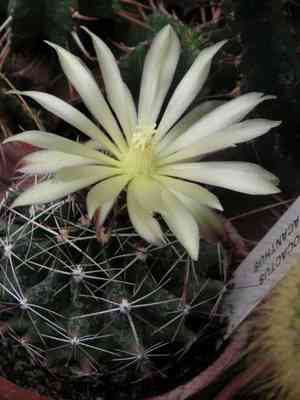
Turk's head flourishes when reproduced by seeding. To guarantee successful development, utilize a growing medium that drains effectively and sustain steady hydration without waterlogging. Partial sun exposure is advantageous, as it emulates the natural habitat of turk's head. For peak outcomes, plant the seeds in shallow receptacles, delicately blanketing them with a thin stratum of planting material. Consistent yet gentle irrigation fosters sound seed sprouting and root formation, laying a strong groundwork for the nascent flora.
Optimal Time for Turk's Head Propagation
Propagation Method
Seeding
Propagation Period
Spring
Tools for Turk's Head Propagation
Seed tray
Seed trays are crucial for initiating turk's head seeds indoors or in a regulated setting. They enable uniform distribution and arrangement of seeds, vital for consistent seedling development. Employing seed trays also facilitates proper spacing, ensuring each turk's head seed has ample space to grow without competition.
Succulent or cactus soil mix
A specialized succulent or cactus potting mix offers the necessary well-draining conditions for turk's head seeds to sprout successfully. This soil type helps prevent waterlogging and root decay, common issues with poorly draining substrates. The mix typically includes components like sand, perlite, and compost to enhance aeration and drainage.
Misting bottle
A misting bottle is used to gently irrigate turk's head seeds without disturbing them. Overhead watering can be too forceful, potentially dislodging small seeds or causing erosion in the planting medium. A misting bottle delivers a fine spray that adequately moistens the soil without these problems.
Heating mat
For turk's head, a heating mat can significantly boost the germination rate. Turk's head originates from warm climates; thus, maintaining a consistently warm soil temperature is key to successful seed germination. The heating mat gently warms the soil, improving the germination environment, especially in cooler conditions or during off-season propagation attempts.
Grow lights
If propagating turk's head indoors or in areas with insufficient natural light, grow lights are indispensable. These lights help mimic natural sunlight, providing the necessary light spectrum for healthy seedling growth. Proper lighting is crucial for preventing seedling etiolation (stretching) and ensuring robust, compact development.
How to Propagate Turk's Head?
Propagation Difficulty
Simple
Caring for Your Newly Propagated Turk's Head
Caring for Your Newly Propagated Turk's Head?
Post-germination, continue to provide turk's head with minimal yet consistent watering, allowing the soil to dry slightly between waterings. Gradually increase sun exposure to harden off the young seedlings. Once they have developed a strong root system and are large enough to handle, they can be transplanted into individual pots. Keep in a warm, sunny spot and fertilize sparingly with a cactus-specific fertilizer during the growing season to ensure optimal growth and health.
Common Errors to Avoid When Propagating Turk's Head
Overwatering
Excessive watering can lead to root rot in turk's head, as their natural habitat is arid, and they are adapted to dry conditions. Overwatering can suffocate the roots, limiting their ability to absorb nutrients and making the plant vulnerable to diseases.
Using unsuitable soil
Employing dense or clay-rich soil can retain too much moisture and prevent sufficient air from reaching the roots of turk's head. This can impede root development and diminish the plant's overall health.
Excessive handling
Frequent handling or touching of turk's head during the propagation process can damage delicate roots or newly forming shoots, negatively impacting the plant's ability to establish and grow.
Tips for Propagating Turk's Head
Use well-draining soil
Employing a well-draining soil mix, ideally one formulated for cacti and succulents, ensures that excess water drains quickly, preventing moisture accumulation around the roots of turk's head.
Provide ample sunlight
Turk's head requires full sunlight to thrive. Ensuring that the plant receives several hours of direct sunlight daily promotes healthy growth and flowering.
Mimic natural environment
Creating conditions that mimic turk's head's natural desert habitat aids in successful propagation. This includes temperature variations between day and night and minimal humidity.



