How to Propagate Eriocephalus capitellatus?
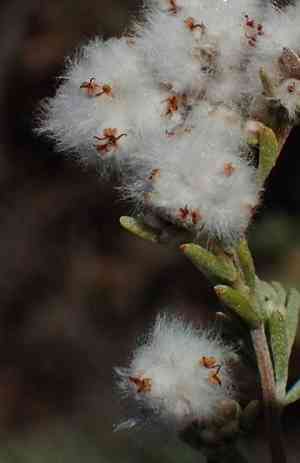
Eriocephalus capitellatus belongs to the Asteraceae family and thrives in dry climates. Reproduction is mainly achieved via cuttings. For optimal outcomes, choose semi-hardwood sections. Employ a potting blend that drains effectively and keep it moist without oversaturating. Position the cuttings in diffused light and enclose them with a plastic covering to preserve dampness until root systems emerge.
Optimal Period for Eriocephalus Capitellatus Propagation
Propagation Method
Cutting
Propagation Period
Spring,Summer
Tools Required for Eriocephalus Capitellatus Propagation
Sharp Pruning Shears
Crucial for obtaining clean sections from the parent plant. Minimizes harm to both the donor and the new piece, promoting quicker recovery and lowering infection risk.
Rooting Hormone
Applied to the severed ends of the cuttings to stimulate root development. This can significantly boost the success rate of cuttings forming roots and growing into robust plants.
Sterile Potting Mix
Offers a pathogen-free growth medium that supports root formation. Ensures excellent drainage and air circulation, vital for eriocephalus capitellatus cuttings.
Propagation Trays with Humidity Domes
Used to hold the cuttings and maintain high moisture levels around them. The dome helps create a controlled environment that reduces water loss through transpiration, giving cuttings a better chance to root.
Spray Bottle
To mist the cuttings and maintain the necessary humidity levels. A fine spray ensures even moisture distribution without saturating the medium.
Heat Mat
Maintains a consistent, warm temperature in the root zone, which is beneficial for encouraging root growth. Stable warmth is especially helpful for cuttings during cooler periods.
Labeling Supplies
Used to track different cuttings and their planting dates. Accurate labeling aids in monitoring progress and care schedules for each cutting.
Sterilizing Agent
Important for cleaning tools and containers to prevent disease spread. Ensures a hygienic environment that promotes healthy growth of eriocephalus capitellatus.
How to Propagate Eriocephalus Capitellatus?
Propagation Difficulty
Moderately Difficult
Caring for Your Newly Propagated Eriocephalus Capitellatus
Caring for Your Newly Propagated Eriocephalus Capitellatus
Once successfully propagated, transfer the rooted cutting into a larger container with a well-draining soil blend. Water the plant regularly, allowing the top inch of soil to dry between waterings. Position the plant in an area receiving full sun to partial shade. Fertilize monthly during the active growth period with a balanced, water-soluble fertilizer. Prune as needed to maintain shape and remove any dead or damaged parts. Monitor for common pests and diseases, and treat promptly if detected.
Common Mistakes to Avoid When Propagating Eriocephalus Capitellatus
Overwatering
This can lead to root rot and fungal diseases, which impede the growth and overall health of eriocephalus capitellatus.
Incorrect Soil Choice
Using soil that is too dense or poorly drained can suffocate the roots, leading to poor plant establishment.
Inadequate Light
Placing eriocephalus capitellatus in a location with insufficient sunlight can result in weak, spindly growth and slow propagation.
Improper Temperature Control
Exposing eriocephalus capitellatus to extreme temperatures, either too hot or too cold, can stress the plant and reduce propagation success.
Tips For Propagating Eriocephalus Capitellatus
Use Well-Draining Soil
Select a soil mix that ensures good drainage to prevent waterlogging and root rot.
Provide Adequate Light
Eriocephalus capitellatus thrives under full sunlight, so ensure it receives plenty of light for robust growth.
Monitor Watering
Water sparingly and ensure the soil dries out slightly between watering sessions to prevent overwatering.
Maintain Optimal Temperature
Keep eriocephalus capitellatus in a stable environment, avoiding extreme temperature fluctuations to promote healthy growth.



