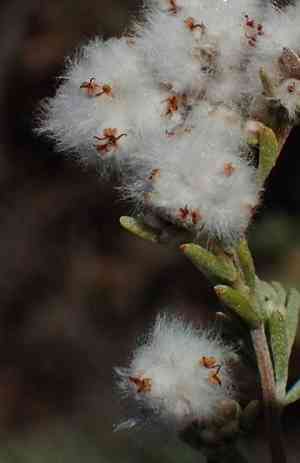
Eriocephalus capitellatus (Eriocephalus capitellatus)
Also known as: Cape Snow Bush
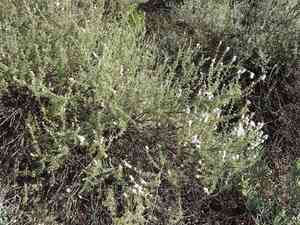
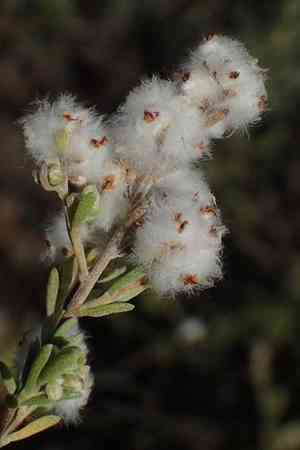
Eriocephalus capitellatus is a resilient shrub native to arid environments, where its silvery-white foliage and cottony texture help to reflect harsh sunlight and conserve moisture. It sports compact flower heads, capitulum type, from which it derives part of its Latin name. This plant is well adapted to survive with minimal water, thriving in sandy soils.
In This Article
Attributes of Eriocephalus capitellatus
Lifespan
Perennial
Plant Type
Shrub
Plant Height
0.5 to 1 meter
Spread
0.5 to 1 meter
Leaf Color
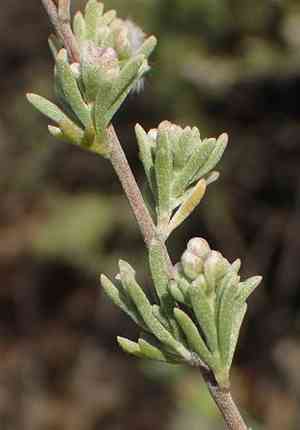
Grey-green, covered with white hairs
Flower Size
0.5 to 1 cm
Flower Color
White
Images of Eriocephalus capitellatus
Quickly Identify Eriocephalus capitellatus
1
To identify Eriocephalus capitellatus, look for its distinctive white, woolly foliage and clustered, small white flowers. The leaves are small, narrow, and covered with fine white hairs.
Scientific Classification of Eriocephalus capitellatus
Phylum
Vascular plants
Class
Dicotyledons
Order
Asterales
Family
Daisy
Genus
Wild rosemary
Species
Eriocephalus capitellatus
Planting and Growing of Eriocephalus capitellatus
Care Difficulty
Moderate
Watering Schedule
Every 2 days
Sunlight Requirements
Full sun
Sunshine Duration
4-8 hours
Ideal Temperature
60-75℉
Soil Type
Potting Mix, Peat Mix
Soil pH
6.5-7.5
Fertilizer Type
Balanced
Pruning Season
Spring, Summer
Pruning Area
Branches, Leaves
Pruning Frequency
2 times a year
Repotting Season
Spring
Pot Type
Ceramic, Plastic
 How to Water Eriocephalus capitellatus?
For Eriocephalus capitellatus, an ideal watering session involves about 200 milliliters each time. This amount ensures that the soil remains moist but not waterlogged, allowing the roots to absorb necessary moisture without being submerged. The key is to water until the water just begins to seep through the drainage holes of the pot.
What are the symptoms of an underwatered Eriocephalus capitellatus?
›
What should I do if my Eriocephalus capitellatus is not getting enough water?
›
What are the symptoms of an overwatered Eriocephalus capitellatus?
›
How to save an overwatered Eriocephalus capitellatus?
›
 What Are the Sunlight Requirements for Eriocephalus capitellatus?
Eriocephalus capitellatus thrives best in full sun to partial sun conditions. Consistent exposure within this range ensures healthy growth and vibrant flowering, as it maximizes the plant's photosynthetic efficiency while minimizing stress.
Question 1: What is the optimal lighting for Eriocephalus capitellatus?
›
Question 2: How can one ensure ideal lighting throughout the seasons?
›
Question 3: What are the benefits of achieving ideal lighting conditions?
›
 What Is the Ideal Temperature Range for Eriocephalus capitellatus?
The ideal temperature range for Eriocephalus capitellatus is between 60°F to 75°F. Within this range, the plant can photosynthesize efficiently and maintain healthy growth. Temperatures above or below this range can place stress on the plant, affecting its development and vigor.
 What Soil is Best for Eriocephalus capitellatus?
Eriocephalus capitellatus thrives in well-draining soil, which prevents water from pooling around its roots, thereby reducing the risk of root rot. This condition ensures that the roots receive adequate oxygen, promoting healthy growth and robust flowering. While not overly fussy about nutrients, Eriocephalus capitellatus benefits from a soil rich in organic matter. This helps provide essential nutrients that fuel its growth and flowering capabilities, ensuring a lush appearance and sustained plant health. The plant prefers soil that retains some moisture but does not stay soggy. This balance is crucial for maintaining the plant's hydration while preventing overwatering issues that could lead to detrimental conditions like fungal infections.
 How to Fertilize Eriocephalus capitellatus?
For Eriocephalus capitellatus, use a balanced liquid fertilizer diluted to half strength. Apply about 100 ml per plant to avoid over-fertilization while ensuring nutrient uptake.
 How to Prune Eriocephalus capitellatus?
Start by using sharp, clean shears to trim back any dead or damaged stems at the base. This encourages new growth and helps prevent the spread of disease. Focus on maintaining an open center to allow sunlight to penetrate and air to circulate. Trim the plant to maintain its natural shape, following the growth habit. Remove leggy stems to encourage bushier regrowth. The goal is to have a balanced plant with no cross-branching, which may lead to rubbing and injury.
More About Pruning Techniques→
 How to Propagate Eriocephalus capitellatus plant?
1
Start with fresh seeds for better germination rates. Soak the seeds overnight to help soften the seed coat, which can enhance sprouting success.
2
Choose non-flowering stems and cut about 10-15 cm in length. Ensure the cutting is from healthy, vigorous plants to increase the likelihood of successful rooting.
3
Dip the cut end in rooting hormone to accelerate root development. Plant the cutting in well-draining soil, and keep it moist but not waterlogged.
 How to Repot Eriocephalus capitellatus plant?
1
Monitor Eriocephalus capitellatus for signs such as roots emerging from the drainage holes, compacted soil, or slowed growth. If any of these indications appear, it's a good time to consider repotting to allow more room for root expansion.
2
Choose a pot that is slightly larger than the current one, ideally one size up to prevent overwatering issues. The chosen pot should have ample drainage holes to facilitate water flow and prevent root rot, ensuring the plant thrives.
3
Opt for a well-draining, sandy soil mix that mimics the plant's natural environment. Good drainage is crucial to prevent water logging. The soil should retain enough moisture for the plant's needs while ensuring excess water flows away quickly.
Learn More About Eriocephalus capitellatus Diseases
Anthracnose
Bacterial Leaf Spot
Bacterial Soft Rot
Bacterial Wilt
Black Spot
Chemical Injury
Crown Gall
Cyst Nematode
Damping-off
Downy Mildew
Drought Stress
Fusarium Wilt
Gray Mold
Leaf Curl
Leaf Spot
Mosaic
Nutrient Deficiency
Nutrient Toxicity
Powdery Mildew
Root Rot
Root-knot Nematode
Rusts
Sooty Mold
Spider Mites
Temperature Stress
Thrips Damage
White Mold



