How to Propagate Japanese persimmon?
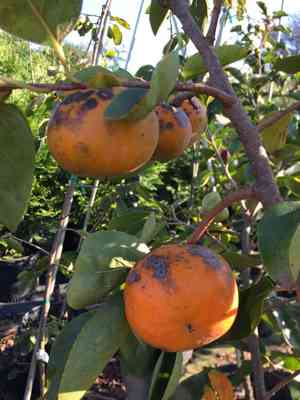
For Japanese persimmon, the favored propagation techniques involve grafting and air layering, best performed in the spring and winter periods. This procedure presents a moderate challenge, with successful outcomes evidenced by fresh shoots and well-developed root structures. Precise timing of the grafting operation is essential for achieving the best results.
Optimal Time for Japanese Persimmon Propagation
Propagation Method
Grafting
Propagation Period
Spring,Winter
Tools for Japanese Persimmon Propagation
Grafting Knife
A sharp, robust grafting knife is essential for making precise cuts on japanese persimmon scion and rootstock. Its slender blade ensures clean incisions, minimizing tissue damage and boosting the likelihood of a successful graft union.
Grafting Tape
Grafting tape secures the japanese persimmon scion and rootstock firmly together. This flexible material offers support while allowing the grafted area to expand during healing and growth, crucial for maintaining vascular connection.
Pruning Shears
Pruning shears prepare the japanese persimmon rootstock for grafting. They create clean, straight cuts, vital for proper alignment of cambial layers, leading to a successful graft union.
Rubber Grafting Bands
Rubber grafting bands offer extra support to the grafted joint of japanese persimmon, ensuring tight contact without applying excessive pressure, which could harm the graft site.
Rooting Hormone (optional)
If propagating japanese persimmon via cuttings in conjunction with grafting, a rooting hormone can stimulate root development. Applying it to the base of cuttings can improve root growth and establishment.
Healing Compound
Applying a healing compound to the japanese persimmon graft site protects against pathogens and desiccation as the graft union forms. It promotes quicker healing and increases grafting success rates.
Budding Strips
For bud grafting of japanese persimmon, budding strips hold the bud in place against the rootstock. These specialized strips ensure the bud remains secure for optimal vascular fusion.
Caring for Your Newly Propagated Japanese Persimmon
Caring for Your Newly Propagated Japanese Persimmon
Care for the grafted japanese persimmon by providing adequate water, avoiding both waterlogging and drought. Protect the young graft from extreme temperatures and direct sunlight. Use protective structures like shade cloth if needed. Monitor for signs of disease or pests, and apply appropriate treatments. Provide support for the growing graft if necessary, and remove any sprouts or suckers from the rootstock to direct energy towards the grafted scion's development. As the graft strengthens and begins to grow, gradually acclimate it to less protective conditions and begin training and pruning to encourage a strong, balanced structure for fruit production.
Common Errors to Avoid When Propagating Japanese Persimmon
Incorrect cutting selection
Gardeners might choose softwood cuttings or non-woody parts of japanese persimmon, leading to poor rooting and propagation failure. The semi-hardwood section of the plant is more suitable for cuttings, as it balances flexibility with the necessary woody structure.
Inadequate rooting medium
Using a medium that is too dense or poorly draining can result in waterlogged conditions that promote rot. Japanese persimmon requires a well-draining and aerated medium to facilitate proper root formation without causing rot.
Poor moisture management
Overwatering or underwatering during the rooting phase can be detrimental. While consistent moisture is crucial, the unique water needs of japanese persimmon must be met without causing water stress or root rot.
Neglecting temperature control
Ignoring the warm temperatures preferred by japanese persimmon during its rooting period can slow or halt the rooting process. Consistent warmth is vital for encouraging root growth in this species.
Tips For Propagating Japanese Persimmon
Semi-hardwood cuttings
Use semi-hardwood cuttings from mature, healthy branches. These should be taken from vigorous sections of japanese persimmon and measure approximately 6-8 inches with several leaf nodes present to ensure successful rooting.
Use rooting hormones
Applying rooting hormones to the cut ends of the cuttings can significantly enhance root development, increasing the chances of successful propagation for japanese persimmon.
Prepare proper medium
Employ a light, sterile, and well-draining propagation mix, such as a combination of peat, perlite, and sand, to provide the ideal rooting environment for japanese persimmon.
Regulate moisture and humidity
Maintain the japanese persimmon cuttings in a consistently moist (but not soggy) medium, and enclose the growing area with a plastic cover to keep humidity levels high. Be vigilant about ventilation to prevent mold and rot.
Provide bottom heat
Supplying gentle bottom heat can help japanese persimmon's cuttings develop roots more quickly and efficiently. A propagation heating mat or another heat source can maintain an optimal temperature for root growth.



