How to Propagate Houghton's flatsedge?
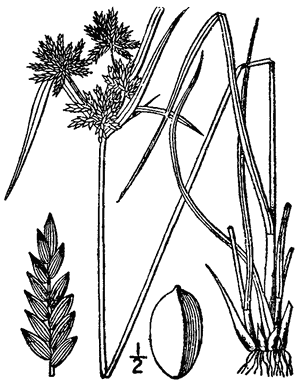
Houghton's flatsedge, a perennial sedge found in damp or sandy environments, can be multiplied by dividing its root ball. When performing division, select robust, established clusters, splitting them into smaller portions while preserving the root structure to facilitate quick rooting. Utilize a growing medium that drains effectively, providing regular moisture without oversaturation. This technique guarantees vigorous development and expansion, helping to sustain the plant's ecological benefits and visual appeal.
When Is the Best Time to Multiply Houghton's Flatsedge?
Propagation Type
Division
Propagation Season
Spring,Autumn
What Implements Are Used for Houghton's Flatsedge Propagation?
Garden Spade
Utilized for excavating and separating mature houghton's flatsedge clumps, a garden spade assists in cleanly cutting through the root mass without harming the plant. A spade with a slender blade is especially beneficial for precision and ease during separation.
Sharp Knife/Pruners
Crucial for severing roots and rhizomes. A clean, sharp knife or pruners guarantees precise cuts, lowering the risk of disease spread and fostering quicker recovery and more robust regrowth of houghton's flatsedge.
Rooting Hormone
Aids in stimulating root development in the divided sections. Applying rooting hormone to the cuts can boost root formation and increase the propagation success rate for houghton's flatsedge.
Watering Can/Sprayer
Ensures newly separated plants receive sufficient water, as consistent moisture is vital for the establishment of houghton's flatsedge. A fine mist can prevent soil disturbance and guarantee even moisture distribution.
Potting Trays/Containers
Used to hold the freshly divided segments. Containers should possess good drainage to prevent waterlogging, which is particularly important for houghton's flatsedge's root health.
Sterilizing Solution
Employed to sanitize tools before and after use to prevent pathogen transmission. Ensuring tools are disinfected is critical for maintaining the health of houghton's flatsedge during and after propagation.
Garden Gloves
Offers hand protection during the digging and dividing process. Durable gloves prevent injury and help maintain cleanliness while handling houghton's flatsedge.
Mulch
Helps retain moisture around new divisions and suppresses weed growth. Applying mulch around the base of houghton's flatsedge after planting can support healthy growth conditions.
How to Propagate Houghton's Flatsedge?
Propagation Type
Easy
How to Care for Your Newly Propagated Houghton's Flatsedge?
How to Care for Your Newly Propagated Houghton's Flatsedge?
Following propagation, houghton's flatsedge requires consistent attention to flourish. Keep the soil uniformly moist but not saturated; houghton's flatsedge prefers damp conditions. Fertilize sparingly with a balanced, water-soluble fertilizer monthly during the active growth period. Regularly inspect for pests and diseases and act promptly if detected. Ensure plants are not too crowded to promote good air circulation, which helps prevent fungal issues.
Common Errors to Avoid When Propagating Houghton's Flatsedge
Overwatering
Excessive irrigation can lead to root decay and fungal proliferation, negatively impacting the plant's vitality and development.
Poor Soil Drainage
Planting in inadequately drained soil can suffocate roots and encourage disease, resulting in weak or stunted plant growth.
Insufficient Light
Inadequate illumination can impede photosynthesis, leading to feeble and elongated plants with poor growth and propagation success.
Improper Temperature
Planting in temperatures that are either too low or too high can hinder growth and reduce the plant's ability to establish roots effectively.
Advice For Propagating Houghton's Flatsedge
Optimal Watering
Provide adequate moisture without saturating the soil, ensuring the growing medium drains well to prevent root rot.
Well-Draining Soil
Utilize sandy or loamy soil that provides good drainage and aeration, enhancing root health and growth.
Adequate Light
Ensure the plant receives sufficient indirect sunlight, which is crucial for photosynthesis and overall growth.
Appropriate Temperature
Maintain a stable and suitable temperature range to encourage root development and plant vigor.



