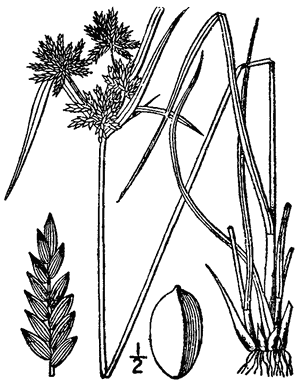
Houghton's flatsedge (Cyperus houghtonii)
Also known as: Houghton's Flatsedge
Houghton's flatsedge is a perennial plant characterized by its slender, grass-like stems and distinctive tufted clusters at the top, which resemble small umbrellas. These clusters contain bristly spikelets arranged around the stem. It thrives in wetlands such as marshes, bogs, and wet meadows, where it is well-adapted to waterlogged soils. This adaptation helps it filter water and maintain stability in the fluctuating conditions of marshy environments.
In This Article
Attributes of Houghton's flatsedge
Lifespan
Perennial
Plant Type
Grass
Plant Height
30-60 cm (1-2 feet)
Spread
Not applicable; sedges do not form typical \'crowns\'
Leaf Color
Green Blue
Flower Size
Approximately 2-3 mm
Flower Color
Yellow Green Brown
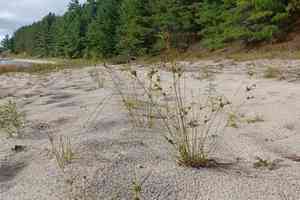
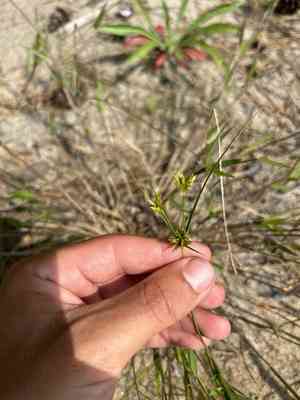
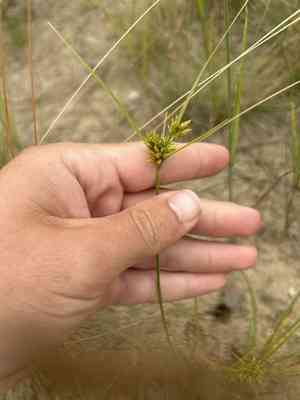
Images of Houghton's flatsedge
Quickly Identify Houghton's flatsedge
1
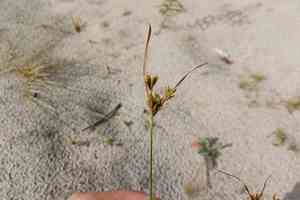
Cyperus houghtonii can be identified by its slender, triangular stems and its inflorescence, which consists of small clusters of flowers surrounded by bracts. The plant also has a characteristic habit of forming dense colonies in sandy soil.
Scientific Classification of Houghton's flatsedge
Phylum
Vascular plants
Class
Monocotyledons
Order
Poales
Family
Sedge
Genus
Nutgrasses
Species
Houghton's flatsedge
Planting and Growing of Houghton's flatsedge
Care Difficulty
Moderate
Watering Schedule
Every 4 days
Sunlight Requirements
Partial sun
Sunshine Duration
4-8 hours
Ideal Temperature
60-75℉
Soil Type
Potting Mix, Peat Mix
Soil pH
6.5-7.5
Fertilizer Type
Balanced
Pruning Season
Spring, Summer
Pruning Area
Branches, Leaves
Pruning Frequency
2 times a year
Repotting Season
Spring
Pot Type
Terracotta, Plastic
 How to Water Houghton's flatsedge?
For Cyperus houghtonii, water thoroughly until the soil is evenly moist but not waterlogged. Allow the top inch of soil to dry out before the next watering. This plant prefers consistent moisture but not constant saturation.
What are the symptoms of an underwatered Houghton's flatsedge?
›
What should I do if my Houghton's flatsedge is not getting enough water?
›
What are the symptoms of an overwatered Houghton's flatsedge?
›
How to save an overwatered Houghton's flatsedge?
›
 What Are the Sunlight Requirements for Houghton's flatsedge?
Partial sun exposure is ideal, allowing for sufficient light absorption while protecting the plant from excessive heat. This balance promotes healthy growth and ensures optimal nutrient synthesis.
What is the optimal location for Cyperus houghtonii?
›
How can I provide partial sun conditions indoors?
›
How does achieving the right light affect growth?
›
 What Is the Ideal Temperature Range for Houghton's flatsedge?
Cyperus houghtonii thrives best in temperatures ranging between 60°F and 75°F. This range allows the plant to maintain optimal physiological functions, enabling it to grow and reproduce effectively. These temperatures also help in maximizing photosynthesis, thus ensuring the plant receives sufficient energy for growth.
 What Soil is Best for Houghton's flatsedge?
Cyperus houghtonii thrives in well-draining soil, which prevents waterlogging that can lead to root rot. Well-drained conditions ensure the roots receive enough oxygen, promoting healthier growth and better nutrient uptake. While tolerant, Cyperus houghtonii prefers soils enriched with organic matter. This boosts soil fertility and contributes to robust plant development. Organic matter provides essential nutrients, improving plant vigor and resilience against pests. Though tolerant of drier conditions, this plant benefits from soil that maintains moderate moisture levels. Consistent moisture availability aids in steady growth and prevents stress during dry spells, encouraging lush foliage.
 How to Fertilize Houghton's flatsedge?
For Cyperus houghtonii, it's recommended to apply a balanced, all-purpose fertilizer at a concentration of half the usual amount. Excessive amounts can lead to root damage or nutrient burn, so moderation is key.
 How to Prune Houghton's flatsedge?
Use sharp, sterilized pruning shears to ensure clean cuts and minimal damage to the plant. This reduces the risk of disease transmission during the pruning process. Focus on removing dead or brown leaves and stems. This opens up the plant, allowing light and air to reach healthy parts, which is essential for photosynthesis and overall plant vitality. Carefully trim back unwanted growth close to the base, ensuring not to damage the main structure of the plant. This encourages new, stronger growth to emerge from the base.
 How to Propagate Houghton's flatsedge plant?
1
Begin by collecting mature seeds from a healthy Cyperus houghtonii plant. Ensure seeds are fully dry before storing them in a cool, dry place until ready for planting.
2
Use a well-draining potting mix to fill seedling trays. Make small indentations in the soil for each seed, approximately 5 mm deep, and cover with a thin layer of soil.
3
For division propagation, carefully remove the plant from its pot and gently separate the root ball into smaller clumps, ensuring each has sufficient roots and shoots.
 How to Repot Houghton's flatsedge plant?
1
Cyperus houghtonii shows signs for repotting when growth slows down significantly, or the roots start to emerge through the drainage holes. It's imperative to choose a time near the start of its active growth phase for optimal recovery and reinforcement of new growth.
2
Select a pot that is one to two inches larger in diameter than the current container. This allows sufficient space for root expansion without overwhelming the plant with excess soil moisture. A pot with multiple drainage holes is optimal to prevent waterlogging.
3
Opt for a well-draining sandy loam soil mix to mimic the plant’s natural habitat. This type of soil allows for adequate moisture retention while ensuring excess water drains efficiently, thus preventing root rot and supporting robust root health.
Learn More About Houghton's flatsedge Diseases
Anthracnose
Bacterial Leaf Spot
Bacterial Soft Rot
Cyst Nematode
Damping-off
Downy Mildew
Drought Stress
Fusarium Wilt
Gray Mold
Leaf Spot
Mosaic
Nutrient Deficiency
Nutrient Toxicity
Powdery Mildew
Root Rot
Root-knot Nematode
Rusts
Sooty Mold
Spider Mites
Temperature Stress
Thrips Damage
White Mold
Chemical Injury



