How to Propagate Hedge cactus?
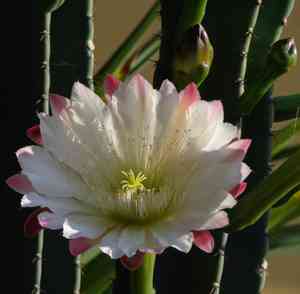
Propagating the hedge cactus is most effectively achieved via cuttings, a simple and gratifying technique. Cultivators ought to choose a robust stem and execute a precise incision. Permit the severed piece to air-dry for several days to develop a protective layer, which assists in averting decay upon planting. After callusing, insert the cutting into a well-draining substrate, usually a specialized cactus or succulent mixture, and irrigate sparingly until root formation occurs. Regular yet measured watering contributes to the successful rooting of the hedge cactus. This method encourages vigorous development, guaranteeing the new hedge cactus replicates the attributes of the original plant.
Optimal Time for Hedge Cactus Propagation
Propagation Method
Cuttings
Propagation Period
Spring,Summer
Tools Required for Hedge Cactus Propagation
Sharp, sterilized pruning shears or knife
These implements are vital for making clean cuts on hedge cactus segments. A precise cut prevents tissue damage and lowers the chance of disease. Sterilizing the tool stops pathogen transfer that could hinder rooting and growth.
Rooting hormone powder or gel
Applying rooting hormone to the cut ends of hedge cactus can significantly boost root development during propagation. This substance encourages root growth at the cutting site, improving the success rate of the cutting taking root and subsequently growing into a healthy new plant.
Clean, coarse-grained sand or a well-draining potting mix
This medium offers essential support and drainage for new hedge cactus cuttings. It prevents waterlogging, which is crucial to avoid new root rot. The coarse texture allows for better air circulation around the roots, critical for their development and health.
Pots or trays with drainage holes
Proper drainage is critical for the successful rooting of hedge cactus cuttings. Containers with drainage holes ensure excess water can escape, which helps prevent issues like root rot and fungal growth, both of which could destroy new cuttings before they establish.
Plastic bags or a humidity dome
Maintaining a high humidity environment benefits hedge cactus cuttings as they develop roots. Covering pots or trays with plastic bags or using a humidity dome helps retain air moisture, mimicking humid conditions that aid in promoting better root growth and survival rates in new plants.
How to Propagate Hedge Cactus?
Propagation Difficulty
Simple
Post-Propagation Care for Your Hedge Cactus
How to Care for Your Newly Propagated Hedge Cactus?
After propagation, position hedge cactus in a spot receiving several hours of direct sunlight daily. Maintain minimal yet consistent watering â allowing the soil to completely dry between waterings to prevent rot. Additionally, provide a balanced cactus fertilizer during the growing season to support healthy growth. Avoid high humidity to minimize fungal disease risk.
Common Errors to Avoid When Propagating Hedge Cactus
Excessive watering of cuttings
Gardeners often water propagating hedge cactus cuttings as they would a mature plant. Overwatering can lead to rot, especially in the delicate state when roots are trying to form.
Cutting size
Using hedge cactus cuttings that are too large or too small can impede successful propagation. Inadequate size can disrupt the balance of resources needed for rooting and growth.
Unsuitable soil
Employing soil that retains too much moisture or lacks adequate drainage can be detrimental to hedge cactus propagation, as it may cause root rot and fungal growth.
Neglecting cleanliness
Not sterilizing cutting tools or pots can introduce harmful pathogens to hedge cactus cuttings, increasing the risk of disease during the sensitive propagation period.
Advice for Propagating Hedge Cactus
Correct cutting technique
Ensure hedge cactus cuttings are taken with a clean, sharp tool to promote healthy rooting and prevent disease. The ideal cutting should be 4-6 inches long and have a few nodes present.
Callousing cuttings
Allow hedge cactus cuttings to callous over for a few days before planting to reduce chances of rot, as this creates a natural seal over the cut surface.
Well draining soil
Use a well-draining soil mix specifically formulated for cacti to foster root development for hedge cactus without retaining excessive moisture.
Moderate watering
Water the hedge cactus cuttings sparingly, only when the soil is dry to the touch, to prevent overwatering and promote successful root formation.



