How to Propagate Dioecious sedge?
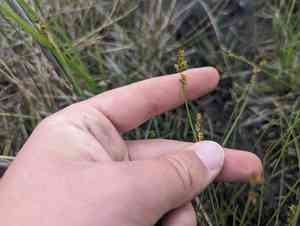
Dioecious sedge flourishes when multiplied through separation, a simple technique well-suited for this particular variety. For successful establishment, divide the root mass into segments, ensuring each possesses robust roots and emerging stems. Gently transplant these portions into damp earth, replicating their natural surroundings for peak growth. Consistent irrigation is vital to aid the integration of newly placed segments.
When Is the Optimal Time to Propagate Dioecious Sedge?
Propagation Method
Division
Propagation Period
Spring,Autumn
What Implements Are Utilized in Dioecious Sedge Propagation?
Garden Trowel
A garden trowel is crucial for excavating and separating the root masses of dioecious sedge. Its slender blade is perfect for carefully maneuvering through the soil surrounding the roots, minimizing harm to the plant. During the division process, the trowel's precision aids in efficiently detaching the roots while preserving their integrity, which is vital for successful dioecious sedge propagation.
Rooting Hormone
Rooting hormone can be employed to boost the root growth of dioecious sedge following division. Applying rooting hormone to the cut surfaces of the roots accelerates the development of new root tissues and assists in establishing divisions more effectively. This is particularly important as dioecious sedge requires a robust root system to flourish after transplantation.
Pruning Shears
Pruning shears are used to clean and trim the roots of dioecious sedge during division. Sharp, clean cuts are necessary to prevent disease and encourage healthier, faster regrowth. Shears should be disinfected before use to prevent the transmission of pathogens to the newly propagated dioecious sedge.
Watering Can with Fine Rose
After planting the divisions of dioecious sedge, gentle irrigation is necessary. A watering can equipped with a fine rose attachment ensures a soft, even distribution of water that does not disturb the soil or newly planted divisions. Sufficient water is essential for promoting root establishment in their new location.
Plant Labels and Marker
Utilizing plant labels assists in monitoring the growth and varieties of dioecious sedge post-propagation. Markers used should be weather-resistant to withstand various environmental conditions. Labeling is crucial for proper care and oversight of each division, ensuring that specific requirements are met during subsequent growth phases.
How to Propagate Dioecious Sedge?
Propagation Difficulty
Easy
How to Care for Your Newly Propagated Dioecious Sedge?
How to Care for Your Newly Propagated Dioecious Sedge?
Following propagation, dioecious sedge demands continuous care to establish successfully and thrive. Ensure the plant receives adequate moisture, especially during dry spells, but avoid waterlogging which can lead to root rot. Position dioecious sedge in a location that mimics its natural habitat, typically somewhere with partial to full sunlight. It's also beneficial to apply a layer of mulch around the base to retain soil moisture and suppress weeds. Monitor for pests or diseases and treat accordingly to keep dioecious sedge healthy.
Common Errors to Avoid When Propagating Dioecious Sedge
Disregarding soil type
Using unsuitable soil types for dioecious sedge can result in poor root development and waterlogging. The specific requirements of dioecious sedge necessitate well-aerated, moisture-retentive but not excessively wet soils, which if not followed, impairs growth and survival.
Overcrowding plants
Planting dioecious sedge's propagules or divisions too closely can restrict air circulation and nutrient availability. This can lead to weaker plants that are more vulnerable to diseases and stunted growth.
Excessive watering
While dioecious sedge flourishes in moist environments, overwatering during propagation can cause root rot and fungal infections, significantly reducing propagation success.
Advice For Propagating Dioecious Sedge
Use of sharp tools
When dividing dioecious sedge, it is crucial to use sharp, clean tools to make precise cuts. This prevents damage to the plant tissues, promoting healthier, quicker recovery and growth after propagation.
Maintaining moisture levels
Ensuring the soil remains consistently moist but not waterlogged is vital for dioecious sedge. This balances the need for adequate water without risking root diseases common in overly saturated soils.
Adequate spacing
When planting divisions or seedlings of dioecious sedge, sufficient spacing is essential. It ensures ample sunlight and airflow around each plant, fostering stronger growth and reducing competition for resources.



