How to Propagate Crawe's sedge?
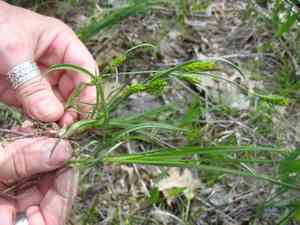
Crawe's sedge belongs to the Cyperaceae botanical group, frequently encountered in damp grasslands and marshy areas. Reproduce this plant by separating established, robust clusters, making sure every segment retains its root system. A humid, adequately draining substrate with partial to complete sun exposure is optimal. Sufficient irrigation and ground cover application can improve root development. Before transplanting divisions, remove any impaired roots or leaves. Refrain from planting in excessively crowded groupings to avert rivalry for nutrients.
When Is the Optimal Time to Propagate Crawe's Sedge?
Propagation Method
Division
Propagation Period
Spring,Autumn
What Implements Are Utilized for Crawe's Sedge Propagation?
Garden Spade or Shovel
These implements are crucial for excavating crawe's sedge clumps for separation. A garden spade is especially effective due to its sharp edge, which allows for clean root cuts without excessive plant damage.
Hori Hori Knife or Garden Knife
A Hori Hori knife or a comparable sharp garden knife is employed to meticulously divide crawe's sedge clumps. Its serrated edge is advantageous for slicing through dense, fibrous root masses without tearing or crushing them.
Garden Fork
This implement aids in gently extracting crawe's sedge clumps from the soil, preventing root harm. It excels at aerating and loosening the soil surrounding the plant, making the uprooting process less traumatic for the roots.
Pruning Shears
Pruning shears are used to trim any damaged or overly long roots prior to replanting. This tool ensures that new divisions have a greater chance of rapid establishment by fostering healthy root growth.
Rooting Hormone
While typically for cuttings, a rooting hormone can be beneficial in crawe's sedge division by stimulating root development and lessening transplant shock in new divisions.
Watering Can with Fine Rose
A watering can with a fine rose is used to gently irrigate newly divided and transplanted crawe's sedge, keeping the soil moist without dislodging or eroding soil around the young roots.
Mulch
Applying mulch around newly planted crawe's sedge divisions helps retain soil moisture, regulate soil temperature, and suppress weeds, all vital for the successful establishment of the new plants.
How to Propagate Crawe's Sedge?
Propagation Difficulty
Easy
How to Nurture Your Newly Propagated Crawe's Sedge?
How to Nurture Your Newly Propagated Crawe's Sedge?
Post-propagation, maintain consistent soil moisture without waterlogging. Apply a balanced, slow-release fertilizer once new growth emerges. Position crawe's sedge in a location receiving partial to full sun. During the initial growing season, shield young plants from harsh conditions like strong winds or direct midday sun. Mulch around plants to retain moisture and deter weeds, and monitor for pests or diseases.
Common Errors to Avoid When Propagating Crawe's Sedge
Inappropriate soil conditions
Utilizing soil that is too dense or poorly draining can lead to root rot and stunted growth.
Excessive watering
Overwatering can cause roots to suffocate and decay, leading to a decline in plant health.
Incorrect light exposure
Providing too much direct sunlight or placing crawe's sedge in excessive shade can impede growth and propagation success.
Neglecting soil moisture
Allowing the soil to completely dry out can harm delicate roots and hinder seedling development.
Overcrowding seedlings
Planting too many seeds or seedlings in close proximity can result in competition for nutrients and space, leading to weaker plants.
Advice For Propagating Crawe's Sedge
Utilize well-draining soil
Ensure the soil is light and drains effectively to prevent waterlogging and support robust root development.
Monitor irrigation
Water crawe's sedge consistently but avoid creating saturated conditions; the soil should remain moist but not waterlogged.
Provide partial sunlight
Position crawe's sedge where it receives indirect sunlight or partial shade to mimic its natural environment.
Maintain consistent soil moisture
Regularly check soil moisture and irrigate when the top layer begins to dry, maintaining a balanced moisture level.
Properly space seedlings
Allow each seedling ample room to grow by planting them sufficiently apart, reducing competition and fostering strong development.



