How to Propagate Long strap fern?
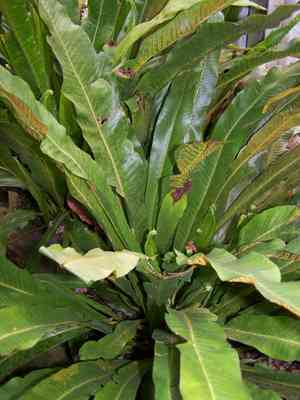
Long strap fern flourishes when reproduced via sections, a technique perfectly suited for this variety. To foster effective root development, sustain elevated humidity and subdued illumination, environments that mimic its natural surroundings. Employ a porous, organic-rich growing medium to support early development. Sanitize your implements prior to collecting sections to avert pathogen spread, and confirm the sections originate from robust, established specimens for optimal outcomes.
Optimal Time for Long Strap Fern Propagation
Propagation Method
Cutting
Propagation Period
Spring,Summer
Tools for Long Strap Fern Propagation
Sharp Pruning Shears
Crucial for obtaining clean and precise cuttings from long strap fern, sharp pruning shears minimize harm to the parent plant and boost the likelihood of successful rooting. A clean cut reduces infection risk, promoting healthier propagation.
Rooting Hormone
Applying a rooting hormone to the freshly cut ends of long strap fern's cuttings promotes root development. The hormone accelerates root growth more rapidly and effectively, supporting the health and vitality of new plants. Especially beneficial for a weak-rooting species like long strap fern.
Sterile Potting Mix
Utilizing a sterile potting mix helps prevent diseases during the critical initial growth phases for long strap fern's cuttings. A well-draining and nutrient-balanced mix supports strong root development without retaining excessive moisture, which could lead to rot.
Humidity Dome
Creating a microenvironment with a humidity dome maintains consistent and high moisture levels around long strap fern's cuttings, helping to prevent water loss through leaves. This is vital for cuttings before they develop roots and can absorb water independently.
Heat Mat
A heat mat can be positioned beneath the propagation tray to maintain an ideal soil temperature, encouraging quicker and more successful rooting for long strap fern. Consistent, gentle bottom heat can significantly enhance root development rates.
Small Watering Can with a Fine Rose
Delivers gentle watering that does not disturb the soil or newly planted cuttings of long strap fern. Using a watering can with a fine rose helps maintain consistent moisture levels, essential for cuttings to develop roots without being dislodged or overwatered.
How to Propagate Long Strap Fern?
Propagation Type
Easy
Caring for Your Newly Propagated Long Strap Fern
Caring for Your Newly Propagated Long Strap Fern
Post-transplantation, ensure consistent moisture for long strap fern, preventing the soil from ever completely drying out. Position in an area with indirect light and high humidity. Regularly remove any dead fronds to encourage healthy growth and air circulation. Fertilize semi-annually with a balanced, water-soluble fertilizer diluted to half-strength to avoid over-fertilization.
Common Mistakes to Avoid When Propagating Long Strap Fern
Overwatering
Excessive watering can cause root rot in long strap fern, as its roots require well-draining conditions. Too much moisture hinders proper root aeration, leading to fungal issues and reduced plant health.
Using compact soil
Long strap fern needs a loose, well-aerated growing medium to allow for proper root expansion and development. Using dense or compact soil can restrict root movement and decrease the oxygen flow vital for healthy growth.
Insufficient humidity
Long strap fern thrives in high humidity environments. Low humidity levels can cause the fronds to dry out and turn brown at the edges, negatively impacting plant vigor and aesthetic appeal.
Tips For Propagating Long Strap Fern
Division of rhizome
Carefully dividing the rhizome ensures successful propagation of long strap fern. Make sure each division has at least one healthy frond and part of the root system for optimal growth.
Appropriate substrate
Use a substrate mix that mimics long strap fern's natural growing conditions, such as a blend of peat, perlite, and bark. This mixture improves drainage and retains adequate moisture without becoming waterlogged.
Maintain high humidity
Maintain a high humidity environment when propagating long strap fern to mimic its natural habitat. This can be achieved by placing the plant in a humidity tray or using a humidity dome until the plant is well established.



