How to Propagate Adriatic bellflower?
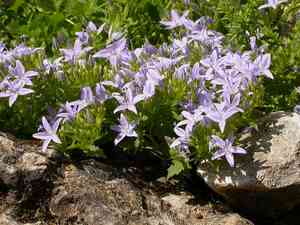
Campanula muralis flourishes in soil that drains effectively and needs steady hydration without becoming saturated. To multiply Campanula muralis through seeding, utilize newly harvested seeds and initiate the process indoors for the best sprouting results. Gently conceal the seeds with a fine stratum of earth. Sustaining a warm atmosphere contributes to successful growth. After the young plants produce several leaves, they are ready for outdoor relocation, progressively acclimating them to either full sunlight or dappled shade.
Optimal Period for Adriatic Bellflower Propagation
Propagation Method
Seeding
Propagation Period
Spring
Tools Utilized for Adriatic Bellflower Propagation
Seed Trays
Seed trays offer a regulated setting for planting adriatic bellflower seeds. They assist in sustaining ideal conditions for sprouting and initial development.
Seed Starting Mix
A premium seed starting mix provides a well-draining and nutrient-dense medium crucial for the delicate root systems of adriatic bellflower seedlings.
Mist Sprayer
A mist sprayer guarantees gentle and uniform hydration of adriatic bellflower seeds and young plants without disturbing the soil or seeds.
Transparent Humidity Domes
Humidity domes preserve moisture and warmth, establishing a microclimate favorable for adriatic bellflower germination.
Heating Mat
A heating mat supplies bottom warmth, which is essential for maintaining the consistent soil temperature required for adriatic bellflower seed germination.
Labels and Markers
Labels and markers aid in distinguishing various sowing dates and seed types, tracking the advancement and health of adriatic bellflower during propagation.
Sterile Scalpel or Knife
Utilized for precise cuts during the thinning or relocation of adriatic bellflower seedlings to prevent harm.
Fine Sieved Compost
Applied as a top dressing for seeds to ensure light coverage, which is vital for adriatic bellflower germination.
Pencil or Dibber
A pencil or dibber assists in creating small indentations for planting adriatic bellflower seeds at the correct depth.
How to Propagate Adriatic Bellflower?
Propagation Type
Simple
Caring for Your Newly Propagated Adriatic Bellflower
Caring for Your Newly Propagated Adriatic Bellflower?
Post-germination, thin seedlings to prevent overcrowding. Relocate young plants into individual containers or directly into the garden once robust enough, ensuring ample growth space. Water consistently but avoid saturation. Lightly fertilize during the active growth phase to encourage vigorous development. Ensure plants receive partial to full sunlight and maintain good air circulation to deter mildew and other fungal issues. Regularly inspect for pests and diseases, and prune as needed to promote a bushy habit.
Common Errors to Avoid When Propagating Adriatic Bellflower
Overwatering
Excessive watering can lead to root decay and fungal infections, impeding the plant's growth and vitality.
Improper soil mix
Using dense or clay-rich soil hinders drainage, causing waterlogging and root damage.
Neglecting light requirements
Insufficient or excessive light can stress the plant, reducing its ability to root and flourish.
Incorrect cutting techniques
Using dull tools or making unclean cuts can harm stems, lowering the success rate of rooting.
Poor pest management
Failing to monitor for pests like aphids and snails can result in infestations, severely weakening the plant.
Advice for Propagating Adriatic Bellflower
Use well-draining soil
Ensure the soil mixture drains effectively to prevent waterlogging and foster healthy root development.
Maintain moderate moisture
Keep the soil consistently damp but not waterlogged to support rooting.
Provide adequate light
Position cuttings in bright, indirect light to encourage healthy growth without the risk of scorching.
Ensure clean cuts
Utilize sharp, sterile tools to make precise cuts on stems, increasing the likelihood of successful propagation.
Monitor for pests
Regularly check for and manage pests to safeguard young plants from harm.



