How to Propagate Drummond's rockcress?
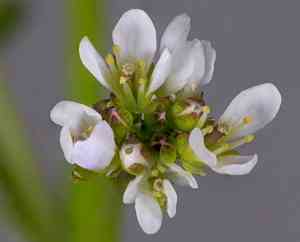
Drummond's rockcress flourishes when reproduced through seeding. For the best outcomes, utilize recently harvested seeds, as these typically exhibit superior sprouting success. Prepare a growing medium that drains effectively, preferably one formulated for alpine flora to replicate the natural stony habitats of drummond's rockcress. Disperse the seeds on the surface and gently embed them into the substrate, given their need for illumination to germinate. Ensure steady hydration and ample airflow to avert seedling blight, a condition that can severely damage young plants.
What Is the Best Time To Propagate Drummond's Rockcress?
Propagation Type
Seeding
Propagation Season
Spring
What Tools Are Used in Drummond's Rockcress Propagation?
Seed trays
Utilized for starting seeds in controlled environments. Seed trays aid in maintaining consistent soil conditions, which is crucial for the germination of drummond's rockcress seeds. Their shallow depth and uniform compartment size allow for easy management of soil moisture and temperature, both vital for successful seed germination.
Sterile potting mix
Crucial for sowing seeds, a sterile potting mix offers a clean, nutrient-controlled medium that lowers the risk of soil-borne diseases affecting drummond's rockcress. This medium supports the delicate roots of new seedlings, fostering healthier growth and development during the initial stages.
Dibber or small planting stick
Employed to create uniform holes in the soil for placing seeds. This tool ensures that seeds are planted at the correct depth, which is particularly important for drummond's rockcress to guarantee optimal germination rates and initial growth stability.
Misting bottle
Used for gently watering soil in seed trays without disturbing the placement and depth of the seeds. Proper hydration is critical during the germination phase of drummond's rockcress, and a misting bottle assists in providing a delicate, even distribution of moisture.
Grow lights (optional)
Beneficial if propagating drummond's rockcress indoors or in low light conditions. Grow lights help mimic natural sunlight, promoting photosynthesis and encouraging healthy growth even in less than ideal light conditions. This tool is particularly important for drummond's rockcress to ensure sufficient light exposure during the critical stages of germination and early seedling growth.
How to Propagate Drummond's Rockcress?
Propagation Type
Simple
How to Care for Your Newly Propagated Drummond's Rockcress?
How to Care for Your Newly Propagated Drummond's Rockcress?
Following successful propagation, relocate the young drummond's rockcress plants to a sunny spot with well-drained soil. Water them regularly, but ensure the soil isn't waterlogged. Fertilize sparingly with a balanced, low-nitrogen fertilizer. Shield the plants from extreme weather and pests as they become established.
Common Mistakes to Avoid When Propagating Drummond's Rockcress
Overwatering
Excessive moisture can lead to root rot and fungal infections, jeopardizing the health and viability of drummond's rockcress.
Deep planting of seeds
Planting seeds too deeply can impede germination as drummond's rockcress seeds require light for optimal growth.
Ignoring soil composition
Using an unsuitable soil mix can hinder proper drainage and aeration, which are crucial for the root health of drummond's rockcress.
Crowding seedlings
Planting drummond's rockcress seedlings too close together can restrict their access to sunlight and nutrients, stunting their growth.
Tips For Propagating Drummond's Rockcress
Use a light seed mix
Employ a well-draining, light seed mix to encourage healthy root development and prevent moisture-related issues.
Surface sowing
Drummond's rockcress seeds need light to germinate effectively, so they should be sown on the soil surface and not covered.
Regular misting
Maintain moisture by gently misting the seeds of drummond's rockcress without saturating the soil, to support germination and growth.
Adequate spacing
Ensure sufficient space between transplanted drummond's rockcress seedlings to allow for adequate light exposure and air circulation, promoting healthier growth.



