How to Propagate Lobed spleenwort?
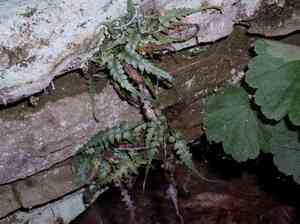
Asplenium pinnatifidum flourishes in dim, stony environments featuring damp, adequately drained substrates. For propagation, select robust leaf sections that include a segment of the rhizome. Provide elevated humidity and diffused illumination for peak development. Generally, cuttings will establish roots rapidly under these circumstances. Periodically verify appropriate moisture content to prevent decay, and once mature, the young specimen can be relocated to an appropriate exterior setting.
When Is the Optimal Time to Propagate Lobed Spleenwort?
Propagation Type
Cutting
Propagation Season
Spring,Summer
What Equipment Is Utilized in Lobed Spleenwort Propagation?
Sharp, Sterilized Pruning Shears
Essential for obtaining clean, precise cuttings from lobed spleenwort without harming the parent plant. Sterilization aids in preventing disease transmission.
Rooting Hormone
Boosts the probability of successful root formation in lobed spleenwort cuttings by encouraging root growth and increasing resilience to transplant shock.
Propagation Trays
Employed to hold and arrange multiple lobed spleenwort cuttings in a controlled setting, simplifying management and observation.
Moisture Dome
Helps maintain elevated humidity levels around lobed spleenwort cuttings, vital for preventing dehydration and fostering root development.
Well-Draining Potting Mix
Offers a balanced medium that holds adequate moisture while allowing excess water to escape, preventing root rot in lobed spleenwort cuttings.
Spray Bottle
Used to mist lobed spleenwort cuttings and maintain sufficient humidity without over-saturating the rooting medium, ensuring ideal conditions for root development.
Heating Mat
Optional but advantageous for providing bottom warmth to encourage quicker and more uniform root growth in lobed spleenwort cuttings by sustaining an optimal temperature range.
How to Propagate Lobed Spleenwort?
Propagation Type
Easy
How to Care for Your Newly Propagated Lobed Spleenwort?
How to Care for Your Newly Propagated Lobed Spleenwort?
Keep the substrate consistently moist but not waterlogged. Periodically remove any covers to allow for air circulation and deter mold. Once new growth emerges, gradually acclimatize the plant to lower humidity before fully removing the cover. Provide indirect sunlight and maintain a humid environment, mimicking lobed spleenwort's natural habitat. Regularly inspect for pests and diseases, and water as needed, allowing the soil to dry slightly between waterings.
Common Errors to Avoid When Propagating Lobed Spleenwort
Overwatering
Excessive moisture can lead to root rot and fungal growth, hindering the plant's ability to establish roots.
Inadequate Humidity
Insufficient humidity can cause the plant's foliage to dry out, decreasing the likelihood of successful propagation.
Poor Lighting
Insufficient light can weaken the cuttings or spores, making it difficult for them to develop properly.
Wrong Soil Type
Using a substrate that is too dense or retains too much water can impede proper root formation.
Handling Delicate Roots
Rough handling of the roots or frequent disturbance can damage them, impeding growth.
Tips For Propagating Lobed Spleenwort
Moist but Well-Drained Soil
Utilize a lightweight, well-draining substrate that retains moisture without becoming waterlogged.
Consistent Humidity
Maintain elevated humidity levels, such as through misting or employing a humidity dome, to foster healthy growth.
Filtered Indirect Light
Position the plant in an area with bright, indirect light to prevent leaf scorch and promote optimal growth.
Sterilized Tools
Use sterilized tools when cutting or dividing to prevent the introduction of pathogens.
Gentle Handling
Handle the roots carefully and minimize disturbances to promote healthy and stable root development.



