How to Propagate Lady's-mantle?
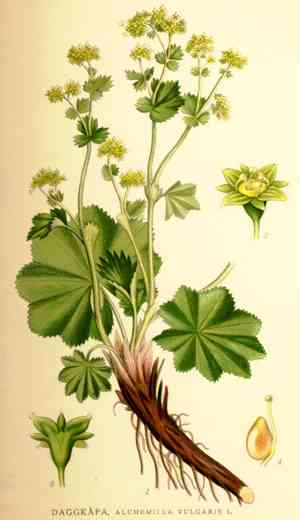
Alchemilla is easily multiplied through seeding. To achieve successful outcomes, verify that the seeds are newly harvested when sown, given their diminishing fertility with age. Distribute the seeds in a potting blend that drains efficiently, lightly dusting them with substrate. Preserve uniform dampness and offer a consistent setting until sprouting takes place. Immature specimens can subsequently be relocated to their permanent outdoor spots, accounting for their preference for dappled light and soil that drains properly.
Optimal Time for Lady's-mantle Propagation
Propagation Method
Seeding
Propagation Period
Spring
Tools for Lady's-mantle Propagation
Seed trays
Seed trays are vital for initiating lady's-mantle from seeds indoors or in controlled environments. These trays facilitate organized sowing of small seeds and help maintain essential humidity and temperature for sprouting. For lady's-mantle, which may have tiny seeds, using a seed tray with fine-textured, well-draining soil mix can boost germination rates by ensuring seeds are not too deep and are uniformly moist.
Peat pots
Peat pots are especially beneficial for lady's-mantle as they minimize root disturbance during transplanting. Lady's-mantle can be sensitive to root shock, and peat pots allow the entire pot to be planted directly into the ground, where it naturally breaks down. This encourages healthier root growth and lessens transplant stress, improving the survival and growth rates of lady's-mantle.
Watering can with a fine rose
A watering can equipped with a fine rose attachment is essential for gently irrigating lady's-mantle seedlings without dislodging seeds or eroding the soil. The fine spray ensures delicate seedlings are unharmed and moisture is evenly distributed, which is critical for the germination and initial growth phases of lady's-mantle.
Misting bottle
Misting is a preferred technique for maintaining the ideal moisture levels required for lady's-mantle seed germination without saturating the soil. A misting bottle helps keep the surface damp, which is particularly important for creating an optimal micro-environment around the seeds, promoting better germination rates.
Propagating Lady's-mantle
Propagation Difficulty
Simple
Caring for Newly Propagated Lady's-mantle
Caring for Newly Propagated Lady's-mantle
Post-transplant, ensure lady's-mantle receives partial shade to full sun and consistently moist, yet well-drained, soil. Apply mulch around the base to retain soil moisture. Water regularly to keep the soil lightly damp, and trim dead or damaged leaves to encourage healthy growth and prevent disease. Fertilize sparingly with a balanced, all-purpose fertilizer during the growing season for optimal development.
Common Propagation Errors for Lady's-mantle
Overwatering
While lady's-mantle thrives in moist soil, excessive water can lead to root rot. Overwatering can suffocate roots, depriving them of oxygen and fostering fungal growth.
Deep planting
Planting divisions or seeds of lady's-mantle too deeply can impede germination and root development. A shallow depth is necessary for optimal growth.
Ignoring soil composition
Using a soil mix that drains poorly or lacks sufficient fertility can severely impact the health of lady's-mantle. Inferior soil can result in weak plants less capable of thriving and multiplying.
Lady's-mantle Propagation Advice
Use fresh seeds
For successful propagation, utilize fresh lady's-mantle seeds as their viability diminishes quickly. This ensures a higher germination rate.
Maintain consistent moisture
Keep the soil consistently moist but not waterlogged to support the germination and growth of lady's-mantle. This balance is crucial for healthy root and plant development.
Select healthy parent plants
When dividing, choose robust and disease-free parent plants. This ensures that the new plants will inherit healthy traits, leading to stronger offspring.



