How to Propagate Common hollyhock?
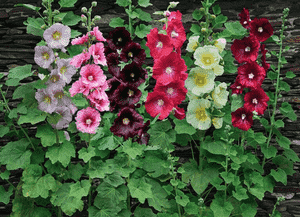
The most suitable period for propagating Alcea rosea is during the spring. Recommended techniques involve planting seeds, a process considered moderately straightforward. Indicators of successful propagation are the sprouting and appearance of young plants. To achieve the best outcomes, immerse the seeds in water for several hours prior to planting.
When Is the Optimal Time to Propagate Common Hollyhock?
Propagation Method
Seeding
Propagation Period
Spring
What Tools Are Utilized for Common Hollyhock Propagation?
Seed trays or flats
These are shallow containers for indoor seed starting. They offer a controlled environment for germination. For common hollyhock, shallow trays help maintain consistent moisture and temperature, vital for effective seed germination.
Seed starting mix
A seed starting mix is a fine-textured, sterilized, soilless medium, providing an ideal environment for common hollyhock seeds to germinate free from weeds or disease. It ensures good drainage and aeration around the seeds.
Misting bottle or spray nozzle
A fine misting bottle or a hose with a spray nozzle attachment gently waters common hollyhock seeds without disturbing them. This tool helps maintain consistent moisture, essential for effective seed germination and growth.
Heating mat
A heating mat gently warms the soil, accelerating common hollyhock seed germination, as they benefit from warmth. The mat should maintain a consistent, optimal temperature for common hollyhock seed germination.
Grow lights
Grow lights provide artificial sunlight to common hollyhock seedlings, crucial, especially in areas with limited natural sunlight during early growth. Grow lights ensure seedlings receive adequate light for healthy development.
Dibber or pencil
This tool creates small, precise holes in the seed starting mix for sowing common hollyhock seeds. A dibber ensures seeds are planted at the correct depth, critical for proper germination.
Transparent plastic dome or cling film
A clear plastic dome or cling film over seed trays helps maintain high humidity and temperature, creating a beneficial microclimate for common hollyhock seed germination.
How to Propagate Common Hollyhock?
Propagation Method
Seeding
Difficulty Level
Easy
How to Care for Your Newly Propagated Common Hollyhock?
How to Care for Your Newly Propagated Common Hollyhock?
After propagation, it's crucial to maintain consistent moisture for common hollyhock without overwatering. Apply mulch to help retain soil moisture and suppress weeds. Fertilize with a balanced fertilizer as per package directions. Support tall stems with stakes or a trellis to prevent flopping. Deadhead spent flowers to encourage more blooms and prevent self-seeding, unless seed collection is desired. Monitor for pests and diseases, such as Japanese beetles and rust, and treat appropriately. For winter preparation, cut stems back to the ground after they die and apply a layer of mulch for protection.
Common Mistakes to Avoid When Propagating Common Hollyhock
Overcrowding seeds
Planting common hollyhock seeds too close can impede seedling growth due to competition for light, nutrients, and space, potentially leading to stunted growth and increased disease susceptibility.
Deep sowing
Sowing common hollyhock seeds too deeply can hinder germination, as they require some light to germinate and may lack sufficient energy to break through the soil surface.
Excess watering
Overwatering common hollyhock during propagation can lead to root rot and fungal diseases, as their seeds and seedlings are sensitive to overly moist conditions.
Neglecting pre-sowing treatment
Failing to stratify or scarify common hollyhock seeds when necessary can result in a lower germination rate, as some seeds have dormancy mechanisms requiring such treatments to break.
Tips For Propagating Common Hollyhock
Appropriate soil mix
Using a well-drained and fertile soil mix helps common hollyhock seeds germinate more effectively and provides necessary nutrients for seedlings to thrive without the risk of waterlogging.
Controlled watering
Providing common hollyhock with consistent but controlled watering ensures seedlings have enough moisture to grow without being susceptible to root diseases caused by excessive wetness.
Correct seed depth
Sowing common hollyhock seeds at a shallow depth, no more than a couple of millimeters, ensures they receive adequate light for germination while being anchored securely in the soil.
Gentle fertilization
Apply a balanced, gentle fertilizer to common hollyhock after germination to encourage healthy growth without overwhelming young plants with excessive nutrients that can harm delicate roots.



