How to Propagate Aglaonema costatum?
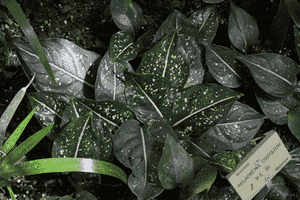
Spotted evergreen flourishes when reproduced via cuttings. To ensure a successful beginning, choose robust stem sections possessing a minimum of two to three leaves, making certain a segment of the stem remains. Immerse the severed tip into a rooting compound to foster vigorous root development prior to potting in a porous soil blend. Sustain steady dampness and offer diffused illumination to stimulate rooting while preventing stem decay.
When Is the Best Time to Propagate Spotted Evergreen?
Propagation Method
Cutting
Propagation Period
Spring,Summer
What Tools Are Used in Spotted Evergreen Propagation?
Sharp pruning shears or scissors
Crucial for making clean, precise cuts from spotted evergreen, these instruments help ensure minimal harm to the parent plant and cutting. A clean cut improves the likelihood of successful rooting by lowering the chance of infection and stress to the cutting.
Rooting hormone
This chemical compound encourages root development from spotted evergreen cuttings. Applying it to the cut end of the stem aids in faster and more dependable root formation, boosting the overall propagation success rate.
Sterile potting mix
A pathogen-free growing medium is vital for the initial stages of cutting growth. For spotted evergreen, a sterile potting mix prevents the introduction of diseases, which is essential for the plant's delicate cut ends.
Small pots or propagation trays
These containers are necessary for holding spotted evergreen cuttings during root development. Size and depth are important, as an overly large pot can retain too much moisture, potentially leading to rooting problems.
Plastic bags or a humidity dome
Maintaining high humidity around the spotted evergreen cutting is critical for preventing moisture loss through the leaves. Covering the propagation setup with a plastic bag or using a humidity dome helps create an ideal microenvironment for rooting.
Heating mat (optional)
This device can be beneficial, especially in cooler environments. For spotted evergreen, a heating mat promotes quicker root growth by maintaining a consistent and appropriate temperature around the root zone.
How to Care for Your Newly Propagated Spotted Evergreen?
How to Care for Your Newly Propagated Spotted Evergreen?
After propagation, position spotted evergreen in a spot with bright, indirect light and keep humidity high. Water the soil when the top inch feels dry, but be careful not to overwater to avoid root rot. Fertilize lightly every 4-6 weeks during the growing season with a balanced, water-soluble fertilizer. Regularly check for pests and diseases.
Common Mistakes to Avoid When Propagating Spotted Evergreen
Overwatering
Excessive watering can cause root rot in spotted evergreen, which is harmful as it impedes the plant's ability to absorb nutrients and water, ultimately affecting its overall health and reducing propagation success.
Using too large a pot
Starting with an oversized pot can cause the soil to hold too much moisture, which is not ideal for spotted evergreen. This can increase the risk of fungal infections and root rot, impacting the young plant's development.
Neglecting humidity needs
Spotted evergreen requires high humidity to flourish, especially during propagation. Ignoring this factor can result in slower root development or cuttings drying out before they establish.
Cutting too short stem segments
Propagating spotted evergreen with very short stem segments can decrease the chances of successful rooting as shorter segments might not possess enough nodes to effectively initiate new growth.
Tips For Propagating Spotted Evergreen
Use of a rooting hormone
Applying a rooting hormone to the cut ends of spotted evergreen stem cuttings can significantly enhance root growth and establishment, leading to a higher success rate in propagation.
Select healthy mother plant
Choosing a healthy and vigorous mother plant for cuttings ensures that the genetic material is robust, improving the overall success rate and health of the propagated spotted evergreen.
Optimal cutting length
Cutting stem segments to an optimal length, typically 4-6 inches, ensures that there is sufficient area for root development and enough foliage to sustain growth during the critical early stages.
Maintaining high humidity
Maintaining a humid environment for spotted evergreen's cuttings, such as using a humidity dome or misting regularly, is crucial to prevent the cuttings from drying out and to promote successful rooting.



