How to Propagate Spiny bear's breech?
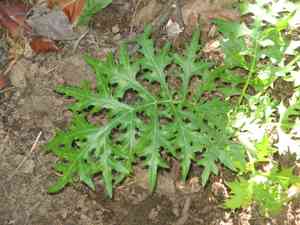
Acanthus spinosus flourishes when reproduced by seeding. To achieve successful sprouting, employ a growing medium that drains effectively and sustain steady hydration without saturating the soil. Planting seeds directly into a prepared outdoor plot or initiating them indoors can enhance growth prospects, leading to more vigorous development. Prior to moving young plants outside, progressively introduce them to external environments to lessen the impact of relocation. This measured exposure aids in establishing a strong root structure and boosts the plant's general health.
Optimal Time for Spiny Bear's Breech Propagation
Propagation Method
Seeding
Propagation Period
Spring
Essential Tools for Spiny Bear's Breech Propagation
Seed trays
Seed trays offer an organized and structured environment for planting spiny bear's breech seeds. They enable proper spacing, vital for good air circulation and growth. Their compartmentalized design also prevents root entanglement, simplifying handling and transplanting of mature seedlings.
Seed-starting mix
A seed-starting mix is crucial for providing spiny bear's breech seeds with a light, sterile, and nutritionally balanced medium, which encourages better germination and robust early root growth. This mix often contains peat moss or coconut coir, which effectively retains moisture while allowing adequate drainage â key factors in preventing seed rot and fostering strong young plants.
Misting bottle
A misting bottle helps maintain the necessary humidity around spiny bear's breech seeds without over-saturating the soil. Consistent misting ensures the soil stays moist but not waterlogged, creating an ideal environment for germination. This is especially important for spiny bear's breech, as stable moisture levels significantly impact germination success.
Heat mat
A heat mat can be placed beneath seed trays to maintain a consistent soil temperature, which is crucial for spiny bear's breech seed germination. Since spiny bear's breech originates from regions with warm soil, a controlled heat source will mimic these conditions, promoting faster and more uniform seed sprouting.
Grow lights
If spiny bear's breech is propagated indoors or in low-light conditions, grow lights provide the necessary light spectrum for photosynthesis in young plants. Proper illumination is essential to prevent seedlings from becoming leggy and weak. Grow lights ensure seedlings develop strong and hardy, ready for eventual outdoor planting.
How to Propagate Spiny Bear's Breech?
Propagation Type
Simple
Caring for Your Newly Propagated Spiny Bear's Breech
Caring for Your Newly Propagated Spiny Bear's Breech
After transplanting, ensure spiny bear's breech is placed in well-drained soil in a sunny to partially shaded spot. Water regularly to keep the soil moist, especially during dry spells. Fertilize annually in early spring and consider mulching to retain soil moisture and control weeds. Monitor for pests and diseases, though spiny bear's breech is generally quite resilient once established.
Common Propagation Mistakes to Avoid with Spiny Bear's Breech
Inadequate soil preparation
Using soil that lacks proper drainage can lead to waterlogging, which may cause root rot in spiny bear's breech. Spiny bear's breech requires well-draining soil for healthy root development.
Overwatering during root development
While propagating spiny bear's breech, excessive watering can suffocate the roots, reducing oxygen availability and hindering growth. This can also increase the risk of fungal diseases.
Ignoring root division size
Dividing spiny bear's breech into sections that are too small can result in weaker plants that struggle to establish. Adequate root mass is crucial for the successful propagation and survival of the divisions.
Tips For Propagating Spiny Bear's Breech
Choose healthy parent plants
Selecting vigorous and disease-free specimens of spiny bear's breech ensures a higher success rate as these characteristics are likely to be passed on to the new plants.
Use sharp tools for division
Ensure that the tools used for dividing spiny bear's breech are sharp and clean to facilitate clean cuts and prevent disease transmission through damaged tissues.
Maintain moisture balance
Keep the soil moist but not waterlogged when propagating spiny bear's breech to encourage root development while preventing conditions that favor fungal growth.



