The Leavenworth's eryngo Plant Advantage: Maximizing Home and Office Appeal and Wellness
1
Leavenworth's eryngo effortlessly draws in bees and butterflies, making it excellent for pollinators.
2
Leavenworth's eryngo improves the well-being of soil by fostering helpful microbes.
3
This plant tolerates dry conditions remarkably well, perfect for gardens that conserve water.
What Makes Leavenworth's eryngo Unique?
Visual Appeal and Ornamental Use
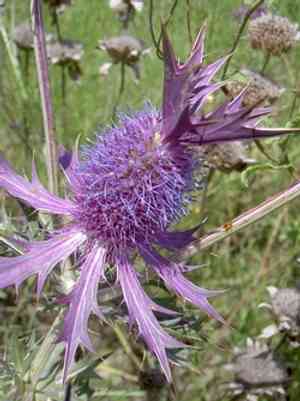
A key distinguishing characteristic of Leavenworth's eryngo is its vivid coloring and distinct texture. The plant's blue to purple tones can establish a striking focal point in any garden, complemented by its spiky, spherical flower heads. These decorative qualities not only boost your garden's visual charm but also make Leavenworth's eryngo a favored option for floral arrangements and landscape design.
Hardiness and Adaptability
Leavenworth's eryngo is renowned for its robustness and capacity to adjust to diverse environmental conditions. Originating from areas with limited rainfall, this plant has evolved to endure drought, making it an excellent selection for xeriscaping. Its ability to flourish in poor soil without extensive upkeep further highlights its practicality for gardeners aiming to decrease water consumption and foster sustainable landscaping.
How Does Leavenworth's eryngo Benefit Pollinators and Biodiversity?
Attraction of Bees and Butterflies
Leavenworth's eryngo acts as a magnet for pollinators, especially bees and butterflies. The form and hue of its blossoms are highly appealing to these beneficial insects, which play a vital role in pollinating numerous other plants within your garden. By offering a consistent food source for pollinators, Leavenworth's eryngo helps cultivate a flourishing, biodiverse ecosystem.
Supporting Beneficial Insects
Beyond its allure to pollinators, Leavenworth's eryngo supports various beneficial insects such as ladybugs and predatory beetles. These insects aid in natural pest control by preying on aphids, mites, and other garden pests. Incorporating Leavenworth's eryngo into your landscape can thus lessen the need for chemical pesticides, promoting a healthier, more balanced ecological environment.
How Does Leavenworth's eryngo Improve Soil Health?
Promotion of Microorganisms
Leavenworth's eryngo enhances soil health by encouraging the proliferation of beneficial microorganisms. The plant's root system interacts with soil microbes, fostering a symbiotic relationship that improves soil structure and nutrient availability. These microorganisms are crucial in decomposing organic matter, which in turn enriches soil quality and supports vigorous plant growth.
Preventing Soil Erosion
The extensive root system of Leavenworth's eryngo also serves as an effective barrier against soil erosion. By stabilizing the soil, this plant helps prevent the loss of valuable topsoil, particularly in areas prone to wind and water erosion. This characteristic is especially advantageous in agricultural settings and home gardens situated on slopes or in regions with fragile soil structures.
Tips for Growing and Maintaining Leavenworth's eryngo
Optimal Growing Conditions
To successfully cultivate Leavenworth's eryngo, understanding its preferred growing conditions is essential. This plant thrives best in full sun and well-drained soil. While it is remarkably drought-tolerant, providing occasional deep watering during extended dry periods can enhance its growth and flowering. Mulching around the plant can help retain soil moisture and reduce weed competition.
Pruning and Maintenance
Minimal upkeep is required for Leavenworth's eryngo, but regular pruning can help manage its form and encourage more abundant blooming. Removing spent flowers prevents seed production and promotes additional flowering. Additionally, cutting back the plant in early spring can stimulate new growth and ensure a more compact shape.
Can Leavenworth's eryngo be Used in Companion Planting?
Complementing Other Plants
Leavenworth's eryngo performs exceptionally well in companion planting arrangements. Its tall, spiky flowers can offer a striking contrast to softer, mounding plants like lavender or yarrow. Furthermore, because it attracts pollinators, placing Leavenworth's eryngo near vegetable gardens or fruit-bearing plants can improve pollination rates and boost yields.
Pest Deterrent Properties
Interestingly, Leavenworth's eryngo also displays natural pest deterrent qualities. Its presence in the garden can help to repel certain pests, providing a protective barrier for more vulnerable plants. This makes it an excellent addition to any integrated pest management strategy.



