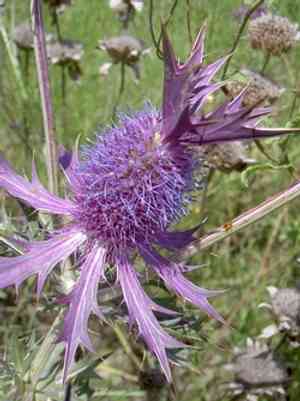
Leavenworth's eryngo (Eryngium leavenworthii)
Also known as: Leavenworth's eryngo, Leavenworth's button snakeroot
Leavenworth's eryngo (Eryngium leavenworthii), often referred to as the purple pineapple due to its distinctive spiky, pineapple-like flower clusters, is highly attractive to pollinators. The plant's unique, spiny appearance and rich purple hues make it stand out. Its abundant nectar supply draws a variety of insects, such as butterflies, moths, and bumblebees. This wildflower is celebrated for its ability to support numerous pollinators, making it a valuable addition to any ecosystem.
In This Article
Attributes of Leavenworth's eryngo
Lifespan
Annual, Perennial
Plant Type
Herb
Plant Height
91 cm
Spread
30 cm to 45 cm
Leaf Color
Green Gray Silver Bronze
Flower Size
1.3 cm
Flower Color
Purple Blue Violet
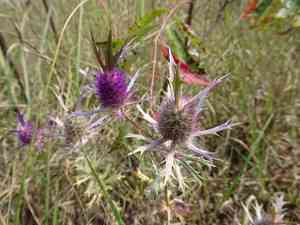
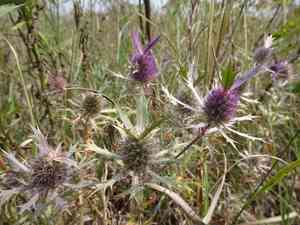
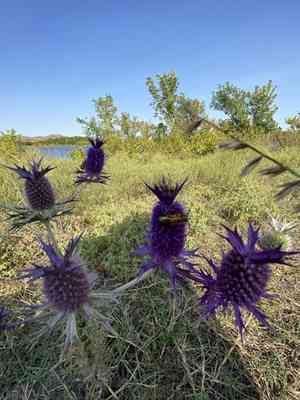
Images of Leavenworth's eryngo
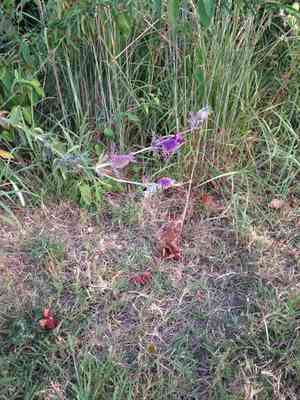
Quickly Identify Leavenworth's eryngo
1
Look for the spikey, branched stems with purple or blue bracts and small thistle-like flowers. The leaves are deeply lobed with spiny margins, and the plant typically grows up to 1 meter in height.
Scientific Classification of Leavenworth's eryngo
Phylum
Vascular plants
Class
Dicotyledons
Order
Apiales
Family
Umbellifers
Genus
Eryngos
Species
Leavenworth's eryngo
Planting and Growing of Leavenworth's eryngo
Care Difficulty
Easy
Watering Schedule
Every 3 days
Sunlight Requirements
Full sun
Sunshine Duration
6-10 hours
Ideal Temperature
70-85℉
Soil Type
Potting Mix, Peat Mix
Soil pH
6.5-7.5
Fertilizer Type
Balanced
Pruning Season
Spring, Summer
Pruning Area
Branches, Leaves
Pruning Frequency
2 times a year
Repotting Season
Spring
Pot Type
Plastic, Ceramic
 How to Water Leavenworth's eryngo?
For Eryngium leavenworthii, it's essential to water until the soil is evenly moist but not soggy, typically around 250 ml per watering session. This ensures the roots receive adequate moisture without sitting in water, which can lead to root rot.
What are the symptoms of an underwatered Leavenworth's eryngo?
›
What should I do if my Leavenworth's eryngo is not getting enough water?
›
What are the symptoms of an overwatered Leavenworth's eryngo?
›
How to save an overwatered Leavenworth's eryngo?
›
 What Are the Sunlight Requirements for Leavenworth's eryngo?
Eryngium leavenworthii prefers full sun conditions (8-10 hours daily). This promotes robustness, and vibrancy, and ensures a more fulfilling flowering cycle, enhancing its ornamental qualities.
More About Sunlight Requirements Techniques→
How much light does Eryngium leavenworthii need daily?
›
What are the solutions to provide ideal light?
›
What are the benefits of getting ideal light?
›
 What Is the Ideal Temperature Range for Leavenworth's eryngo?
Eryngium leavenworthii thrives best in temperatures ranging from 70°F to 85°F. This temperature range supports optimal growth and flowering. The plant originates from regions with warm climates, making it more suited to warmer conditions, and exposure to temperatures within this range can help ensure its lush foliage and vibrant purple and blue flowers.
 What Soil is Best for Leavenworth's eryngo?
Eryngium leavenworthii thrives best in well-draining soils, as this helps prevent root rot by allowing excess water to escape. This characteristic is beneficial because it mimics the plant's natural habitat, where water does not stagnate around the roots. This plant prefers soils of moderate fertility, as overly fertile soils can lead to excessive foliage growth at the expense of blooms. Moderate fertility ensures balanced growth and vibrant flowering. Eryngium leavenworthii is adapted to grow in soils with low organic content, making it ideal for poor or sandy soils that might be unsuitable for other species. This trait is advantageous for low-maintenance gardens.
 How to Fertilize Leavenworth's eryngo?
Eryngium leavenworthii requires a moderate amount of fertilizer to thrive. Use a balanced liquid fertilizer, diluted to half strength, for liquid applications and a standard rate for slow-release fertilizers. Avoid over-fertilizing as it may cause root burn.
 How to Prune Leavenworth's eryngo?
Start by using clean, sharp pruning shears to trim back any dead or damaged stems. Focus on maintaining the natural shape by selectively cutting back the longest and oldest stems. Consider thinning out the center to increase airflow and sunlight penetration. During blooming, regularly remove spent flowers by cutting them back to a set of healthy leaves or a new bud. This prevents the plant from self-seeding excessively and encourages more blooms. After flowering season, cut back the stems to leave a neat rosette at the base. This helps the plant conserve energy and improves its chances for a robust appearance come next growing season.
More About Pruning Techniques→
 How to Propagate Leavenworth's eryngo plant?
1
Fill the trays with a well-draining potting mix. Ensure the mix is moistened before sowing, as dry soil can hinder seed germination. It's important to level the soil surface gently but without compacting it too much.
2
Sprinkle the seeds evenly over the prepared soil surface. Do not bury them deeply; a light dusting of soil is sufficient. Gently press down the soil to ensure good seed-to-soil contact, which aids germination.
3
Place the seed trays in a warm location with indirect sunlight. Watering should be done carefully to avoid seed displacement. Maintaining high humidity helps in faster germination and healthier seedling growth.
 How to Repot Leavenworth's eryngo plant?
1
Eryngium leavenworthii needs repotting when roots appear out of the drainage holes or the soil becomes compacted, inhibiting water absorption. Optimal times are early Spring or Summer when the plant is actively growing, ensuring quick recovery from transplant shock.
2
Choose a pot that’s one size larger than the current one, with excellent drainage to prevent waterlogging. A terracotta pot is ideal as it allows moisture to evaporate, maintaining the dry conditions Eryngium thrives in.
3
Select a well-draining sandy soil mix, incorporating some perlite or grit to improve drainage. This soil type closely mimics the plant’s natural environment, preventing root rot and ensuring healthy growth.
Learn More About Leavenworth's eryngo Diseases
Anthracnose
Bacterial Leaf Spot
Bacterial Soft Rot
Bacterial Wilt
Crown Gall
Cyst Nematode
Damping-off
Downy Mildew
Drought Stress
Fusarium Wilt
Gray Mold
Leaf Spot
Mosaic
Nutrient Deficiency
Nutrient Toxicity
Powdery Mildew
Root Rot
Root-knot Nematode
Rusts
Sooty Mold
Spider Mites
Temperature Stress
Thrips Damage
White Mold



