The Gander's buckhorn cholla Plant Advantage: Maximizing Home and Office Appeal and Wellness
1
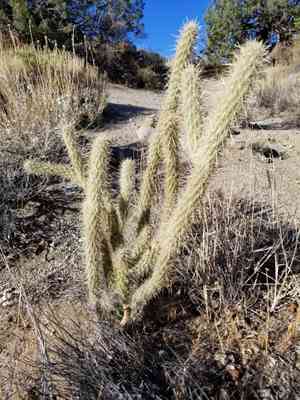
Gander's buckhorn cholla tolerates dry conditions very well, making it perfect for desert climates.
2
It offers superb shelter and sustenance for local fauna.
3
Its distinct thorny form aids in preventing soil degradation.
Why Gander's Buckhorn Cholla Excels in Dry Climates
Drought Resilience
A key reason Gander's buckhorn cholla flourishes in arid settings is its remarkable drought tolerance. Its capacity to store water within its thick, thorny stems enables it to endure extended dry spells. This water retention not only ensures the plant's survival but also means it demands minimal upkeep, making it ideal for xeriscaping and water-wise gardening.
Low Upkeep
Beyond its drought resilience, Gander's buckhorn cholla requires infrequent watering or fertilization, classifying it as a low-maintenance plant. This trait benefits homeowners and landscapers seeking attractive yet sustainable plant options. Integrating Gander's buckhorn cholla into landscaping allows for aesthetic appeal with reduced water consumption and gardening effort.
How Gander's Buckhorn Cholla Benefits Indigenous Wildlife
Habitat Provision
Gander's buckhorn cholla is crucial in offering refuge for various native animal species. Its dense, spiky form provides cover for small creatures and insects, shielding them from predators. Birds frequently build nests within the plant, benefiting from the security it offers. This natural habitat support fosters biodiversity and contributes to the local ecosystem's vitality.
Food Source
Beyond providing shelter, Gander's buckhorn cholla acts as a vital food source for wildlife. Certain mammals and birds consume the plant's fruits and flowers, obtaining essential nutrients. By cultivating Gander's buckhorn cholla in your garden or landscape, you help sustain local wildlife populations and promote a healthy, balanced ecosystem.
The Role of Gander's Buckhorn Cholla in Preventing Soil Erosion
Root System Stability
The extensive root network of Gander's buckhorn cholla is effective at stabilizing soil, preventing erosion, particularly in dry and semi-dry regions. Its roots spread widely and penetrate deep into the earth, anchoring the soil and lessening the risk of soil displacement from wind or water runoff. This characteristic makes Gander's buckhorn cholla valuable for ecological restoration and land management initiatives.
Surface Protection
The spiny stems of Gander's buckhorn cholla also aid in reducing soil erosion by physically shielding the ground from harsh environmental elements. The spines create a microhabitat, trapping moisture and organic debris that enhance soil health. By incorporating Gander's buckhorn cholla into the landscape, erosion can be significantly lessened, supporting sustainable land use practices.
Can Gander's Buckhorn Cholla Enhance Landscape Aesthetics and Practicality?
Visual Appeal
Gander's buckhorn cholla is recognized for its distinctive and striking appearance, making it a visually pleasing addition to any landscape. The plant's structure and seasonal blooms add a touch of natural artistry to gardens and outdoor areas. Its aesthetic value is particularly appreciated in dry gardens, rock gardens, and desert-themed landscapes.
Functional Applications
Beyond its beauty, Gander's buckhorn cholla serves several practical functions. It can be utilized as a natural barrier or fence due to its dense and spiky nature, offering privacy and enhanced security. Furthermore, its robust nature makes it suitable for planting in challenging areas where other plants might struggle to survive.



