How to Propagate Gander's buckhorn cholla?
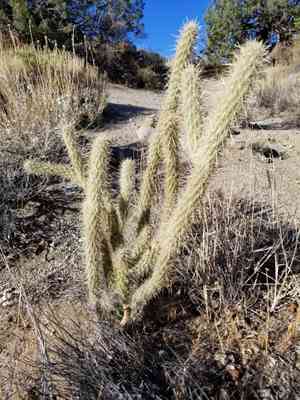
Gander's buckhorn cholla can be successfully multiplied using stem sections. For optimal development, choose robust and established stems from a parent plant. Sever a piece, preferably on a dry day, to minimize water evaporation and deter decay. Let the severed end dry and harden for several days prior to embedding it in a porous soil blend formulated for succulents. Stand the cutting vertically and refrain from irrigation until roots emerge, guaranteeing strong and steady establishment.
What Is the Best Time To Propagate Gander's Buckhorn Cholla?
Propagation Type
Cutting
Propagation Season
Autumn,Winter
What Tools Are Used in Gander's Buckhorn Cholla Propagation?
Sharp, Sterile Pruners
Crucial for obtaining cuttings from gander's buckhorn cholla, sharp, sterilized pruners guarantee a clean incision, minimizing harm to both the parent plant and the cutting. A precise cut lowers infection risk and promotes quicker healing, vital for the cuttings' health and viability. Sterilizing pruners before each use prevents pathogen spread.
Gloves
Given the spiny nature of gander's buckhorn cholla, robust gloves are necessary to safeguard hands during plant handling. Gloves are especially critical when detaching cuttings from the parent plant to prevent injury, which is essential for the handler's safety and to ensure the cuttings remain undamaged.
Rooting Hormone
This chemical compound stimulates root development in gander's buckhorn cholla cuttings. Applying rooting hormone to the cut end of the cutting significantly boosts the likelihood of successful propagation by encouraging faster root formation, thereby improving the new plant's overall growth and health.
Well-draining Soil Mix
A soil blend that provides good drainage is essential for gander's buckhorn cholla cuttings to flourish. It prevents waterlogging, which can lead to root rotâa major concern during the initial rooting phases. A well-draining soil mix typically includes elements like sand, perlite, and organic matter, customized for cactus plants' specific needs for optimal growth.
Pots with Drainage Holes
The use of pots featuring drainage holes is indispensable for regulating soil moisture levels, which is vital for gander's buckhorn cholla's health. Excess water can exit through these openings, thereby preventing issues related to overwatering and ensuring a healthier root environment for new cuttings.
How to Propagate Gander's Buckhorn Cholla?
Propagation Type
Moderately Difficult
How to Care for Your Newly Propagated Gander's Buckhorn Cholla?
How to Care for Your Newly Propagated Gander's Buckhorn Cholla?
Post-propagation, gander's buckhorn cholla requires minimal upkeep. Position the plant in an area receiving full sun to partial shade. Water the plant approximately every two weeks during its active growth period, reducing frequency in colder months. As gander's buckhorn cholla is drought-tolerant, avoid overwatering. Fertilize annually with a balanced cactus fertilizer to encourage robust growth. Regularly check for pests and disease symptoms, treating them promptly if observed.
Common Mistakes to Avoid When Propagating Gander's Buckhorn Cholla
Overwatering
Watering gander's buckhorn cholla too often can cause root rot, which is particularly harmful as gander's buckhorn cholla is adapted to dry environments. Excessive soil moisture disrupts natural water absorption and can lead to root decay, hindering the plant's overall health and its ability to establish new growth.
Using unsuitable soil mix
Employing a soil mixture that retains too much moisture or lacks proper drainage can severely impact the root health of gander's buckhorn cholla. As a desert plant, gander's buckhorn cholla needs well-draining soil to prevent water accumulation around its roots, which can lead to fungal diseases and poor root development.
Incorrect cutting technique
Taking cuttings improperly by making jagged or unclean cuts can harm gander's buckhorn cholla. Such cuts can make the plant more vulnerable to infections and diseases, significantly lowering the chances of successful propagation.
Tips For Propagating Gander's Buckhorn Cholla
Use a sharp, sterile tool
Ensuring that the instrument used for taking cuttings is sharp and sterile is paramount. This practice prevents damage to gander's buckhorn cholla's tissues and reduces the risk of introducing pathogens, leading to healthier and more viable cuttings.
Allow cuttings to callous
Before planting, it is important to let gander's buckhorn cholla cuttings dry and form a callus over the cut surfaces. This process typically takes a few days and helps prevent rot when the cuttings are planted, improving the success rate of propagation.
Provide adequate sunlight
Ensuring that gander's buckhorn cholla cuttings receive sufficient sunlight is crucial for their development. However, it's important to initially avoid direct, intense midday sun, which can stress fresh cuttings. Gradually acclimating them to full sun exposure promotes healthy and vigorous growth.



