The American rockbrake Plant Advantage: Maximizing Home and Office Appeal and Wellness
1
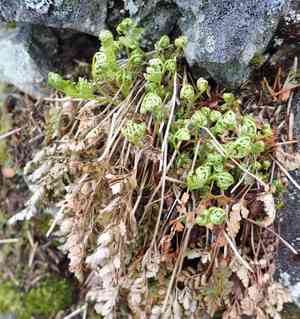
The American rockbrake is a hardy perennial fern, recognized for its ability to thrive in challenging conditions.
2
This fern plays a crucial role in maintaining soil integrity and preventing land degradation.
3
Past applications of American rockbrake in folk medicine underscore its value in natural healing traditions.
What Makes American rockbrake Distinctive?
Adaptability to Challenging Environments
A key feature of American rockbrake is its remarkable capacity to thrive in harsh conditions. This perennial fern prospers in rocky, nutrient-deficient soils where few other plants can survive. Its hardiness stems partly from its unique root system, enabling it to firmly anchor in crevices and efficiently absorb moisture. This adaptability highlights not only the plant's survival skills but also its vital role in populating and stabilizing otherwise barren terrains.
Historical and Traditional Applications
Historically, American rockbrake has been valued across various cultures for its diverse uses. Indigenous communities frequently employed this plant in traditional remedies and as a natural resource. Its leaves and fronds were used in crafting, while different parts of the plant played roles in rituals and folklore. The cultural importance of American rockbrake underscores its enduring worth and the generational knowledge of its beneficial attributes.
Environmental Advantages of American rockbrake
Soil Stabilization and Erosion Prevention
American rockbrake plays a crucial role in environmental preservation, especially in stabilizing soil and preventing erosion. Its dense root network helps bind soil particles, reducing the likelihood of landslides and soil degradation. This benefit is vital in fragile ecosystems prone to erosion, such as mountainous regions and cliff faces. By maintaining soil integrity, American rockbrake contributes to the protection of habitats for other plants and animals.
Boosting Biodiversity
In addition to soil stabilization, American rockbrake enhances biodiversity within its growth areas. The plant offers a microhabitat for various insects and microorganisms, fostering a richer and more diverse ecosystem. Furthermore, its presence can help safeguard the soil against invasive species that often dominate disturbed areas. The role of American rockbrake in promoting biodiversity illustrates how a single plant species can significantly impact ecological balance.
The Role of American rockbrake in Contemporary Practices
Landscaping and Horticulture
American rockbrake has found a place in modern horticultural practices, particularly in landscaping designs that require robust, low-maintenance plants. Its ability to flourish in poor soil and its attractive, fern-like appearance make it an ideal choice for garden rockeries, xeriscaping, and other landscapes where water conservation is a priority. The resilience and ease of care associated with American rockbrake ensure it remains a favorite among gardeners and landscape architects alike.
Ecological Restoration Initiatives
Beyond ornamental uses, American rockbrake is increasingly incorporated into ecological restoration projects. Its capacity to quickly colonize degraded areas and improve soil structure makes it invaluable in efforts to reclaim disturbed lands. Environmental scientists and conservationists utilize American rockbrake in reforestation and habitat restoration initiatives to establish a stable vegetative cover, which in turn supports the regrowth of native species and the reestablishment of natural ecological processes.



