The Common hollyhock Plant Advantage: Maximizing Home and Office Appeal and Wellness
1
The deep root system of common hollyhock improves the soil's condition.
2
It draws in helpful pollinators such as bees and hummingbirds.
3
Common hollyhock provides decorative appeal with its bright, colorful flowers.
What Makes Common hollyhock Unique?
Growth Characteristics
A distinguishing trait of Common hollyhock is its impressive stature, frequently reaching heights of up to 8 feet. This makes it an excellent option for introducing vertical appeal to your garden. The plant also exhibits a biennial life cycle, completing its development over two years. In its initial year, it forms a leaf rosette, and in the subsequent year, it produces a tall flowering stem, culminating in a spectacular display of blossoms.
Flowering and Color Variety
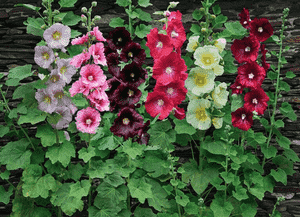
Common hollyhock is celebrated for its magnificent, vibrant flowers that appear in various hues, including pink, red, yellow, and white. These large, striking blooms can invigorate any garden and serve as a central feature. The flowers are arranged along the tall stalks, creating a prominent vertical exhibit visible from a distance.
How Does Common hollyhock Benefit Your Garden Ecosystem?
Attracts Beneficial Pollinators
One of the most significant advantages of Common hollyhock is its capacity to draw in a range of pollinators. Bees, butterflies, and hummingbirds are particularly attracted to its colorful flowers. By cultivating Common hollyhock, you are not only enhancing your garden's beauty but also supporting the local ecosystem. Pollinators play a vital role in the reproductive cycles of many plants, making Common hollyhock a valuable addition to any environmentally friendly garden.
Supports Soil Health
Common hollyhock also contributes positively to soil quality. Its extensive root system aids in aerating the soil, improving its structure and facilitating better water penetration. This can be especially advantageous in preventing soil erosion and boosting your garden's overall fertility. The leaves of Common hollyhock can be composted to return organic matter to the soil, further enriching it.
What Are the Ornamental Uses of Common hollyhock?
Creating Visual Interest
With its tall, graceful spikes and diverse color options, Common hollyhock can serve as a stunning backdrop in flower beds and borders. It complements shorter plants well and can be utilized to establish layers of color and texture in garden designs. Whether planted in a cottage garden, a formal landscape, or a wildflower meadow, Common hollyhock introduces an element of height and drama.
Companion Planting
Common hollyhock is also effective in companion planting. It can offer shade to lower-growing plants and contribute to a microclimate that supports various plant species. Furthermore, its robust nature can act as a windbreak, shielding more delicate plants from strong winds. Pairing Common hollyhock with other flowering plants like marigolds or sunflowers can create a visually appealing and functionally advantageous garden arrangement.
How to Cultivate and Care for Common hollyhock?
Planting Tips
For successful growth, it is best to plant Common hollyhock in a sunny spot with well-drained soil. The plant thrives in full sun but can endure partial shade. Direct sowing of seeds in the garden is recommended, as transplanting can sometimes disturb its deep root system. For optimal development, maintain a spacing of at least 18 inches between plants to allow for adequate air circulation.
Maintenance and Pruning
Common hollyhock requires minimal upkeep once established. Consistent watering is crucial, especially during dry spells, but the plant is relatively drought-tolerant once mature. Removing spent flowers can encourage extended blooming and prevent self-seeding if desired. At the close of the flowering season, cut back the stalks to prepare the plant for its second-year growth cycle.



