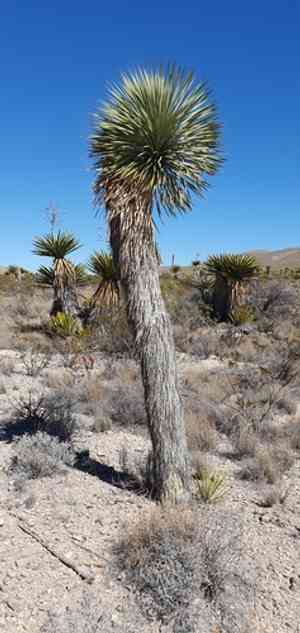
Beaked yucca (Yucca rostrata)
Also known as: Nordstrom's yucca, Beaked blue yucca, Old man yucca, Soyate
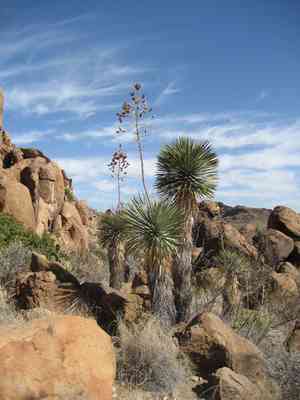
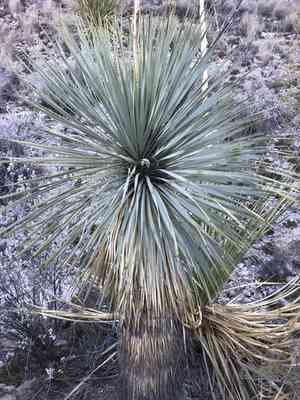
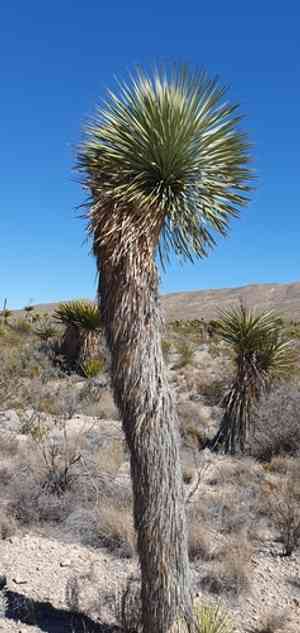
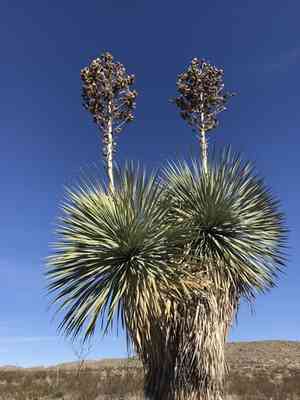
Yucca rostrata, commonly known as beaked yucca, is a tree-like species from the Yucca genus. It originates from regions in Texas, Chihuahua, and Coahuila. This plant features a trunk that can grow up to 4.5 meters high, crowned with slender, rigid leaves that can reach lengths of 60 cm but typically remain less than 1.5 cm wide, ending in a sharp point. The plant produces a sizable inflorescence, a panicle about 1 meter tall, adorned with white flowers.
In This Article
Attributes of Beaked yucca
Lifespan
Perennial
Plant Type
Shrub
Plant Height
1.5 m to 4.5 m
Spread
1.2 m to 3 m
Leaf Color
Green Blue
Flower Size
2.5 cm to 8 cm
Flower Color
White
Images of Beaked yucca
Quickly Identify Beaked yucca
1
Tall tree-like trunk, 12-15 feet (3.7-4.6 meters) high, with solitary stem.
2
Rosette of bluish-green leaves, 2 feet (60 cm) long, with yellow margins.
3
White flowers in tall panicle, up to 2 feet (60 cm) long, blooming late spring.
4
Distinctive ovoid fruit with beaked tip, leathery texture, and vertical posture.
5
Thick, erect stem, up to 6 feet (1.8 meters) high, with rough, fibrous base coverings.
Scientific Classification of Beaked yucca
Phylum
Vascular plants
Class
Monocotyledons
Order
Asparagales
Family
Asparagus
Genus
Yuccas
Species
Beaked yucca
Planting and Growing of Beaked yucca
Care Difficulty
Easy
Watering Schedule
Every 2 days
Sunlight Requirements
Full sun
Sunshine Duration
6-10 hours
Ideal Temperature
60-80℉
Soil Type
Potting Mix, Peat Mix
Soil pH
6.5-7.5
Fertilizer Type
Balanced
Pruning Season
Spring, Summer
Pruning Area
Branches, Leaves
Pruning Frequency
2 times a year
Repotting Season
Spring
Pot Type
Plastic, Ceramic
 How to Water Beaked yucca?
Yucca rostrata thrives with moderate watering. The soil should be well-draining, and you should aim to moisten it with about 500 ml of water per session. This amount helps saturate the soil without causing waterlogging, preventing root rot.
What are the symptoms of an underwatered Beaked yucca?
›
What should I do if my Beaked yucca is not getting enough water?
›
What are the symptoms of an overwatered Beaked yucca?
›
How to save an overwatered Beaked yucca?
›
 What Are the Sunlight Requirements for Beaked yucca?
Yucca rostrata prospers under full sunshine for six to eight hours daily. This optimal level of light enhances its ability to photosynthesize and maintain vibrant foliage while supporting strong structural growth.
More About Sunlight Requirements Techniques→
How much sun does Yucca rostrata need?
›
What is the best location for Yucca rostrata?
›
Why does Yucca rostrata need full sun exposure?
›
 What Is the Ideal Temperature Range for Beaked yucca?
The optimal temperature range for Yucca rostrata's growth is between 60°F and 80°F. This range ensures that the plant receives the warmth it needs, promoting healthy photosynthesis and growth without the risk of heat stress or cold damage. Keeping the temperature within this range can aid in achieving vigorous and lush foliage.
 What Soil is Best for Beaked yucca?
Yucca rostrata thrives in well-draining soils that prevent water from accumulating around its roots. This requirement helps the plant avoid root rot and other moisture-related diseases, keeping it healthy and robust. Though not overly demanding, Yucca rostrata benefits from soil with moderate levels of organic matter. Ensuring adequate nutrients can promote vigorous growth and enhance the plant's striking appearance. The plant prefers soils that dry out between waterings, which mimics its natural arid habitat. This demand highlights the yucca's ability to withstand drought, making it an excellent plant for xeriscaping.
 How to Fertilize Beaked yucca?
Yucca rostrata thrives on a modest fertilization regime. When using liquid fertilizers, dilute them to half-strength to avoid over-fertilization. For slow-release fertilizers, follow the package instructions, typically around 60 grams per application, to ensure balanced nutrient supply.
 How to Prune Beaked yucca?
Begin pruning by identifying dead or yellowing leaves. These leaves are unattractive and can block light and airflow to healthier foliage. Carefully cut them at the base near the trunk using sharp pruning shears. Focus on removing dense clusters of leaves that prevent air circulation. This thinning process reduces disease risk and allows light penetration to lower leaves, promoting overall plant growth. Prune selectively to maintain the plant's architectural shape. Trim excessively long or unbalanced branches to create a symmetrical and visually appealing form, complementing your landscape design.
More About Pruning Techniques→
 How to Propagate Beaked yucca plant?
1
To begin propagation, collect seeds from mature Yucca rostrata plants or take healthy cuttings from the parent plant. Ensure cuttings are taken at an angle to maximize root development.
2
Use a cactus or succulent potting mix, which should be well-draining. Incorporate some sand to enhance drainage and aeration, which is crucial for root formation.
3
For seeds, plant them just beneath the soil surface and cover lightly. For cuttings, insert the cut end into the soil, ensuring good contact between the cutting and the soil base.
 How to Repot Beaked yucca plant?
1
Yucca rostrata shows signs that it's ready for repotting when roots start poking through drainage holes or soil becomes compacted. It's also a good time if the plant becomes top-heavy and easily topples over, indicating it has outgrown its current pot.
2
Choose a pot that is sturdy, ideally terracotta for breathability, and just a few inches wider than the current one. Proper weight and drainage in the pot help prevent root rot and give the plant stability, aiding in healthy growth.
3
Opt for a well-draining cactus mix which mimics Yucca's natural habitat. This kind of soil allows for sufficient aeration and prevents waterlogging, protecting the roots from rot and ensuring the plant thrives post-repotting.



