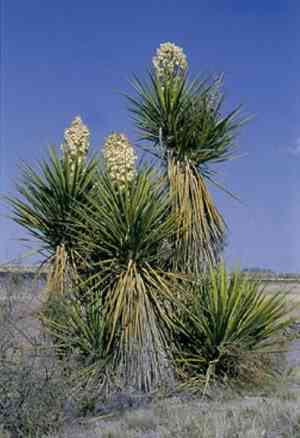
Eve's needle (Yucca faxoniana)
Also known as: Faxon yucca, Spanish bayonet
Typically, a multitrunked shrub plant stands between 91 and 305 cm tall. In some cases, they can grow as a single trunk, reaching up to 6 meters in height and taking on a tree-like form. The leaves, shaped like blades, usually measure between 61 and 137 cm in length. The flowers, which are ivory to creamy white and bell-shaped, appear on flower heads that can be up to 61 cm long. These flowers are usually pollinated by moths from the genus Tegeticula and generally bloom in the spring.
In This Article
Attributes of Eve's needle
Lifespan
Perennial
Plant Type
Shrub
Plant Height
1.8 m to 3.5 m
Spread
5-10 feet (1.5-3 meters)
Leaf Color
Green
Flower Size
4 inches (10 cm)
Flower Color
White
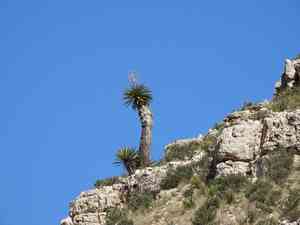
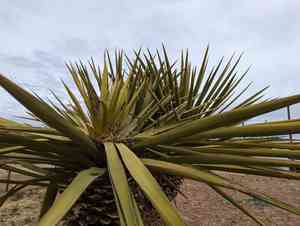
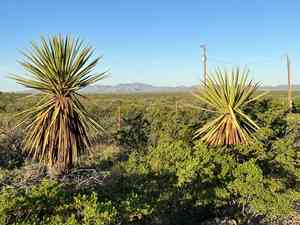
Images of Eve's needle

Quickly Identify Eve's needle
1
Look for blue-green, extremely sharp, sword-like leaves that grow in a rosette formation. The plant typically has a thick, stout trunk and produces tall spikes of creamy white flowers in late spring to early summer.
Scientific Classification of Eve's needle
Phylum
Vascular plants
Class
Monocotyledons
Order
Asparagales
Family
Asparagus
Genus
Yuccas
Species
Eve's needle
Planting and Growing of Eve's needle
Care Difficulty
Easy
Watering Schedule
Every 2 days
Sunlight Requirements
Full sun
Sunshine Duration
6-10 hours
Ideal Temperature
60-80℉
Soil Type
Potting Mix, Peat Mix
Soil pH
6.5-7.5
Fertilizer Type
Balanced
Pruning Season
Spring, Summer
Pruning Area
Branches, Leaves
Pruning Frequency
2 times a year
Repotting Season
Spring
Pot Type
Plastic, Terracotta
 How to Water Eve's needle?
Yucca faxoniana needs about 500 milliliters of water per session. Ensure the soil is soaked thoroughly but allow excess water to drain, simulating its native desert conditions. The key is to provide enough moisture for the roots to absorb without leaving the soil soggy, promoting healthy growth.
What are the symptoms of an underwatered Eve's needle?
›
What should I do if my Eve's needle is not getting enough water?
›
What are the symptoms of an overwatered Eve's needle?
›
How to save an overwatered Eve's needle?
›
 What Are the Sunlight Requirements for Eve's needle?
For optimal growth, Yucca faxoniana requires full sun exposure, ideally 8-10 hours daily. This light level keeps the plant healthy and vibrant, promoting robust growth and disease resistance.
More About Sunlight Requirements Techniques→
Problem Identification
›
Solution Implementation
›
Achieved Benefits
›
 What Is the Ideal Temperature Range for Eve's needle?
Yucca faxoniana thrives best in temperatures ranging from 60 to 80°F. This is the range where it can photosynthesize effectively and maintain healthy growth. Ensuring the plant is kept within this range will enable it to develop strong roots and vibrant foliage.
 What Soil is Best for Eve's needle?
Yucca faxoniana thrives in well-draining soil to prevent root rot. Choosing sandy or loamy soils ensures excess water doesn't linger, which is crucial for the health of these desert-native plants. This plant is accustomed to surviving in nutrient-poor soils, typical of arid environments. A less fertile substrate reduces the risk of over-fertilization, which can harm the plant’s roots. A soil mix that includes gravel or coarse sand emulates its natural habitat, promoting aeration and allowing for robust root growth, essential for its stability and overall health.
 How to Fertilize Eve's needle?
For Yucca faxoniana, use a balanced, water-soluble fertilizer with an N-P-K ratio like 10-10-10. When applying liquid fertilizers, dilute it to half the recommended strength to avoid root burn. Apply approximately 200 ml per plant for potted specimens.
 How to Prune Eve's needle?
Use clean, sharp pruning shears to trim away any dead or damaged leaves at their base. This not only helps maintain the plant's appearance but also promotes healthier growth by redirecting energy to thriving parts of the plant. If your Yucca faxoniana has become too large or unruly, you can prune the top growth sparingly. Cut back to a lateral bud or down to the main stem to control the size, without compromising the plant's structural integrity.
More About Pruning Techniques→
 How to Propagate Eve's needle plant?
1
To propagate Yucca faxoniana by seeds, start by collecting mature seeds from a healthy plant. Ensure the seeds are fully ripe by observing their coloration, which should be dark and firm to the touch.
2
When taking cuttings, select a healthy stem, ideally one that is not flowering. Use sharp pruning shears to make a clean cut and remove a section around 10-15 cm long. Remove any lower leaves to reduce moisture loss.
3
For division propagation, dig up the entire yucca plant carefully to avoid root damage. With a sharp knife, divide the plant into sections, ensuring each section has a part of the root system intact.
 How to Repot Eve's needle plant?
1
Yucca faxoniana should be repotted when its roots outgrow the current pot, visible by roots emerging from drainage holes or the plant appearing 'pot-bound'. This typically happens every 2-3 years. Early signs also include the soil breaking down or losing its drainage capabilities.
2
Choose a pot that is about 2 inches larger in diameter than the current one. Ensure it has ample drainage holes to prevent water retention, which can cause root rot. A clay or terracotta pot is ideal as it allows moisture to evaporate, mimicking this desert plant's natural environment.
3
Opt for a well-draining cactus or succulent mix enriched with sand and perlite. This prevents water from pooling around the roots, which can lead to fungal infections. The airy texture of this mix provides good root aeration, crucial for Yucca's health.



