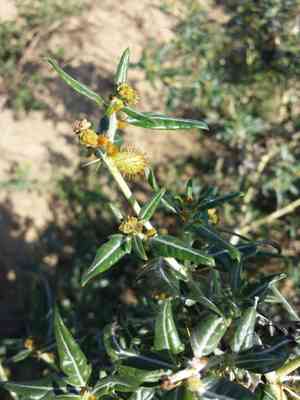
Spiny cocklebur (Xanthium spinosum)
Also known as: Bathurst burr, Clotbur, Spiny cockleburr, Daggerweed, Thorny burweed
Farmers encounter significant difficulties with spiny cocklebur (Xanthium spinosum), a pervasive and invasive weed found globally. The plant's spiny seed pods latch onto animals, facilitating widespread dispersal. This not only contributes to its rapid spread but also damages the wool of sheep, increasing costs for farmers who rely on wool production. Managing this weed involves addressing both its physical spread and its impact on livestock.
In This Article
Attributes of Spiny cocklebur
Lifespan
Annual
Plant Type
Herb
Plant Height
4 m
Spread
1.2 m to 1.5 m
Leaf Color
Green
Flower Size
2.5 cm
Flower Color
Yellow Green White Cream
Images of Spiny cocklebur
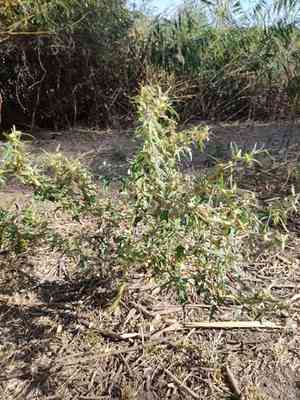
Quickly Identify Spiny cocklebur
1
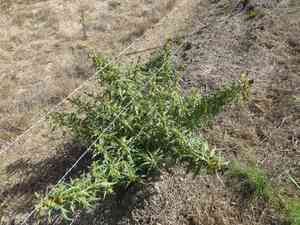
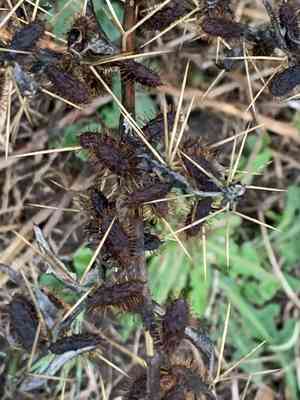
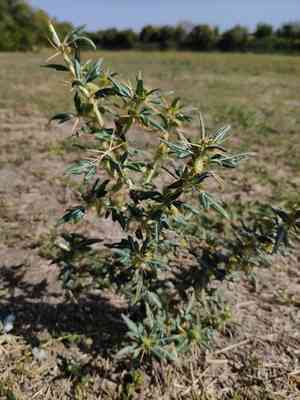
Xanthium spinosum is easily recognizable by its distinctive three-pronged spines on the stems and leaves, lance-shaped leaves with three main veins, and small yellow-green flowers grouped in clusters.
Scientific Classification of Spiny cocklebur
Phylum
Vascular plants
Class
Dicotyledons
Order
Asterales
Family
Daisy
Genus
Cocklebur
Species
Spiny cocklebur
Planting and Growing of Spiny cocklebur
Care Difficulty
Hard
Watering Schedule
Every 2 days
Sunlight Requirements
Full sun
Sunshine Duration
4-8 hours
Ideal Temperature
68-77℉
Soil Type
Potting Mix, Peat Mix
Soil pH
6.5-7.5
Fertilizer Type
Balanced
Pruning Season
Spring, Summer
Pruning Area
Branches, Leaves
Pruning Frequency
2 times a year
Repotting Season
Spring
Pot Type
Plastic, Ceramic
 How to Water Spiny cocklebur?
For Xanthium spinosum, water deeply but infrequently. Each watering session should involve around 500 ml of water, ensuring the soil is moist but not soggy. This depth allows the roots to absorb essential moisture while avoiding waterlogging.
What are the symptoms of an underwatered Spiny cocklebur?
›
What should I do if my Spiny cocklebur is not getting enough water?
›
What are the symptoms of an overwatered Spiny cocklebur?
›
How to save an overwatered Spiny cocklebur?
›
 What Are the Sunlight Requirements for Spiny cocklebur?
For best growth, Xanthium spinosum should receive full sun, which enhances photosynthetic efficiency and promotes strong, healthy growth patterns.
More About Sunlight Requirements Techniques→
How much sunlight is necessary for optimal growth?
›
What are some practical solutions for optimizing sunlight exposure?
›
What are the benefits of ideal sunlight conditions?
›
 What Is the Ideal Temperature Range for Spiny cocklebur?
The ideal temperature range for cultivating Xanthium spinosum is between 68°F to 77°F. This range provides optimal conditions for growth and development, ensuring that the plant can photosynthesize effectively and maintain healthy physiological processes. It's important to maintain this temperature range as much as possible to maximize the plant's growth rate and vigor.
 What Soil is Best for Spiny cocklebur?
Xanthium spinosum thrives in well-drained soil, which prevents waterlogging that can lead to root rot. This type of soil ensures roots have access to air, promoting healthy growth and robust plant structure. This plant does not require highly fertile soil, making it suitable for areas where soil enrichment is limited. Its natural adaptation to poor soils reduces the need for fertilizers, thereby cutting maintenance costs. While Xanthium spinosum prefers well-drained soil, it also benefits from soil that retains some moisture, ensuring it remains hydrated during dry spells. This balance is crucial for steady growth.
 How to Fertilize Spiny cocklebur?
When applying fertilizers to Xanthium spinosum, it is essential to use a balanced formula. A general guideline would be to apply a teaspoon of liquid fertilizer per gallon of water monthly, ensuring it is sufficiently diluted to prevent root burn.
 How to Prune Spiny cocklebur?
Xanthium spinosum is known for its sharp thorns, so it’s crucial to wear protective gloves and clothing while pruning. These thorns can inflict painful injuries if not handled with care. To ensure the plant doesn't grow too wildly, keep an eye on its overall shape. Strive for a balanced appearance to prevent any one side from becoming overly heavy, which might cause the plant to lean.
More About Pruning Techniques→
 How to Propagate Spiny cocklebur plant?
1
Fill the seed tray with potting mix, ensuring the surface is even. Make shallow indentations for each seed, allowing enough space between them to prevent overcrowding.
2
Place one seed in each indentation, lightly covering it with additional potting mix. Press gently to ensure the seed is in contact with the soil.
3
Water the seeds lightly with a fine mist to avoid displacement. Cover the tray with a plastic cover or dome to maintain humidity during germination.
 How to Repot Spiny cocklebur plant?
1
Xanthium spinosum needs repotting when the roots are visibly outgrowing the current container, either protruding from drainage holes or pressing against the pot's edges. This typically indicates the plant's growth has begun to stagnate, making early to mid-spring or early autumn perfect times. An additional sign could be the soil becoming overly compacted and struggling to retain moisture.
2
Choose a pot slightly larger than the current one, allowing about an inch of space between the root ball and the sides. This small increase encourages the roots to expand gradually without overwhelming them, ensuring a balanced growth rate. Also, ensure the pot has adequate drainage holes to prevent root rot, crucial for this plant's well-being.
3
Opt for a well-draining sandy-loam mix, crucial to mimic Xanthium spinosum's natural habitat. This mixture provides excellent drainage, reducing the risk of root rot and helping maintain an even moisture level. Soils that have good aeration support healthy root development and allow adequate nutrient uptake.
Toxicity
Ingestion
WARNING
The judgment on toxicity and danger is for reference only. We DO NOT GUARANTEE any accuracy of such judgment. Therefore, you SHALL NOT rely on such judgment. It is IMPORTANT TO SEEK PROFESSIONAL ADVICE in advance when necessary.



