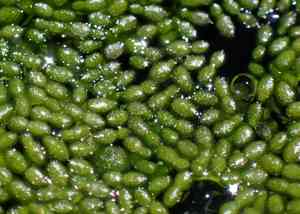
Spotless watermeal (Wolffia arrhiza)
Also known as: Least duckweed
Spotless watermeal is the smallest known vascular plant and is found floating on still freshwater bodies of water. In cooler weather, it sinks to the bottom, rising again when warmer weather arrives. Plants grown in wastewater are often fed to carp, tilapia, and chickens.
In This Article
Attributes of Spotless watermeal
Lifespan
Perennial
Plant Type
Herb
Plant Height
0.1-1.5 mm
Spread
N/A
Leaf Color
Green to yellowish-green
Flower Size
0.3-0.5 mm
Flower Color
White
Images of Spotless watermeal
Quickly Identify Spotless watermeal
1
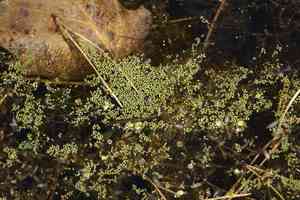
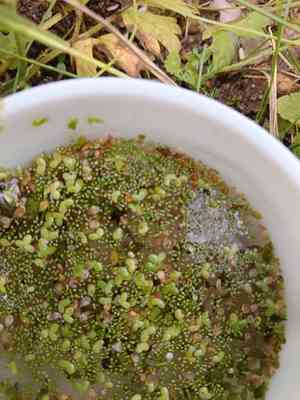
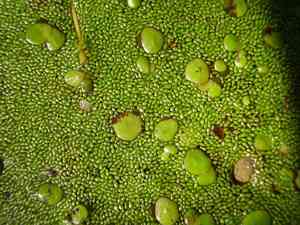
Wolffia arrhiza can be identified by its extremely small size, free-floating nature, lack of roots, and its ability to form dense mats on the water surface. It typically appears as tiny, green, oval-shaped beads.
Scientific Classification of Spotless watermeal
Phylum
Vascular plants
Class
Monocotyledons
Order
Alismatales
Family
Arum
Genus
Watermeals
Species
Spotless watermeal
Planting and Growing of Spotless watermeal
Care Difficulty
Easy
Watering Schedule
Every 8 days
Sunlight Requirements
Full sun
Sunshine Duration
4-8 hours
Ideal Temperature
77-86℉
Soil Type
Potting Mix, Peat Mix
Soil pH
6.5-7.5
Fertilizer Type
Balanced
Pruning Season
Spring, Summer
Pruning Area
Branches, Leaves
Pruning Frequency
2 times a year
Repotting Season
Spring
Pot Type
Plastic, Ceramic
 How to Water Spotless watermeal?
When it comes to watering Wolffia arrhiza, ensure that the plant is submerged in water completely. Given its natural aquatic environment, it's best to maintain a water depth that covers the plant's surface to provide a consistent supply of moisture.
What are the symptoms of an underwatered Spotless watermeal?
›
What should I do if my Spotless watermeal is not getting enough water?
›
What are the symptoms of an overwatered Spotless watermeal?
›
How to save an overwatered Spotless watermeal?
›
 What Are the Sunlight Requirements for Spotless watermeal?
Ideal lighting for Wolffia arrhiza includes partial to full sun exposure. This range promotes vigorous growth and helps maintain its vibrant green appearance.
What is the ideal lighting condition for Wolffia arrhiza?
›
How can you achieve ideal lighting conditions for Wolffia arrhiza?
›
What benefits does Wolffia arrhiza gain from ideal lighting?
›
 What Is the Ideal Temperature Range for Spotless watermeal?
The ideal temperature range for Wolffia arrhiza, also known as rootless duckweed, is between 77°F and 86°F. This range supports optimal growth, ensuring that the plant can perform photosynthesis efficiently and maintain its metabolic functions without stress. Maintaining the temperature within this range will promote healthy and vigorous development, while also minimizing the risk of diseases and pest infestations.
 What Soil is Best for Spotless watermeal?
Wolffia arrhiza thrives in water-saturated environments, benefiting from consistently moist conditions. This supports rapid growth and provides essential nutrients soluble in water, essential for its propagation. This plant requires a nutrient-rich medium, usually facilitated by decomposed organic matter. Such an environment is vital for its robust growth and can significantly enhance its biomass production. Wolffia arrhiza benefits from an aerated water layer within the soil as it enhances oxygen availability. This is crucial since it promotes efficient nutrient absorption and better growth vitality.
 How to Fertilize Spotless watermeal?
Wolffia arrhiza, or commonly known as watermeal, has a very minimal nutrient requirement due to its small size and aquatic nature. A light liquid fertilizer mix, with an N-P-K ratio of 5-5-5, should be diluted to one-quarter of its recommended strength.
 How to Prune Spotless watermeal?
To prune Wolffia arrhiza, carefully skim the surface of the water using a fine mesh net or similar tool to remove any excess growth. This practice prevents overestablishment that might limit sunlight penetration and affect water quality. Gently scoop up the dense patches, leaving enough to promote continued growth and propagation. Once pruning is complete, dispose of the excess Wolffia properly to avoid reintroducing it elsewhere accidentally. Ensure the remaining plants have sufficient space and resources to thrive. Monitor the aquatic environment for any signs of imbalance and adjust conditions to maintain an ideal habitat.
More About Pruning Techniques→
 How to Propagate Spotless watermeal plant?
1
Select healthy and robust Wolffia arrhiza plants for propagation. Ensure that the plants are free from disease and show signs of vigorous growth to increase the likelihood of successful propagation.
2
Carefully remove and separate clusters from the main body of the plant. This should be done by hand or with a sharp knife to avoid damaging the delicate plant structures.
3
Place the divided segments into an aquatic setup similar to their natural habitat. Make sure they have access to adequate sunlight and nutrients to encourage growth and establishment.
 How to Repot Spotless watermeal plant?
1
Wolffia arrhiza, also known as rootless duckweed, often does not require repotting due to its small size and floating nature. However, if you notice overcrowding on the water surface, it's time to thin the population by transferring some to a new container.
2
Since Wolffia arrhiza is a floating water plant, there is no need for a traditional pot. Instead, focus on selecting a shallow water container or pond that provides plenty of room for the plant to spread. A container with a large surface area will promote better sunlight exposure and maximize growth potential.
3
While Wolffia arrhiza thrives on water, its growth can be enhanced with nutrient-rich water. Ensure the water is rich in organic materials or use a diluted aquatic plant fertilizer to support its nutritional needs. This promotes vibrant green growth and a healthy aquatic ecosystem.



