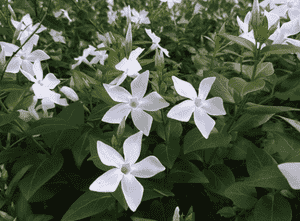
Intermediate periwinkle (Vinca difformis)
Also known as: Intermediate Periwinkle, Variable Leaf Periwinkle
Intermediate periwinkle, or Vinca difformis, is a flowering evergreen perennial. It produces pale bluish to white flowers and is frequently cultivated for use as a ground cover. However, this plant spreads easily and can become invasive.
In This Article
Attributes of Intermediate periwinkle
Lifespan
Perennial
Plant Type
Shrub
Plant Height
25 cm
Spread
1.4 m
Leaf Color
Green Blue
Flower Size
4 cm
Flower Color
White Blue Purple Red
Images of Intermediate periwinkle
Quickly Identify Intermediate periwinkle
1
Look for the glossy, dark green oval leaves, and the five-lobed, pale blue to white star-shaped flowers that appear from late winter to early spring.
Scientific Classification of Intermediate periwinkle
Phylum
Vascular plants
Class
Dicotyledons
Order
Gentianales
Family
Dogbane
Genus
Periwinkles
Species
Intermediate periwinkle
Planting and Growing of Intermediate periwinkle
Care Difficulty
Easy
Watering Schedule
Every 2 days
Sunlight Requirements
Partial sun
Sunshine Duration
4-6 hours
Ideal Temperature
60-75℉
Soil Type
Potting Mix, Peat Mix
Soil pH
6.5-7.5
Fertilizer Type
Balanced
Pruning Season
Spring, Summer
Pruning Area
Branches, Leaves
Pruning Frequency
2 times a year
Repotting Season
Spring
Pot Type
Plastic, Ceramic
 How to Water Intermediate periwinkle?
For Vinca difformis, it's important to keep the soil consistently moist but not waterlogged. A general guideline is to water until the soil feels evenly damp, approximately to a depth of about 10-15 cm. This measurement ensures the roots are well-hydrated without sitting in excess water.
What are the symptoms of an underwatered Intermediate periwinkle?
›
What should I do if my Intermediate periwinkle is not getting enough water?
›
What are the symptoms of an overwatered Intermediate periwinkle?
›
How to save an overwatered Intermediate periwinkle?
›
 What Are the Sunlight Requirements for Intermediate periwinkle?
Vinca difformis thrives under partial sun to full shade, ideal for receiving filtered light similar to its woodland origins. This light range fosters robust growth and vibrant blooms while minimizing stress from too much sunlight.
More About Sunlight Requirements Techniques→
What is the best light condition for Vinca difformis?
›
How can you achieve ideal lighting conditions?
›
What are the benefits of ideal lighting for Vinca difformis?
›
 What Is the Ideal Temperature Range for Intermediate periwinkle?
Vinca difformis thrives best within a temperature range of 60 to 75°F. This range allows optimal growth and flowering, as it ensures adequate warmth during the day and coolness at night. Maintaining this temperature range encourages robust physiological processes and minimizes stress on the plant.
 What Soil is Best for Intermediate periwinkle?
Vinca difformis thrives in well-draining soils that prevent root rot and other water-related issues. This soil type ensures the roots receive necessary oxygen, promoting healthy growth. The plant benefits from a nutrient-rich substrate, which supports its lush foliage and vibrant blooms. Adding organic matter enhances soil fertility, providing the plant with essential nutrients. Consistently moist soil helps the plant maintain turgor pressures, avoiding wilting. However, the soil should not be waterlogged, as excess moisture leads to root diseases.
 How to Fertilize Intermediate periwinkle?
For Vinca difformis, use a balanced, water-soluble fertilizer at half the recommended strength. A moderate amount ensures healthy growth without risking over-fertilization. Over time, observe the plant for signs of nutrient needs and adjust accordingly, always erring on the side of caution.
 How to Prune Intermediate periwinkle?
First, identify any dead or diseased branches. Remove these to prevent disease spread. Next, look for older, woody growth that lacks leaves or blooms and remove these to encourage new growth. Make cuts at a 45-degree angle about 1/4 inch above a bud facing outward. This encourages the new growth to grow outwards rather than inwards, allowing for a fuller plant shape. Thin out the weaker stems to reduce competition within the plant. This allows the healthier branches to receive more sunlight and nutrients, promoting stronger overall growth.
More About Pruning Techniques→
 How to Propagate Intermediate periwinkle plant?
1
Choose healthy stems with no visible signs of disease or damage. Ideally, select stems that are flexible and have a few leaves, as they tend to root more successfully.
2
Using clean pruning shears, cut the chosen stems just below a node. Remove the lower leaves to reduce water loss and allow better contact with the rooting medium.
3
Dip the cut end of the stems into rooting hormone and plant them in a pot filled with well-draining soil. Keep the soil lightly moist and place the pot in a warm, bright location away from direct sunlight.
 How to Repot Intermediate periwinkle plant?
1
Look for signals like slow growth, roots emerging from drainage holes, or compacted soil. Vinca difformis generally needs repotting when its growth becomes stunted or soil appears depleted. Ideal timing would be during active growth phases which occur in spring or autumn.
2
Select a pot slightly larger than the current one with proper drainage holes. A pot that allows for air circulation and excess water to escape is crucial to avoid root rot and ensure healthy plant growth. A proper size pot helps contain the plant’s growth without overwhelming its root system.
3
Opt for a well-draining potting mix with equal parts peat, perlite, and sand. This blend provides the necessary aeration and drainage needed for Vinca difformis roots, preventing waterlogging and promoting healthy root development.
Toxicity
Ingestion, Contact with skin
WARNING
The judgment on toxicity and danger is for reference only. We DO NOT GUARANTEE any accuracy of such judgment. Therefore, you SHALL NOT rely on such judgment. It is IMPORTANT TO SEEK PROFESSIONAL ADVICE in advance when necessary.



