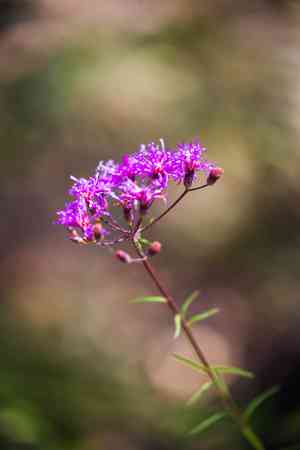
Tall ironweed (Vernonia angustifolia)
Also known as: Narrowleaf Ironweed, Southeastern Ironweed
Liatris spicata, also known as Blazing Star or Gayfeather, is a robust perennial herb characterized by its striking purple, tufted flower heads that are magnets for butterflies and bees. This plant features slender, narrow leaves that grow closely along its upright stems, adding a vertical element to gardens and natural landscapes. Thriving in full sunlight, Blazing Star is remarkably hardy, capable of enduring drought conditions and thriving even in poor soil, showcasing its exceptional adaptability.
In This Article
Attributes of Tall ironweed
Lifespan
Perennial
Plant Type
Herb
Plant Height
1.2 m
Spread
90 cm
Leaf Color
Green
Flower Size
2-3 cm
Flower Color
Purple
Images of Tall ironweed
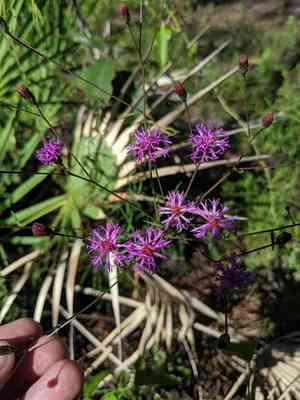
Quickly Identify Tall ironweed
1
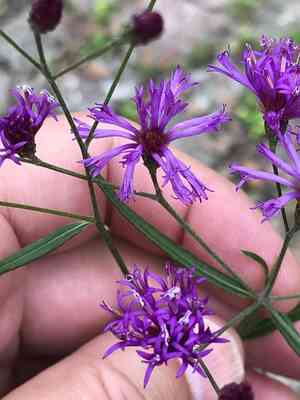
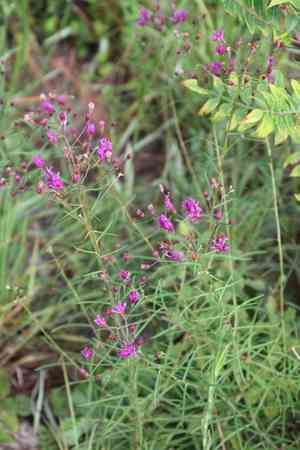
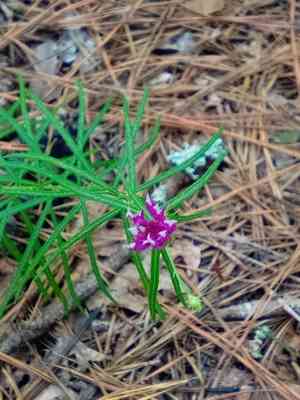
Identify Vernonia angustifolia by its narrow, lanceolate leaves, purplish flower clusters, and robust, upright stems. The leaves are typically 1-2 cm wide and 5-15 cm long.
Scientific Classification of Tall ironweed
Phylum
Vascular plants
Class
Dicotyledons
Order
Asterales
Family
Daisy
Genus
Vernonia
Species
Tall ironweed
Planting and Growing of Tall ironweed
Care Difficulty
Moderate
Watering Schedule
Every 3 days
Sunlight Requirements
Full sun
Sunshine Duration
6-10 hours
Ideal Temperature
60-75℉
Soil Type
Potting Mix, Peat Mix
Soil pH
5.5-7.5
Fertilizer Type
Balanced
Pruning Season
Spring, Summer
Pruning Area
Branches, Leaves
Pruning Frequency
2 times a year
Repotting Season
Spring
Pot Type
Plastic, Ceramic
 How to Water Tall ironweed?
For Vernonia angustifolia, ensure the soil is adequately moist but not waterlogged. Watering should be done when the top inch of the soil feels dry to touch. This ensures that the plant receives enough moisture to thrive without drowning the roots.
What are the symptoms of an underwatered Tall ironweed?
›
What should I do if my Tall ironweed is not getting enough water?
›
What are the symptoms of an overwatered Tall ironweed?
›
How to save an overwatered Tall ironweed?
›
 What Are the Sunlight Requirements for Tall ironweed?
Vernonia angustifolia thrives best in full to partial sunlight, ideally receiving five to seven hours of direct exposure. This level of light allows it to photosynthesize effectively, supporting lush growth and vibrant blooms.
What is the ideal lighting condition for Vernonia angustifolia?
›
How can the ideal lighting conditions be achieved?
›
What benefits does Vernonia angustifolia gain from ideal lighting?
›
 What Is the Ideal Temperature Range for Tall ironweed?
For optimal growth, Vernonia angustifolia thrives in environments where the temperature is consistently between 60°F and 75°F. This range ensures that the plant's metabolic and physiological processes are running at peak efficiency, promoting healthy growth and flowering.
 What Soil is Best for Tall ironweed?
Vernonia angustifolia thrives in well-drained soil that prevents waterlogging, reducing the risk of root rot. This condition is crucial for healthy plant growth and development. The plant flourishes in loam or sandy loam that is rich in organic matter, providing the nutrients required for vibrant growth and blooming. While the plant tolerates a wide pH range, it prefers slightly acidic to neutral (5.5-7.5). Maintaining the optimal pH level ensures nutrient availability and uptake efficiency.
 How to Fertilize Tall ironweed?
For Vernonia angustifolia, it's essential to establish a well-balanced fertilizing routine. Use about 1 tablespoon of liquid fertilizer diluted with a gallon of water per application. Ensure the nutrients meet the plant’s nitrogen needs without overwhelming it.
 How to Prune Tall ironweed?
Carefully inspect the plant for any dead or damaged stems. These components should be cut back to the base or to the nearest healthy node. Removing unhealthy growth redirects energy towards new, robust shoots. While pruning Vernonia angustifolia, take the opportunity to shape the plant according to your desired aesthetic. This could involve maintaining its natural form or adapting it to fit specific landscaping designs. If the plant has grown wild or is too dense, consider rejuvenation pruning. This involves dramatically cutting back the plant to about one third of its size to stimulate new, healthier growth.
More About Pruning Techniques→
 How to Propagate Tall ironweed plant?
1
Fill a seed tray with a seed-starting mix. Sow Vernonia angustifolia seeds evenly on the surface and gently press them into the soil. Keep the tray in a warm area and ensure the soil remains moist.
2
Select healthy, mature stems and use pruning shears to take cuttings about 6 inches long. Remove leaves from the bottom half and dip the cut end in rooting hormone to encourage root development.
3
Carefully dig up the parent plant. Gently separate the root mass into sections, ensuring each section has roots. Replant the divisions immediately into prepared soil and water thoroughly.
 How to Repot Tall ironweed plant?
1
Vernonia angustifolia should be repotted when its roots start to circle around the bottom of the container, indicating it's becoming root-bound. Another sign is if the plant's growth has noticeably slowed down despite adequate care. These signals mark the perfect timing to transfer it into a new pot where it can thrive further.
2
Select a pot that is just one size larger than the current one to avoid overwatering issues. The new pot should have ample drainage holes to prevent water from accumulating at the bottom, which can lead to root rot. A well-chosen pot improves root health and encourages optimal plant growth.
3
Opt for a well-draining soil mix, such as a blend of peat, perlite, and sand. This ensures that the roots get enough oxygen while preventing overwatering. A suitable soil not only provides structural support but also optimizes the nutrient uptake and water retention necessary for thriving growth.



