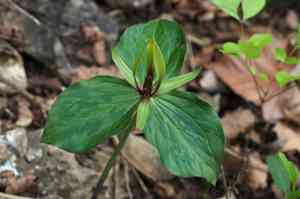
Tapertip wakerobin (Trillium viridescens)
Also known as: Ozark Trillium, Green Trillium
This plant species typically thrives in fertile deciduous forests and mountainous regions with clayey and calcareous soil. The flowers, which stand upright at the junction of three leaves, generally feature bi-colored petals—purple near the base and green towards the top. The plant reaches a height of approximately 61 cm.
In This Article
Attributes of Tapertip wakerobin
Lifespan
Perennial
Plant Type
Herb
Plant Height
15-45 cm (6-18 inches)
Spread
30-45 cm (12-18 inches)
Leaf Color
Green
Flower Size
2.5-5 cm (1-2 inches)
Flower Color
Greenish, Maroon
Images of Tapertip wakerobin
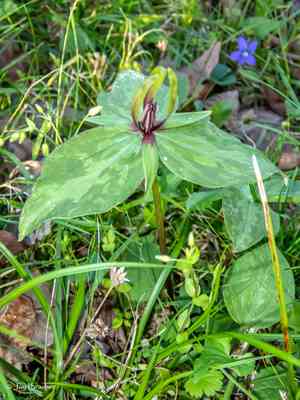
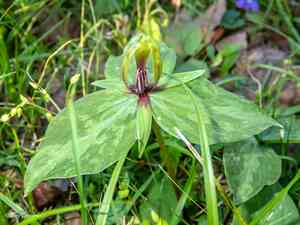
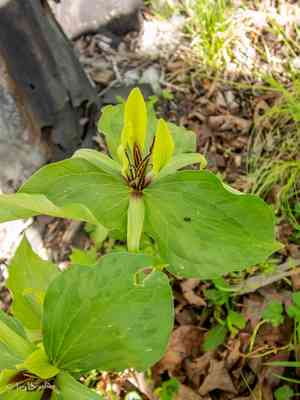
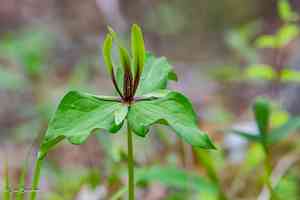
Quickly Identify Tapertip wakerobin
1
Look for three broad, ovate leaves arranged in a whorl at the top of the stem. The flowers, which also have three petals, can be greenish to maroon and appear from spring to early summer.
Scientific Classification of Tapertip wakerobin
Phylum
Vascular plants
Class
Monocotyledons
Order
Liliales
Family
Bunchflower
Genus
Birthroots
Species
Tapertip wakerobin
Planting and Growing of Tapertip wakerobin
Care Difficulty
Moderate
Watering Schedule
Every 3 days
Sunlight Requirements
Partial sun
Sunshine Duration
4-8 hours
Ideal Temperature
60-75℉
Soil Type
Potting Mix, Peat Mix
Soil pH
6.5-7.5
Fertilizer Type
Balanced
Pruning Season
Spring, Summer
Pruning Area
Branches, Leaves
Pruning Frequency
2 times a year
Repotting Season
Spring
Pot Type
Plastic, Ceramic
 How to Water Tapertip wakerobin?
Trillium viridescens prefers consistently moist soil but doesn't want to sit in water. The watering amount should be around 250 milliliters per session. It's important to water until the topsoil is moist, but ensure there is good drainage to prevent waterlogging.
What are the symptoms of an underwatered Tapertip wakerobin?
›
What should I do if my Tapertip wakerobin is not getting enough water?
›
What are the symptoms of an overwatered Tapertip wakerobin?
›
How to save an overwatered Tapertip wakerobin?
›
 What Are the Sunlight Requirements for Tapertip wakerobin?
Trillium viridescens benefits from partial sun to full shade with consistent indirect light aiding vigorous growth and flowering. Ideal light environments enhance photosynthesis and overall vitality.
What is the optimal light level?
›
How to achieve this light condition?
›
Benefits of ideal light?
›
 What Is the Ideal Temperature Range for Tapertip wakerobin?
For Trillium viridescens to thrive, the ideal temperature range is between 60°F and 75°F. This range supports optimal physiological processes, including photosynthesis and cellular respiration, which are crucial for its growth and reproduction. Maintaining this temperature ensures the plant can effectively manage its metabolic activities without stress.
 What Soil is Best for Tapertip wakerobin?
Trillium viridescens thrives in well-drained soil to prevent root rot, ensuring optimal growth and vibrancy. Well-drained conditions keep the roots healthy and provide the necessary aeration for nutrient uptake. The soil needs to retain moisture without becoming waterlogged. This balance ensures Trillium viridescens receives sufficient water for its metabolic processes while avoiding stress conditions caused by drought. Rich organic matter enhances soil fertility, providing essential nutrients and improving soil structure. This promotes robust growth and vivid foliage in Trillium viridescens.
 How to Fertilize Tapertip wakerobin?
For Trillium viridescens, the recommended amount of fertilizer should be moderate, as this plant thrives in natural forest conditions with nutrient-rich, organic soils. For liquid fertilizers, use about half the strength recommended on the product label to avoid over-fertilization. As for granular or slow-release fertilizers, aim for a light sprinkle around the base of the plant, covering an area roughly the size of the plant's canopy.
 How to Prune Tapertip wakerobin?
Begin pruning Trillium viridescens by identifying any dead or damaged foliage. Carefully use sterilized pruning shears to snip away these unwanted parts. Focus on overgrown areas to ensure better airflow and sunlight penetration, which will support robust growth. For a more natural look, prune in a way that mimics the plant's natural form, taking care not to remove more than one-third of the plant at a time to avoid stress.
More About Pruning Techniques→
 How to Propagate Tapertip wakerobin plant?
1
Collect fresh seeds in early spring and soak them in water for 24 hours to initiate the germination process. This will soften the seed coat, making it easier for the seed to sprout.
2
Fill a seed tray with a well-draining seed-starting mix. Sow the Trillium viridescens seeds at a depth of 1/4 inch and keep the soil consistently moist, not waterlogged, during the germination period.
3
In early spring, gently dig around the plant with a trowel to expose the root clumps. Carefully separate the clumps ensuring each division has roots and a growing shoot, then replant immediately.
 How to Repot Tapertip wakerobin plant?
1
Trillium viridescens generally requires repotting when you notice roots escaping through the drainage holes or when water drains too quickly due to compacted soil. Another key signal is reduced growth or poor flowering. Spring and summer are ideal as they coincide with the plant's active growth period, allowing it to recover quickly.
2
Opt for a pot that is slightly larger than the current one but not oversized. A pot that is too large can lead to water retention issues. Ensure it has sufficient drainage holes as Trillium viridescens prefers good drainage. Clay pots can be beneficial as they help absorb excess moisture, providing a more stable environment for the plant.
3
Select rich, well-draining soil to emulate the plant's natural forest floor habitat. A mixture of loamy soil, with added organic matter like compost or peat, is ideal. This composition supports nutrient uptake while preventing root rot by ensuring excess moisture can escape easily, fostering healthier root growth.
Learn More About Tapertip wakerobin Diseases
Anthracnose
Bacterial Leaf Spot
Bacterial Soft Rot
Bacterial Wilt
Chemical Injury
Damping-off
Downy Mildew
Drought Stress
Fusarium Wilt
Gray Mold
Leaf Spot
Mosaic
Nutrient Deficiency
Nutrient Toxicity
Powdery Mildew
Root Rot
Root-knot Nematode
Rusts
Sooty Mold
Spider Mites
Temperature Stress
Thrips Damage
White Mold



