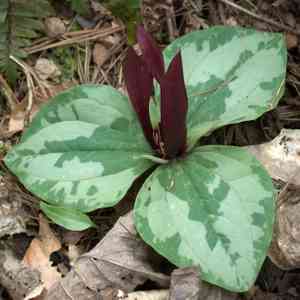
Trailing wakerobin(Trillium decumbens)

Trailing wakerobin (Trillium decumbens)

Also known as: Trailing wakerobin, Decumbent trillium

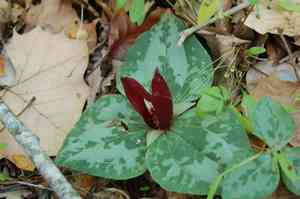
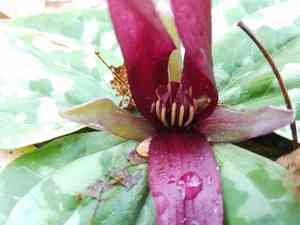
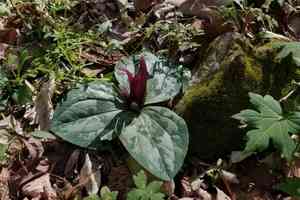
Trailing wakerobin, or Trillium decumbens, is a perennial wildflower recognized by its trio of broad, mottled green leaves arranged in a whorl on a stem that often trails along the ground. In early spring, it features a single maroon to reddish-brown flower nestled among the leaves.

**Growing Conditions**:
- **Light**: Prefers partial to full shade.
- **Soil**: Grows best in rich, well-drained soils with high organic content, favoring slightly acidic to neutral pH.
- **Moisture**: Needs consistently moist environments but not waterlogged conditions.
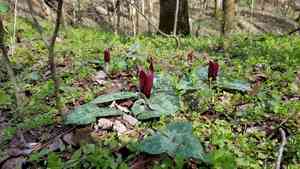
- **Habitat**: Found on deciduous forest floors, benefiting from leaf litter and dappled sunlight.

Ideal for woodland gardens, this low-maintenance plant retreats underground as the forest canopy fills in.

Attributes of Trailing wakerobin

Lifespan
Perennial
Plant Type
Herb
Plant Height
30 cm
Spread
20 cm
Leaf Color
Green with mottled patterns
Flower Size
1 to 2 inches (2.5 to 5 cm)
Flower Color
Maroon to purple

ForwardPlant - Identify plants with a snap

Identify and diagnose plants, get toxicity alerts, and explore safety guides for all types of fungi.

Try for Free

Images of Trailing wakerobin

Trailing wakerobin(Trillium decumbens)

Quickly Identify Trailing wakerobin

1
Trillium decumbens can be identified by its three broad, mottled leaves and a single maroon or purple flower that sits on a short stalk. The plant\'s stems lie flat on the ground, a key feature that distinguishes it from other Trillium species.

Scientific Classification of Trailing wakerobin

Phylum
Vascular plants
Class
Monocotyledons
Order
Liliales
Family
Bunchflower
Genus
Birthroots
Species
Trailing wakerobin

Planting and Growing of Trailing wakerobin

Care Difficulty
Moderate
Watering Schedule
Every 3 days
Sunlight Requirements
Partial sun
Sunshine Duration
6-10 hours
Ideal Temperature
60-75℉
Soil Type
Potting Mix, Peat Mix
Soil pH
5.5-7
Fertilizer Type
Balanced
Pruning Season
Spring, Summer
Pruning Area
Branches, Leaves
Pruning Frequency
2 times a year
Repotting Season
Spring
Pot Type
Plastic, Ceramic

water icon How to Water Trailing wakerobin?

For Trillium decumbens, the amount of water per session should be approximately 250 ml. The soil should be moist but not waterlogged. It's important to follow the principle of keeping the soil consistently moist while avoiding standing water, which the plant dislikes.
What are the symptoms of an underwatered Trailing wakerobin? ›
What should I do if my Trailing wakerobin is not getting enough water? ›
What are the symptoms of an overwatered Trailing wakerobin? ›
How to save an overwatered Trailing wakerobin? ›

sunlight icon What Are the Sunlight Requirements for Trailing wakerobin?

Sunlight Requirements: Partial sun, Full shade
Duration of light: 4 to 6 hours daily
Trillium decumbens benefits from partial sun or full shade conditions, replicating forest floor lighting. Adequate dappled sunlight enhances its photosynthesis processes, leading to healthier foliage and vibrant blooms.
What type of lighting does Trillium decumbens prefer? ›
How can you achieve ideal lighting conditions for Trillium decumbens? ›
What are the benefits of providing ideal lighting for Trillium decumbens? ›

temperature icon What Is the Ideal Temperature Range for Trailing wakerobin?

Ideal Temperature: 60 ~ 75℉
For optimal growth, Trillium decumbens prefers a controlled environment between 60°F and 75°F. Maintaining this range helps ensure vigorous plant growth and healthy flowering.

soil icon What Soil is Best for Trailing wakerobin?

Soil type: Acidic soil, Loam
Soil PH: 5.5 ~ 7
Trillium decumbens thrives in nutrient-rich soils, which support its growth and vibrant flower production. Ensuring the soil is high in organic matter provides essential nutrients, leading to healthier plants and robust blooms. This plant prefers well-drained soil to prevent root rot and other moisture-related issues. Ensuring the soil doesn't retain excess water helps maintain the plant's health and allows it to absorb nutrients effectively. Loose and aerated soil is crucial for root expansion and access to oxygen. This type of soil promotes vigorous root growth, ensuring the plant can access adequate water and nutrients while thriving in its natural environment.

fertilize icon How to Fertilize Trailing wakerobin?

Fertilizer type: Balanced
When fertilizing Trillium decumbens, use a balanced, water-soluble fertilizer at one-quarter to half the recommended strength. This ensures the plant receives adequate nutrients without the risk of over-fertilization. Using too much fertilizer can cause more harm than benefits, leading to nutrient burn and impacting the plant's health.

prune icon How to Prune Trailing wakerobin?

Pruning Time: Spring
Start pruning Trillium decumbens by first identifying any withered or discolored leaves and stems. Using a pair of sharp, sterilized scissors, carefully trim these parts down to the base. This encourages vitality by allowing the plant to redirect its energy to healthy growth. Be gentle, as this plant's structure is delicate. More About Pruning Techniques→

propagate icon How to Propagate Trailing wakerobin plant?

Propagate Time: Spring, Early spring
1
Collect Trillium decumbens seeds in late spring when pods start to open. Carefully remove the seeds, ensuring not to damage them, and let them dry for a few days before planting.
2
In early spring, dig out mature Trillium clumps using a garden spade. Shake off excess soil and carefully separate the rhizomes by hand, ensuring each section has roots and buds.
3
Fill seed trays with a well-draining potting mix. Sow the seeds on the surface, pressing them lightly to ensure contact with the soil. Water gently to avoid soil displacement and place the trays in a cool, shaded location.
More About Propagating Techniques→

repot icon How to Repot Trailing wakerobin plant?

Repotting frequency: Every 2-3 years
1
Trillium decumbens signals the need for repotting when growth slows, roots are visible through drainage holes, or soil remains wet longer than usual. These cues generally occur every couple of years and indicate that the plant requires more space or fresh nutrients to thrive.
2
Choose a pot that is 1-2 inches larger in diameter than the current one to give roots room to grow. A pot with appropriate drainage holes prevents root rot by allowing excess water to escape, thus keeping the roots healthy and ensuring the plant has space for optimal growth.
3
Opt for a well-draining, rich soil mix that retains sufficient moisture without becoming waterlogged. This balance is crucial as Trillium decumbens requires consistent moisture yet suffers from root rot if the soil is too dense, thereby enhancing healthy root development and plant vigor.

ForwardPlant - Identify plants with a snap

Find the best spots for them to optimize their health, simply using your phone.

Try for Free