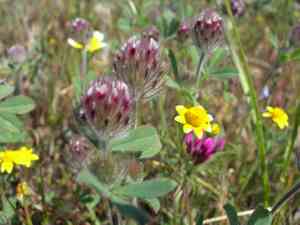
Rancheria clover (Trifolium albopurpureum)
Also known as: White Purple Clover, Purple Sack Clover
Rancheria clover (Trifolium albopurpureum var. dichotomum) is a perennial herb characterized by its trifoliate leaves, each composed of three oval leaflets. It produces small, rounded flower heads that range in color from white to purple. This hardy plant is well-suited to open, well-drained soils and is often found in grassy meadows, open woodlands, and along roadsides. It prefers sunny to partially shaded environments and is typically seen at elevations from sea level to mid-mountain areas. Rancheria clover's adaptability allows it to thrive in various habitats, adding a splash of color to the landscape.
In This Article
Attributes of Rancheria clover
Lifespan
Annual
Plant Type
Herb
Plant Height
10-60 cm
Spread
Not commonly measured
Leaf Color
Green with light-green or whitish markings
Flower Size
0.5-1 cm
Flower Color
White to purplish
Images of Rancheria clover
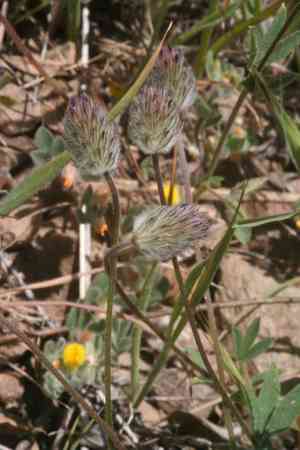
Quickly Identify Rancheria clover
1
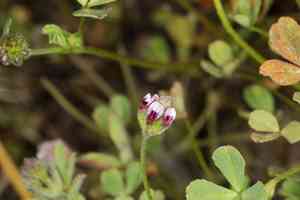
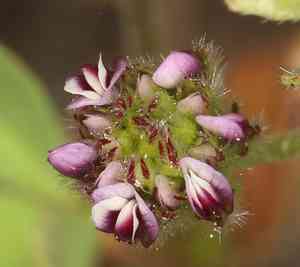
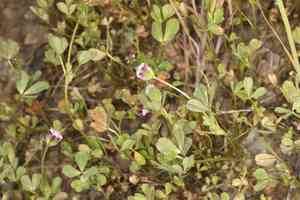
Trifolium albopurpureum can be identified by its trifoliate leaves, each composed of three leaflets. The flowers are typically white to purplish, clustered in a dense flower head. The plant has a hairy stem and the leaves often have a distinct pattern of light-green or white marks.
Scientific Classification of Rancheria clover
Phylum
Vascular plants
Class
Dicotyledons
Order
Fabales
Family
Legume
Genus
Clovers
Species
Rancheria clover
Planting and Growing of Rancheria clover
Care Difficulty
Easy
Watering Schedule
Every 2 days
Sunlight Requirements
Partial sun
Sunshine Duration
4-8 hours
Ideal Temperature
60-75℉
Soil Type
Potting Mix, Peat Mix
Soil pH
6.5-7.5
Fertilizer Type
Balanced
Pruning Season
Spring, Summer
Pruning Area
Branches, Leaves
Pruning Frequency
2 times a year
Repotting Season
Spring
Pot Type
Plastic, Ceramic
 How to Water Rancheria clover?
Trifolium albopurpureum thrives when its soil is moist but not soggy. Its watering should be thoroughly soaked until the water starts draining out of the bottom of the pot. Providing 250 ml of water per session typically suffices to achieve this moisture level, yet always ensure any excess water can escape to avoid root rot.
What are the symptoms of an underwatered Rancheria clover?
›
What should I do if my Rancheria clover is not getting enough water?
›
What are the symptoms of an overwatered Rancheria clover?
›
How to save an overwatered Rancheria clover?
›
 What Are the Sunlight Requirements for Rancheria clover?
Trifolium albopurpureum prefers a light range of 4 to 6 hours of partial sun. Ideal exposure supports robust growth and helps in vibrant blooming, ensuring the plant remains lush and healthy.
How much light does Trifolium albopurpureum need?
›
How to achieve ideal lighting conditions?
›
Benefits of ideal light for Trifolium albopurpureum?
›
 What Is the Ideal Temperature Range for Rancheria clover?
The ideal temperature range for Trifolium albopurpureum is between 60°F and 75°F. This range provides optimal conditions for growth and photosynthesis, ensuring the plant thrives and maintains healthy development. Keeping the temperature in this range also helps minimize stress and promote resilience against diseases.
 What Soil is Best for Rancheria clover?
Trifolium albopurpureum thrives in well-drained soil, which prevents waterlogging and root rot. Adequate drainage enhances root health, allowing the plant to absorb essential nutrients efficiently. This plant prefers soil with moderate fertility. It benefits from a balanced availability of nutrients, promoting robust growth and vibrant blooms without the need for excessive fertilization. Trifolium albopurpureum does well in soils with a pH ranging from 6.5 to 7.5. This range facilitates optimal nutrient uptake and supports the plant's physiological processes.
 How to Fertilize Rancheria clover?
Trifolium albopurpureum benefits from a balanced fertilization approach. When using liquid fertilizers, a diluted solution at half the strength recommended for houseplants is optimal. For solid fertilizers, such as slow-release granules, about 1 tablespoon per square foot is adequate. This ensures they get enough nutrients without the risk of overfertilization.
 How to Prune Rancheria clover?
Start by assessing your plant for any dead, damaged, or diseased stems. Remove these with clean cuts to encourage new growth and prevent disease spread. Trim back excessive growth to maintain a neat shape. Focus on inward growing stems to improve air circulation within the plant, reducing the risk of fungal infections.
More About Pruning Techniques→
 How to Propagate Rancheria clover plant?
1
Begin by scarifying the seeds gently with sandpaper to break their hard outer coating, which promotes quicker germination. Soak the seeds in water for 24 hours to further soften them and enhance the absorption of moisture once planted.
2
Scatter the prepared seeds evenly across the surface of your seed tray filled with potting mix. Cover the seeds with a thin layer of soil, no more than twice their size, to provide the darkness they need to germinate while ensuring airflow.
3
After sowing, water the seed tray gently using a spray bottle to avoid dislodging seeds. Maintain consistent moisture by covering the tray with plastic wrap or a clear lid, and place it in a location with indirect sunlight, checking daily for germination.
 How to Repot Rancheria clover plant?
1
Repotting Trifolium albopurpureum typically aligns with its growth cycle. Signs include roots outgrowing the current pot or the soil compacting with reduced drainage. Spring is ideal when the plant is actively growing, ensuring a smoother transition.
2
Select a pot that is one size larger than the current one, with drainage holes to prevent waterlogging. A clay pot is beneficial as it allows for airflow around the roots, reducing the risk of root rot and promoting healthy growth.
3
Choose a well-draining loamy mix to ensure Trifolium albopurpureum receives the nutrients it needs without water retention issues. This type of soil prevents root rot and allows for optimal air circulation around the roots.
Learn More About Rancheria clover Diseases
Anthracnose
Bacterial Leaf Spot
Bacterial Wilt
Crown Gall
Cyst Nematode
Damping-off
Downy Mildew
Drought Stress
Fusarium Wilt
Gray Mold
Leaf Spot
Mosaic
Nutrient Deficiency
Nutrient Toxicity
Powdery Mildew
Root Rot
Root-knot Nematode
Rusts
Sooty Mold
Spider Mites
Temperature Stress
Thrips Damage
White Mold



