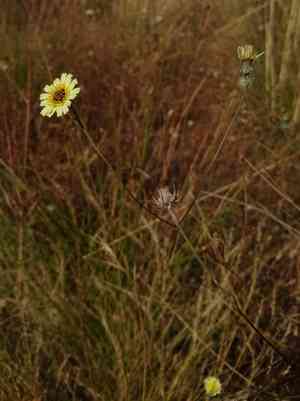
Yellow hawkweed (Tolpis umbellata)
Also known as: None
Yellow hawkweed (Hieracium caespitosum) is a perennial herb that thrives in sunny, well-drained areas such as meadows, grasslands, and roadsides. It features bright yellow, dandelion-like flowers and narrow, hairy leaves. The plant forms a basal rosette and has slender, branching stems that can grow up to 90 cm tall. Originally from Europe, it has adapted to various environments and is now considered invasive in some parts of North America.
In This Article
Attributes of Yellow hawkweed
Lifespan
Perennial
Plant Type
Herb
Plant Height
30-50 cm
Spread
N/A
Leaf Color
Green
Flower Size
2-4 cm
Flower Color
Yellow
Images of Yellow hawkweed
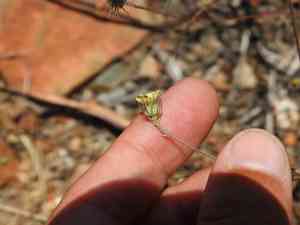
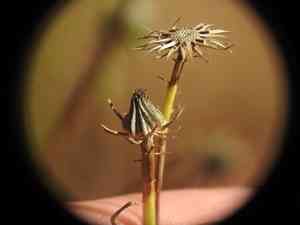
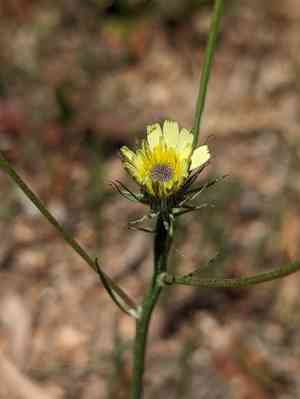
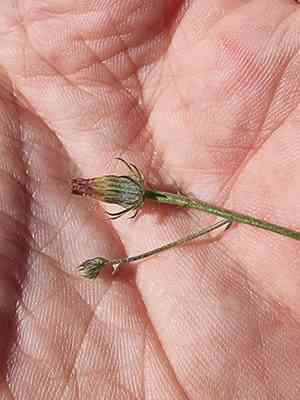
Quickly Identify Yellow hawkweed
1
Tolpis umbellata can be identified by its umbrella-shaped clusters of bright yellow flowers, narrow linear leaves, and stem that can reach up to 50 cm in height.
Scientific Classification of Yellow hawkweed
Phylum
Vascular plants
Class
Dicotyledons
Order
Asterales
Family
Daisy
Genus
Tolpis
Species
Yellow hawkweed
Planting and Growing of Yellow hawkweed
Care Difficulty
Easy
Watering Schedule
Every 3 days
Sunlight Requirements
Full sun
Sunshine Duration
4-6 hours
Ideal Temperature
60-75℉
Soil Type
Potting Mix, Peat Mix
Soil pH
6.5-7.5
Fertilizer Type
Balanced
Pruning Season
Spring, Summer
Pruning Area
Branches, Leaves
Pruning Frequency
2 times a year
Repotting Season
Spring
Pot Type
Plastic, Ceramic
 How to Water Yellow hawkweed?
Tolpis umbellata requires a balanced approach to watering. Each watering should aim to provide about 200 milliliters of water, ensuring the soil is moist but not waterlogged. The principle is to allow the topsoil to dry out slightly between waterings, which prevents root rot and other moisture-related issues.
What are the symptoms of an underwatered Yellow hawkweed?
›
What should I do if my Yellow hawkweed is not getting enough water?
›
What are the symptoms of an overwatered Yellow hawkweed?
›
How to save an overwatered Yellow hawkweed?
›
 What Are the Sunlight Requirements for Yellow hawkweed?
Tolpis umbellata thrives best under full sun or partial sun conditions. Providing adequate light promotes optimal flowering, vigorous growth, and a robust plant structure.
What is the best lighting condition for Tolpis umbellata?
›
How can we provide this lighting condition?
›
What are the benefits of these lighting conditions?
›
 What Is the Ideal Temperature Range for Yellow hawkweed?
To promote optimal growth, Tolpis umbellata should be cultivated within an ideal temperature range of 60 to 75 degrees Fahrenheit. These conditions mimic their native habitat, fostering effective photosynthesis and overall plant health. Within this range, the plant can efficiently manage biochemical processes crucial for growth, flowering, and seed production. Plant stress is minimized, thereby reducing susceptibility to diseases and pest infestations. Thus, maintaining these temperatures is key to achieving a flourishing Tolpis umbellata.
 What Soil is Best for Yellow hawkweed?
Tolpis umbellata thrives in well-drained soil to prevent root rot and ensure healthy growth. This condition allows for appropriate moisture retention without waterlogging, giving the plant a stable environment for root expansion. The plant prefers moderately fertile soils, which provide the necessary nutrients for optimal growth without causing excessive foliage production. Balanced fertility ensures bloom development and overall plant vigor. Tolpis umbellata grows best in neutral to slightly acidic pH levels between 6.5 and 7.5. This range allows for optimum nutrient availability, enhancing the plant's ability to absorb essential elements effectively.
 How to Fertilize Yellow hawkweed?
For Tolpis umbellata, the amount of fertilizer to use should be modest, given its specific nutrient needs. Typically, a diluted solution of liquid fertilizer should be applied at a rate of half the recommended strength per the product's instructions. For solid fertilizers, use approximately 100 grams per plant annually, divided into three applications. This balanced approach ensures the plant receives adequate nutrients without the risk of over-fertilization.
 How to Prune Yellow hawkweed?
Start by removing any dead or damaged stems to improve air circulation. Trim back overly long or leggy stems to maintain the plant's shape and prevent it from becoming unruly. Use sharp, sterilized scissors or pruning shears to make clean cuts, encouraging new growth and more robust flowering. To promote a bushier plant, prune back the stem tips by a few inches. This encourages the plant to grow more lateral branches, making it fuller. Be consistent with this practice during the active growing seasons for the best results. Regularly deadhead spent flowers to prolong the blooming period. This not only keeps the plant looking tidy but also redirects the plant's energy into producing more flowers instead of seeds.
More About Pruning Techniques→
 How to Propagate Yellow hawkweed plant?
1
Start by filling a seed tray with a suitable potting mix. Ensure the soil is loose and well-draining, and moisten it slightly before sowing the seeds to provide an ideal germination environment.
2
Scatter Tolpis umbellata seeds evenly across the soil surface, lightly pressing them into the soil. Ensure even distribution and cover with a thin layer of soil or vermiculite.
3
Place the seed tray in a warm and bright location, ideally under indirect sunlight. Maintain consistent moisture by misting the soil surface regularly to prevent it from drying out.
 How to Repot Yellow hawkweed plant?
1
Tolpis umbellata signals its need for repotting when its roots start circling the pot's edge or growing out of the drainage holes. Additionally, if water takes longer to drain or the plant seems stunted in growth, it's time to consider repotting. Typically, the best seasons are spring and summer when the plant is actively growing.
2
Select a pot that is one size larger than the current one, ensuring it has ample drainage holes. This allows for root expansion and prevents waterlogging, which could lead to root rot. A breathable material, such as terracotta, is preferred for better aeration, promoting healthier growth.
3
Opt for a well-draining loamy soil mix, which balances moisture retention with adequate drainage. This type of soil prevents the roots from sitting in water, reducing the risk of diseases while allowing the plant to access necessary nutrients. Including some perlite or sand can enhance the drainage capability.
Learn More About Yellow hawkweed Diseases
Anthracnose
Bacterial Leaf Spot
Bacterial Soft Rot
Bacterial Wilt
Black Spot
Chemical Injury
Crown Gall
Cyst Nematode
Damping-off
Downy Mildew
Drought Stress
Fusarium Wilt
Gray Mold
Leaf Curl
Leaf Spot
Mosaic
Nutrient Deficiency
Nutrient Toxicity
Powdery Mildew
Root Rot
Root-knot Nematode
Rusts
Sooty Mold
Spider Mites
Temperature Stress
Thrips Damage
White Mold



