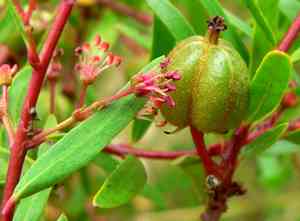
Parry's tetracoccus (Tetracoccus dioicus)
Also known as: Red Shrubby Spurge, Red Sage
Parry's tetracoccus is a dioecious shrub, possessing separate male and female plants, which is crucial for its reproductive success. Adapted to arid habitats, this shrub has evolved several features to conserve water. Its small, thick leaves, often coated with a waxy layer, significantly reduce water loss by limiting transpiration. Additionally, its sparse and woody structure is well-suited to endure dry conditions. Female plants bear bright red berries, which serve as a distinctive identification marker.
In This Article
Attributes of Parry's tetracoccus
Lifespan
Perennial
Plant Type
Shrub
Plant Height
0.5 to 2 meters
Spread
1 to 1.5 meters
Leaf Color
Green
Flower Size
Approximately 1 cm
Flower Color
Yellow-green
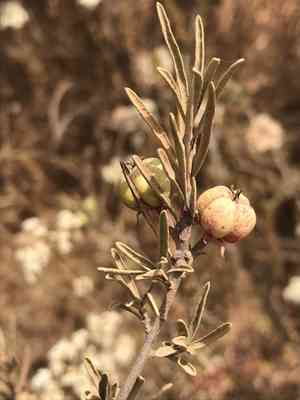
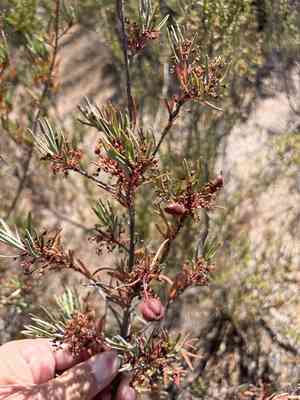
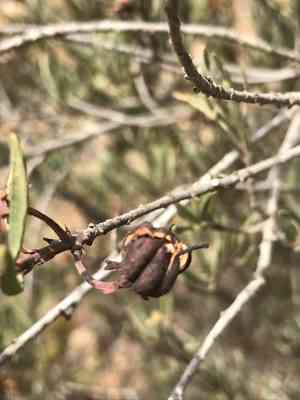
Images of Parry's tetracoccus

Quickly Identify Parry's tetracoccus
1
Identifiable by its dense, rounded growth form, red twigs, and small, leathery leaves. Flowers are small, yellow-green clusters. Male and female flowers appear on separate plants.
Scientific Classification of Parry's tetracoccus
Phylum
Vascular plants
Class
Dicotyledons
Order
Malpighiales
Family
Picrodendron
Genus
Shrubby-spurge
Species
Parry's tetracoccus
Planting and Growing of Parry's tetracoccus
Care Difficulty
Moderate
Watering Schedule
Every 2 days
Sunlight Requirements
Full sun
Sunshine Duration
6-10 hours
Ideal Temperature
60-75℉
Soil Type
Potting Mix, Peat Mix
Soil pH
6.5-7.5
Fertilizer Type
Balanced
Pruning Season
Spring, Summer
Pruning Area
Branches, Leaves
Pruning Frequency
2 times a year
Repotting Season
Spring
Pot Type
Plastic, Ceramic
 How to Water Parry's tetracoccus?
Tetracoccus dioicus requires moderate watering, about 250 milliliters each time. The key is to ensure the soil feels moist but not soggy. Avoid letting the pot sit in water and always check the topsoil before adding more water. A good rule of thumb is to water when the top inch of soil feels dry to the touch.
What are the symptoms of an underwatered Parry's tetracoccus?
›
What should I do if my Parry's tetracoccus is not getting enough water?
›
What are the symptoms of an overwatered Parry's tetracoccus?
›
How to save an overwatered Parry's tetracoccus?
›
 What Are the Sunlight Requirements for Parry's tetracoccus?
For optimal health, Tetracoccus dioicus requires full to partial sun, about 4 to 6 hours daily. This range supports robust growth and flowering, mimicking its native sunny environment.
Why is full sun important?
›
Can it tolerate some shade?
›
What are best positioning practices?
›
 What Is the Ideal Temperature Range for Parry's tetracoccus?
Tetracoccus dioicus thrives best when the temperature is maintained between 60°F and 75°F. This range provides the right balance between warmth and comfort, supporting optimal growth and biological functions. Staying within these limits helps ensure that the plant can photosynthesize effectively, produce healthy foliage, and resist most pests and diseases.
 What Soil is Best for Parry's tetracoccus?
Tetracoccus dioicus thrives in well-draining soils, ensuring that its roots receive enough air and avoid rot caused by waterlogging. This setup aids in maintaining plant health by preventing root diseases. This plant adapts to nutrient-poor conditions, which means it does not require fertilization often. This adaptability helps it survive in arid environments, making it a low-maintenance choice. Tetracoccus dioicus prefers soil with low organic matter, common in its native habitat. This preference reduces the need for soil amendments, saving resources and effort.
 How to Fertilize Parry's tetracoccus?
Tetracoccus dioicus, being a resilient desert shrub, requires minimal fertilization. A light application of liquid fertilizer, diluted to half strength, every month during the growing season is sufficient. Avoid over-fertilizing, as it can harm the plant’s natural adaptation to nutrient-scarce environments.
 How to Prune Parry's tetracoccus?
Before you start pruning, thoroughly inspect Tetracoccus dioicus for any dead or diseased branches. Remove these first to promote overall plant health. Prune back overgrown or leggy branches to maintain a balanced shape. This not only improves the plant's appearance but also allows better air circulation. When trimming branches, make cuts at a slight angle. This helps water to run off the cut surface, preventing rot and fostering quicker healing. While Tetracoccus dioicus benefits from regular pruning, avoid cutting more than one-third of the plant at once to prevent shock and ensure vigorous growth.
More About Pruning Techniques→
 How to Propagate Parry's tetracoccus plant?
1
Choose a robust and healthy parent plant to ensure that the genetic material and the initial plant tissue are free from diseases and weaknesses.
2
With pruning shears, take several 4-6 inch cuttings from the plant. The cuttings should be taken from young, non-flowering shoots to encourage growth.
3
Sow the seeds evenly on a tray filled with potting mix. Lightly cover them with a thin layer of soil, then water gently to avoid displacement.
 How to Repot Parry's tetracoccus plant?
1
Repotting Tetracoccus dioicus should be considered when you notice roots emerging through the drainage holes or the plant appears to be stunted in growth. This indicates that the plant has outgrown its current container and needs more space to continue flourishing.
2
Choose a pot that is slightly larger than the current one, with sufficient drainage holes at the bottom. Terracotta pots are ideal as they allow airflow and excess moisture to escape, preventing root rot in this drought-tolerant species.
3
Opt for a well-draining sandy soil mix that mimics the plant's natural environment. This type of soil ensures proper aeration and helps prevent water from sitting at the roots, reducing the risk of fungal diseases.
Learn More About Parry's tetracoccus Diseases
Anthracnose
Bacterial Leaf Spot
Bacterial Soft Rot
Black Spot
Chemical Injury
Crown Gall
Cyst Nematode
Damping-off
Downy Mildew
Drought Stress
Fusarium Wilt
Gray Mold
Leaf Curl
Leaf Spot
Mosaic
Nutrient Deficiency
Nutrient Toxicity
Powdery Mildew
Root Rot
Root-knot Nematode
Rusts
Sooty Mold
Spider Mites
Temperature Stress
Thrips Damage
White Mold



