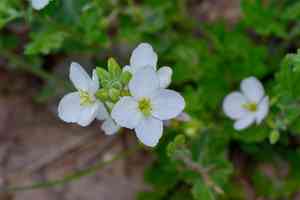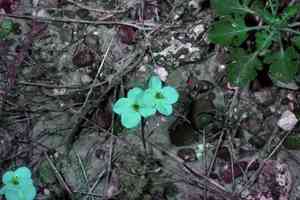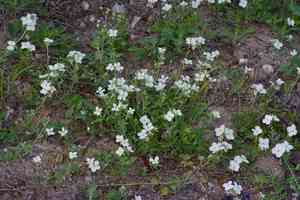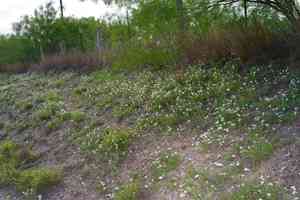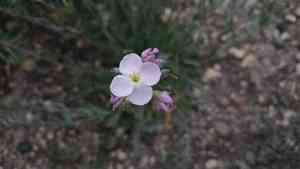
Gregg's keelpod(Synthlipsis greggii)

Gregg's keelpod (Synthlipsis greggii)

Also known as: Gregg's Synthlipsis

Gregg's keelpod, also known as Eysenhardtia greggii, is an ideal choice for water-wise gardens in arid climates due to several distinctive traits:

1. **Silver-Gray Foliage**: Its unique silver-gray leaves not only add aesthetic appeal but also reflect sunlight, helping to reduce water loss.
2. **Profuse Blooms**: The plant produces an abundance of delicate pink to lavender flowers during the warm months, adding vibrant color to the garden.
3. **Compact Growth**: Its compact size makes it suitable for smaller garden spaces while still providing visual interest.
4. **Drought Resistance**: Requiring very little water once established, it is perfect for regions with limited water supply.
5. **Adaptability to Rocky Soils**: Gregg's keelpod thrives in rocky, poor soils commonly found in arid environments.
6. **Sun Tolerance**: It flourishes under full sun, showcasing the resilience typical of desert plants.

These attributes make Gregg's keelpod a resilient and attractive option for sustainable landscaping in dry areas.

Attributes of Gregg's keelpod

Lifespan
Annual, Biennial
Plant Type
Herb
Plant Height
5-15 cm
Spread
Not applicable, as it is an herbaceous plant.
Leaf Color
Green
Flower Size
Up to 1 cm
Flower Color
White to pale-pink

ForwardPlant - Identify plants with a snap

Identify and diagnose plants, get toxicity alerts, and explore safety guides for all types of fungi.

Try for Free

Images of Gregg's keelpod

Gregg's keelpod(Synthlipsis greggii)

Quickly Identify Gregg's keelpod

1
Look for small, clustered, white to pale-pink flowers and linear, grass-like leaves. It\'s often found in sandy or rocky soils.

Scientific Classification of Gregg's keelpod

Phylum
Vascular plants
Class
Dicotyledons
Order
Brassicales
Family
Cruciferae
Genus
Synthlipsis
Species
Gregg's keelpod

Planting and Growing of Gregg's keelpod

Care Difficulty
Easy
Watering Schedule
Every 2 days
Sunlight Requirements
Full sun
Sunshine Duration
6-10 hours
Ideal Temperature
65-75℉
Soil Type
Potting Mix, Peat Mix
Soil pH
6.5-7.5
Fertilizer Type
Balanced
Pruning Season
Spring, Summer
Pruning Area
Branches, Leaves
Pruning Frequency
2 times a year
Repotting Season
Spring
Pot Type
Plastic, Ceramic

water icon How to Water Gregg's keelpod?

Synthlipsis greggii prefers moderate watering. Water until the top inch of soil feels consistently moist, but ensure no water is pooling at the bottom of the pot. This helps in mimicking its natural, slightly arid habitat while preventing root rot.
What are the symptoms of an underwatered Gregg's keelpod?
What should I do if my Gregg's keelpod is not getting enough water?
What are the symptoms of an overwatered Gregg's keelpod?
How to save an overwatered Gregg's keelpod?

sunlight icon What Are the Sunlight Requirements for Gregg's keelpod?

Sunlight Requirements: Full sun, Partial sun
Duration of light: 6 to 8 hours daily
Synthlipsis greggii prefers full to partial sun exposure, translating to 6 to 8 hours of light daily. This light range supports blooming and robust growth, ensuring a healthy plant.
Solution for Ideal Light
How to Ensure Ideal Light
Benefits of Ideal Light

temperature icon What Is the Ideal Temperature Range for Gregg's keelpod?

Ideal Temperature: 65 ~ 75℉
For optimal growth and development, Synthlipsis greggii flourishes in a stable temperature environment that ranges from 65°F to 75°F. This range allows the plant to maintain its physiological processes, ensuring healthy foliage and optimal flowering.

soil icon What Soil is Best for Gregg's keelpod?

Soil type: Loam, Sandy loam, Sand soil
Soil PH: 6.5 ~ 7.5
Synthlipsis greggii thrives in well-drained soil conditions that prevent water-logging, promoting healthy root growth and minimizing the risk of root rot and fungal diseases. This plant prefers soils with moderate nutrient content that support its growth without promoting excessive foliage, which can lead to weak stems and poor flowering. A balance of moisture retention and aeration ensures that Synthlipsis greggii roots have access to water while also receiving ample oxygen, crucial for optimal plant health.

fertilize icon How to Fertilize Gregg's keelpod?

Fertilizer type: Balanced
For Synthlipsis greggii, it is important to apply liquid fertilizers at a concentration of about half the strength recommended for general houseplants. Use roughly one teaspoon per gallon of water to ensure proper nutrient delivery without over-fertilizing.

prune icon How to Prune Gregg's keelpod?

Pruning Time: Spring, Summer
Begin by identifying and removing any dead or diseased stems to promote healthy growth. Next, trim back any overgrown branches to maintain the plant's desired shape and size. Always make clean cuts with sharp shears to minimize potential damage to the plant. To maintain the desired shape of Synthlipsis greggii, lightly trim along the edges and tops of the plant. This helps keep it looking tidy and encourages denser foliage. Be mindful not to remove more than one-third of the plant at any one time to avoid stress. More About Pruning Techniques

propagate icon How to Propagate Gregg's keelpod plant?

Propagate Time: Spring, Late spring, Early spring
1
Begin by filling the seed tray with potting mix, gently firming down the surface. Sow the Synthlipsis greggii seeds on the soil surface, spacing them evenly, and lightly cover them with a thin layer of soil.
2
Water the seeds gently using a fine mist spray to avoid disturbing the soil surface. Ensure that the soil remains consistently moist but not waterlogged, as excess water can lead to seed rot.
3
Place the seed tray in a location with indirect sunlight and maintain a temperature range of 65-75°F (18-24°C). Use a propagation mat if necessary to provide consistent warmth for better germination.
More About Propagating Techniques

repot icon How to Repot Gregg's keelpod plant?

Repotting frequency: Every 2-3 years
1
Repot Synthlipsis greggii when you notice roots coming out of the drainage holes, or the plant appears top-heavy. Ideally, repot in spring or autumn, avoiding the heat of summer. These seasons allow the plant to recover quickly in mild conditions.
2
Select a pot that is only one size larger to prevent over-potting. This ensures the roots have room to grow without excess soil retaining moisture, which could lead to root rot. Consider using a pot with sufficient drainage holes.
3
Opt for a well-draining sandy loam mixture. Ensuring good drainage prevents waterlogging, promoting healthier roots. The sandy texture allows for air-flow and the loam ensures necessary nutrients are retained.

ForwardPlant - Identify plants with a snap

Find the best spots for them to optimize their health, simply using your phone.

Try for Free