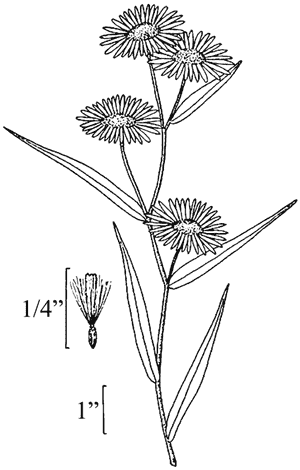
Northern bog aster (Symphyotrichum boreale)
Also known as: Rush aster
The New England Aster is a hardy perennial plant known for its daisy-like flowers with yellow centers and purple to blue petals. Native to wetland environments, it flourishes in moist soils and is commonly found in meadows and along streambanks. With its upright stems and lance-shaped leaves, this resilient plant adds vibrant autumn color with its late-season blooms.
In This Article
Attributes of Northern bog aster
Lifespan
Perennial
Plant Type
Herb
Plant Height
15 cm to 91 cm
Spread
N/A
Leaf Color
Green
Flower Size
Around 1-2 cm (0.4-0.8 inches)
Flower Color
Pale lavender to blue with yellow centers
Images of Northern bog aster
Quickly Identify Northern bog aster
1
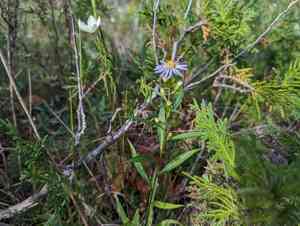
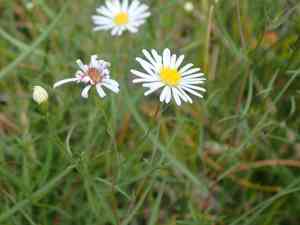
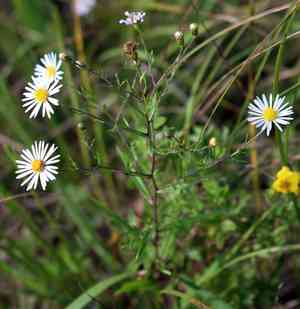
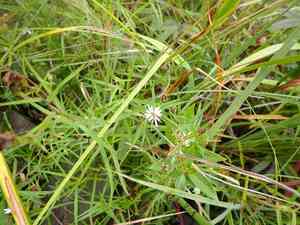
The northern bog aster can be identified by its slender, erect stems and small, pale lavender or blue flowers with yellow centers. It has narrow, lance-shaped leaves that are alternately arranged on the stem.
Scientific Classification of Northern bog aster
Phylum
Vascular plants
Class
Dicotyledons
Order
Asterales
Family
Daisy
Genus
Asters
Species
Northern bog aster
Planting and Growing of Northern bog aster
Care Difficulty
Easy
Watering Schedule
Every 2 days
Sunlight Requirements
Full sun
Sunshine Duration
8-12 hours
Ideal Temperature
60-75℉
Soil Type
Potting Mix, Peat Mix
Soil pH
6.5-7.5
Fertilizer Type
Balanced
Pruning Season
Spring, Summer
Pruning Area
Branches, Leaves
Pruning Frequency
2 times a year
Repotting Season
Spring
Pot Type
Plastic, Ceramic
 How to Water Northern bog aster?
When watering Symphyotrichum boreale, ensure the soil remains consistently moist but not soggy. The watering should be thorough enough to keep the soil damp but still provide sufficient drainage. A general rule is to use approximately 500 ml of water per instance, soaking the soil to a depth of several inches while avoiding stagnation or waterlogging.
What are the symptoms of an underwatered Northern bog aster?
›
What should I do if my Northern bog aster is not getting enough water?
›
What are the symptoms of an overwatered Northern bog aster?
›
How to save an overwatered Northern bog aster?
›
 What Are the Sunlight Requirements for Northern bog aster?
Partial to full sun exposure is ideal for this plant, providing positive impacts like improved bloom quality and vigorous growth, which decrease susceptibility to diseases by maintaining optimal health.
How much sunlight is ideal?
›
What are the best solutions to ensure ideal lighting?
›
What are the benefits of receiving ideal sunlight?
›
 What Is the Ideal Temperature Range for Northern bog aster?
Symphyotrichum boreale thrives best in a temperature range of 60°F to 75°F. This range provides an optimal environment for foliar development, flowering, and overall vitality. Within this range, the plant can efficiently carry out photosynthesis and other metabolic processes, promoting robust growth.
 What Soil is Best for Northern bog aster?
Symphyotrichum boreale thrives in well-draining soils, which prevent waterlogging and root rot. Good drainage ensures the plant's roots receive sufficient oxygen and prevents pathogen buildup, leading to healthier growth. Loamy soils rich in organic matter are ideal for this species as they supply essential nutrients like nitrogen, phosphorus, and potassium. These nutrients contribute to vigorous growth and vibrant blooming in plants. A balance between water retention and aeration is key. Loamy soil provides this balance, maintaining moisture while allowing air flow, crucial for root respiration and overall plant vitality.
 How to Fertilize Northern bog aster?
For Symphyotrichum boreale, the fertilizer amount should be moderate. Use a balanced 10-10-10 liquid fertilizer at half the recommended strength to prevent over-fertilization. About 1/4 to 1/2 teaspoon per gallon of water once during active growth phase is ideal.
 How to Prune Northern bog aster?
When pruning Symphyotrichum boreale, begin by using clean, sharp shears. Remove any dead or damaged stems by cutting them down to ground level. Trim back any excessively tall branches to maintain the desired height and shape of the plant. Focus on creating an open structure to ensure good air circulation, which can help prevent disease. To promote continuous blooming of Symphyotrichum boreale, it’s important to deadhead faded flowers regularly. Gently remove spent blooms by pinching or cutting them just above the nearest set of healthy leaves. This helps the plant focus its energy on producing more vibrant flowers rather than forming seeds.
More About Pruning Techniques→
 How to Propagate Northern bog aster plant?
1
Begin by collecting mature seeds from the plant. It’s important to dry and clean them before planting. Sow the seeds in moist soil and cover them lightly with a layer of soil, ensuring not to plant them too deep.
2
Carefully dig up the plant in spring or autumn when it's not in active growth. Use a sharp knife to divide the root ball into sections, ensuring each section has both roots and shoots. Replant immediately at the same depth they were growing.
3
Select healthy, thick roots in the dormant season. Cut into 4-inch sections, plant them horizontally in the soil, and cover with a thin layer of compost. Keep the soil moist and maintain a consistent temperature for rooting.
 How to Repot Northern bog aster plant?
1
Watch for signals such as stunted growth, roots poking out of the pot, or water draining too quickly. These signs indicate it's time to repot Symphyotrichum boreale, ensuring its roots have ample space to grow and absorb nutrients.
2
Select a pot that is one to two inches larger in diameter than the current one. It should have drainage holes to prevent waterlogging. A slightly larger pot provides room for root expansion and improves drainage, reducing the risk of root rot.
3
Opt for well-draining loamy soil, which strikes a balance between retaining moisture and allowing excess water to drain away. This soil composition supports healthy root development and prevents water-related issues such as root rot.



