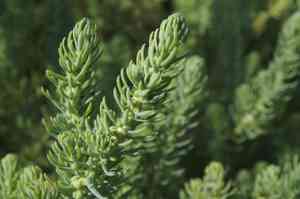
California sea-blite (Suaeda californica)
Also known as: Californian sea blite
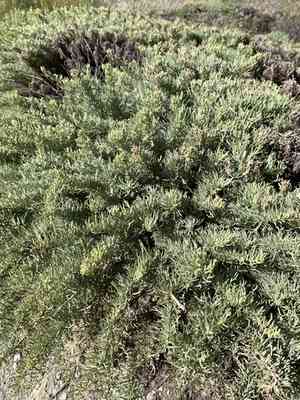
The California sea-blite is a hardy shrub typically found in the salty marshes and coastal regions of California. It is well-suited to saline habitats and flourishes in areas with abundant sunlight. Its succulent, fleshy leaves aid in water retention, while its green to reddish stems and small, understated flowers add a unique visual element to the surroundings, making it recognizable even from afar.
In This Article
Attributes of California sea-blite
Lifespan
Perennial
Plant Type
Shrub, Succulent
Plant Height
30-100 cm
Spread
30-100 cm
Leaf Color
Green, often appearing red in saline conditions
Flower Size
Less than 1 cm
Flower Color
Greenish
Images of California sea-blite
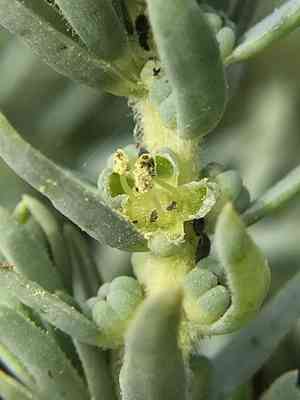
Quickly Identify California sea-blite
1
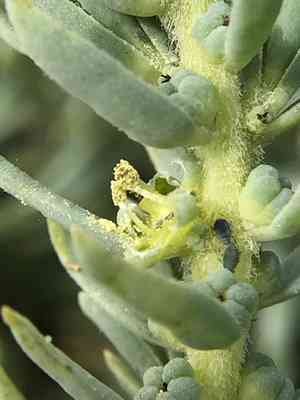
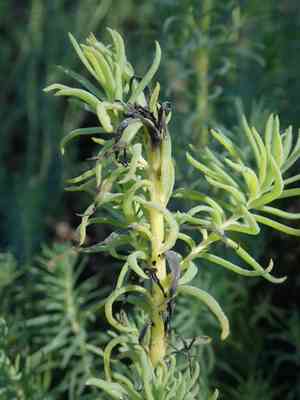
Suaeda californica can be identified by its succulent, linear to cylindric fleshy leaves that are typically 1-3 cm long. The plant often has a bushy appearance and can appear reddish in certain environmental conditions. It produces small, inconspicuous flowers.
Scientific Classification of California sea-blite
Phylum
Vascular plants
Class
Dicotyledons
Order
Caryophyllales
Family
Amaranth
Genus
Seepweeds
Species
California sea-blite
Planting and Growing of California sea-blite
Care Difficulty
Moderate
Watering Schedule
Every 2 days
Sunlight Requirements
Full sun
Sunshine Duration
4-8 hours
Ideal Temperature
60-75℉
Soil Type
Potting Mix, Peat Mix
Soil pH
6.5-8.5
Fertilizer Type
Balanced
Pruning Season
Spring, Summer
Pruning Area
Branches, Leaves
Pruning Frequency
2 times a year
Repotting Season
Spring
Pot Type
Plastic, Ceramic
 How to Water California sea-blite?
Suaeda californica prefers infrequent but thorough watering. Apply approximately 200 milliliters of water per session, ensuring the soil is moistened but not waterlogged. This imitates the plant's natural conditions, supporting its growth and health.
What are the symptoms of an underwatered California sea-blite?
›
What should I do if my California sea-blite is not getting enough water?
›
What are the symptoms of an overwatered California sea-blite?
›
How to save an overwatered California sea-blite?
›
 What Are the Sunlight Requirements for California sea-blite?
Suaeda californica ideally benefits from a light exposure range of 5 to 10 hours daily. This light regime supports active growth, maintains its physiological balance, and enhances its photosynthetic efficiency, contributing to its vigorous health and productivity.
What is the recommended sunlight exposure?
›
How to achieve ideal sunlight for Suaeda californica?
›
What are the benefits of ideal sunlight for this plant?
›
 What Is the Ideal Temperature Range for California sea-blite?
The ideal temperature range for Suaeda californica lies between 60 to 75 degrees Fahrenheit. This range ensures optimal growth and physiological functions. Maintaining temperatures within this interval helps in achieving robust plant vigor, promoting hydration and nutrient uptake efficiency.
 What Soil is Best for California sea-blite?
Suaeda californica thrives in soil that offers excellent moisture retention, ensuring the roots have consistent access to water. This property is especially beneficial in arid conditions where water availability is limited. The plant prefers soil enriched with essential nutrients. A balanced nutrient composition supports robust growth and enhances its resilience against environmental stress. Suaeda californica requires soil that facilitates good drainage to prevent waterlogging. This condition helps prevent root rot and promotes healthy plant development.
 How to Fertilize California sea-blite?
For Suaeda californica, it's important to use a balanced approach to fertilizing. Typically, a quarter to half the recommended amount on fertilizer packages is sufficient. This is because this plant is adapted to nutrient-poor environments.
 How to Prune California sea-blite?
Start by removing any dead or diseased branches to ensure the health of the Suaeda californica. Use sharp, clean pruning shears to make clean cuts. Trim back any overgrown or leggy growth to encourage a more compact shape. Aim to prune monthly to maintain the desired form and to stimulate fresh growth, particularly during the active growing seasons of spring and summer. To maintain the desired size and shape of the Suaeda californica, focus on cutting back the longest branches. Trim them to the length you prefer, making angled cuts just above a leaf node. This technique will promote new growth from the nodes and prevent the plant from becoming too woody or sparse. Regular size control is essential in preventing the plant from overshadowing neighboring plants.
More About Pruning Techniques→
 How to Propagate California sea-blite plant?
1
Before planting seeds or cuttings, prepare a well-draining substrate, such as a mix of sand and peat, to encourage root development and ensure the media is sterile to prevent fungal infections.
2
Collect seeds when they are fully matured and dry. For cuttings, select healthy stems and cut just below a node. Ensure to collect in the early morning when plant tissues are turgid.
3
Plant seeds about 1/8 inch deep and cover lightly with substrate. Insert cuttings into the substrate about one-third of their length. Gently firm the substrate around each cutting to eliminate air pockets.
 How to Repot California sea-blite plant?
1
You should consider repotting Suaeda californica when you notice that the plant's growth has become stunted or roots are protruding from the drainage holes. These are clear signals that the plant has outgrown its current container and requires more space to thrive.
2
Select a pot that is slightly larger than the current one, with good drainage holes. The material should be breathable, like terracotta, to facilitate proper airflow. A well-chosen pot prevents waterlogging and supports the overall health of the plant.
3
Opt for a sandy, well-draining soil mix as Suaeda californica thrives in coastal saline environments. Such a mix prevents root rot and mimics natural conditions, ensuring that the plant develops a robust root system.



